
Finding Luxury Home Sellers: A Strategic Guide for Agents
What if the most impressive property in your prospecting area is the least promising seller lead? Learning how to find luxury home sellers starts with looking beyond visible wealth. A high-value home signals potential, not intent. Treating it as proof of a coming sale can consume hours without producing a meaningful listing conversation.
For agents pursuing affluent clients, the challenge is finding a reliable way to identify plausible sellers, distinguish curiosity from genuine readiness, and build credibility before making an approach. Without a qualification process, a long prospect list can create activity without producing a pipeline of relevant conversations.
This guide explains how to find luxury prospects through repeatable channels, assess credible signs of timing and motivation, and focus outreach on homeowners more likely to consider a sale. You’ll also learn how professional positioning and qualified listing appointments can turn prospecting into productive conversations. LuxeScale identifies and qualifies affluent homeowners with selling intent, schedules direct listing appointments, and provides agent training and coaching.
Key Takeaways
- Learn how to find luxury home sellers by building a researchable prospect pool around ownership, potential life or portfolio changes, and permission-based connections.
- Compare referrals, relationship networks, public records, listing history, and qualified appointments by access, intent signals, effort, and follow-up needs.
- Use a clear qualification sequence: confirm property fit, ask about plans, clarify timing, identify decision-makers, and agree on next steps.
- See how LuxeScale identifies and qualifies affluent homeowners with selling intent, schedules listing appointments, and prepares agents with coaching, training, and live video education.
How to Find Luxury Home Sellers Starts with Defining the Right Prospect
Luxury prospecting is not a search for the highest property values or the most visible signs of wealth. It’s a search for seller fit and timing. A luxury home seller is an owner considering the sale of a high-value property, but what counts as high-value depends on the market. A property may sit at the top of one market and closer to the middle of another. The Luxury Real Estate Overview offers useful context on the category, but your prospecting criteria should reflect the market you serve.
That distinction makes it easier to decide how to find luxury home sellers. Treat the luxury label as a starting point for research, not evidence that an owner plans to list. First identify a plausible match, then qualify the owner’s plans through a respectful conversation.
What Makes a Homeowner a Plausible Luxury Seller?
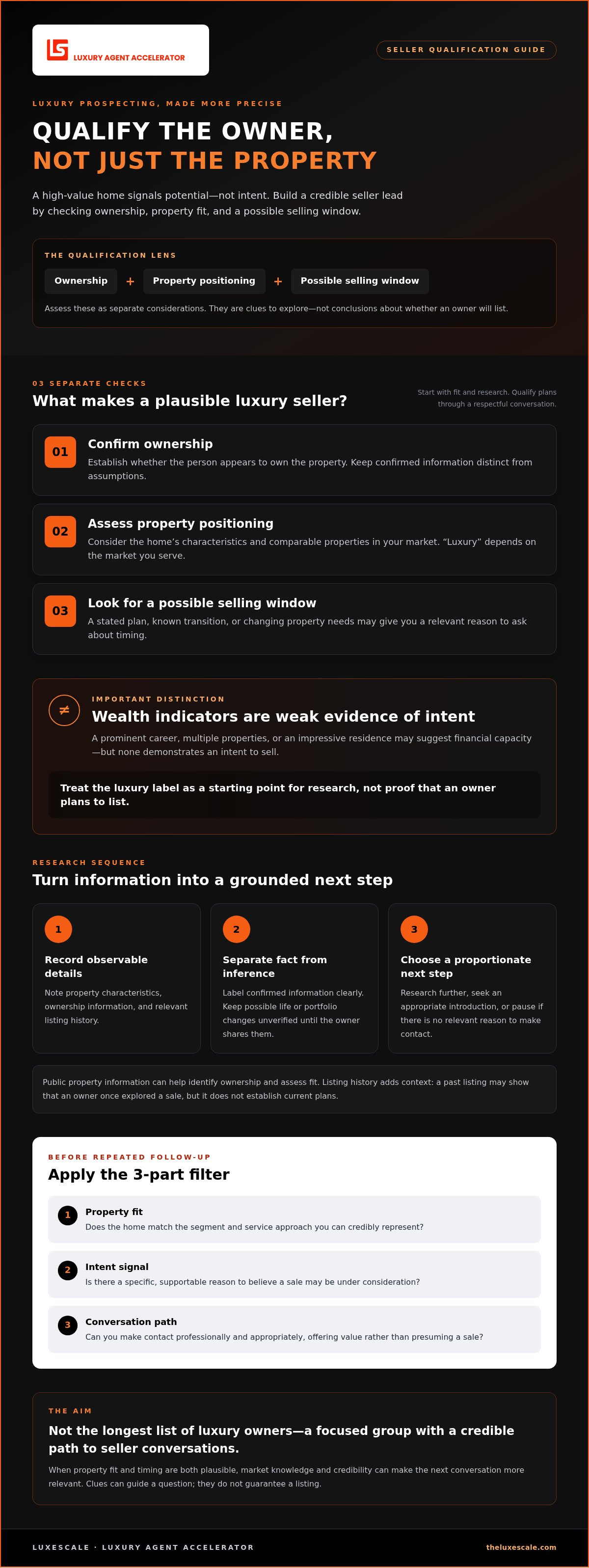
Assess three considerations separately: ownership, property positioning, and a possible selling window. First, establish whether the person appears to own the property. Next, consider how the home fits your market’s luxury segment, including its characteristics and comparable properties. Finally, look for a credible reason the owner might consider selling, such as a stated plan, a known transition, or changing property needs. These are clues to explore, not conclusions.
Wealth indicators alone are weak evidence. A prominent career, multiple properties, or an impressive residence may suggest financial capacity, but none demonstrates intent to sell. Keep seller fit as a working hypothesis: “This owner and property may align with my expertise, and there may be a relevant timing signal.” Qualification begins when a respectful conversation confirms or challenges that hypothesis.
Why Seller Intent Matters More Than a Luxury Label
A broad list of affluent owners can look productive while drawing time away from active opportunities. A property profile tells you what the owner owns. Evidence of a potential move or sale gives you a reason to ask whether a listing conversation might be timely. For example, an estate that aligns with your specialty is worth researching. If the owner has also expressed plans to relocate, you have a relevant opening to ask about timing. Neither detail guarantees a listing, but the second gives your outreach a more useful starting point.
Apply a simple filter before investing in repeated follow-up:
- Property fit: Does the home match the segment and service approach you can credibly represent?
- Intent signal: Is there a specific, supportable reason to believe a sale may be under consideration?
- Conversation path: Can you make contact professionally and appropriately, offering value rather than presuming a sale?
When both fit and timing are plausible, your market knowledge and credibility can make the next conversation more relevant. Demonstrate that you understand the property’s positioning and can guide a considered decision. Keep your standard disciplined: the goal isn’t the longest list of luxury owners, but a focused group of prospects with a credible path to seller conversations.
Where to Find Potential Luxury Home Sellers: Build a Researchable Prospect Pool
A useful prospect pool brings together several sources and answers three questions: who owns a relevant property, what might have changed in their life or portfolio, and where can you make a respectful, permission-based connection? This approach gives you a research process rather than a pile of names. It also helps separate observable information from assumptions before you decide whether outreach makes sense.
Research Public Property and Listing Information
Public property information can help you identify ownership and assess whether a home fits your target segment. Listing history adds context: a past listing may show that the owner once explored a sale, but it doesn’t establish current plans. Treat each detail as a lead for research, not proof of motivation or personal wealth. Before using property or contact data for outreach, verify the privacy and communication requirements that apply to your jurisdiction and channel.
Use a simple research sequence:
- Record observable details: Note property characteristics, ownership information, and relevant listing history.
- Separate fact from inference: Label confirmed information clearly. Mark possible life or portfolio changes as unverified until the owner shares them.
- Choose a proportionate next step: Research further, seek an appropriate introduction, or pause if there’s no relevant reason to make contact.
This discipline protects your time and keeps your approach grounded. A property that fits your expertise may merit monitoring. A past listing could suggest a useful question if you have a credible, respectful way to ask it. Neither fact justifies presumptive messaging.
Use Relationships to Create Relevant Introductions
Professional relationships can provide context that public data can’t. Attorneys, financial professionals, business owners, and other agents may encounter people considering a property change. Any introduction should respect the homeowner’s privacy and willingness to connect. Build familiarity by participating consistently in relevant professional and community networks, sharing useful market insight, and making your specialty clear before asking for referrals.
Existing relationships matter, too. Past clients and professional contacts may know homeowners whose plans are changing. Keep conversations useful and open-ended instead of treating every interaction as a referral request. For a broader framework on developing high-ticket seller-lead strategies, connect relationship-building to a repeatable process for identifying, qualifying, and following up with prospects.
Include relevant events and listing-history research in your mix, then assess each source by the context it provides and the effort it requires. A thoughtful introduction may offer more insight than a large, unverified list. Track each prospect’s source, known context, last interaction, and next appropriate action. A concise record helps you prioritize follow-up without relying on memory or contacting someone repeatedly without a clear purpose.
If you want more qualified seller conversations alongside your own prospecting, explore LuxeScale’s affluent seller appointments.
Compare Luxury Seller Prospecting Channels by Intent, Access, and Follow-Through
Each prospecting channel offers a different mix of access, evidence of intent, and agent effort. A strong strategy doesn’t assume one source will produce listings. Instead, measure whether a source leads to relevant, permission-based conversations. Use the comparison below to decide where to invest time, then evaluate lead quality by what homeowners actually share about their plans.
| Channel | Access and intent evidence | Effort and follow-through |
|---|---|---|
| Referrals | Often provide a warm introduction and useful context, especially when the homeowner has shared a potential sale plan. | Maintain referral relationships and follow up promptly and professionally with the homeowner’s permission. |
| Relationship networks | Offer access through existing professional or community connections; intent evidence depends on what the homeowner has chosen to share. | Require consistent participation and trust-building over time, not a one-time request for business. |
| Public records | Can help identify ownership and property characteristics, but usually offer little direct evidence of current selling intent. | Require research, verification, and an appropriate outreach approach before acting on a lead. |
| Listing history | A past listing can indicate prior consideration, but doesn’t establish current motivation or timing. | Review context, avoid assumptions, and use any follow-up to clarify whether plans have changed. |
| Qualified appointments | Can connect agents with affluent homeowners whose selling interest has been qualified. | Focus agent time on the listing conversation, while still assessing fit and readiness directly. |
Which Channels Can Reveal Seller Intent?
A homeowner’s direct statement about considering a sale is stronger evidence than a demographic profile or a property’s apparent value. A contextual introduction can also help when it accurately reflects what the homeowner has shared and respects their privacy. Listing history is a prompt for further research, not confirmation that the owner is ready to move. Online engagement and high lead volume are similarly weak signals unless they lead to a meaningful conversation.
For agents learning how to find luxury home sellers, the distinction is practical: prioritize evidence of plans over assumptions about wealth. No channel guarantees a listing. Confirm the opportunity through direct conversation, and update your assessment as the homeowner’s timing or priorities become clearer.
How to Prioritize Sources Without Chasing Every Lead
Assess each opportunity against four criteria: strength of intent evidence, fit with your expertise, permission to make contact, and realistic follow-up effort. A referred homeowner who has discussed a possible move may deserve near-term attention. An owner identified through public information, with no other context, may belong in long-term research rather than immediate outreach.
Keep long-term relationship-building separate from near-term appointment opportunities. That distinction protects time for active seller conversations while helping you maintain a deliberate presence in relevant networks. When a prospect is ready to discuss a sale, preparation matters. A clear process for luxury real estate listing appointments helps you guide the conversation toward the homeowner’s goals and an appropriate next step.
How to Tell If a Luxury Homeowner Is Ready to Sell
Affluence and an impressive property don’t establish readiness. A homeowner may have the means to move and a home that fits your expertise, yet have no plans to sell. To qualify fairly, follow a consistent sequence, ask neutral questions, and let the owner’s answers determine whether a listing conversation is timely. This keeps follow-up grounded in evidence rather than assumptions.
Use these steps during an initial conversation:
- Confirm fit: Briefly establish whether the property and the owner’s needs align with your experience. Don’t assume a high-value home is automatically the right fit.
- Ask about plans: “Have you been considering a sale, or are you gathering information for the future?” This gives the homeowner room to explain their level of interest.
- Clarify timing: Ask what timeframe, if any, they have in mind. Avoid manufacturing urgency or suggesting that they must decide immediately.
- Understand decision-makers: Find out who else is involved and what information would help them consider next steps.
- Agree on a next step: Depending on their answers, offer relevant follow-up, schedule a discussion, or leave the door open without pressing for an appointment.
Questions That Clarify Timing and Motivation
Keep your questions open and neutral. Ask, “What prompted you to consider selling?” and “What timing would work best for you, if you decide to move forward?” If the owner is still exploring, ask what information would be useful now. Clarify who will participate in the decision and whether they’d like to be included in a future conversation. The goal is to understand, not steer the homeowner toward a sale.
Listen for specifics. “We may move someday” signals curiosity, while a stated timeframe and willingness to discuss a next step indicate a more developed plan. Neither guarantees a listing, but both help you choose an appropriate level of follow-up.
Signals That Need Context Before Follow-Up
A past listing, a change to a property, or a referral can suggest a relevant question, but none proves current motivation. Ask what the owner wants and whether they’re open to continuing the conversation. Distinguish interest in general market information from willingness to discuss a defined next step, such as a property review or a meeting about selling plans.
After each conversation, record the homeowner’s verified statements separately from your interpretation. For example, note “owner said they may consider a move next year” as reported context, and label “likely motivated by relocation” as an unconfirmed hypothesis unless the owner said so. Add the agreed follow-up and timing, then honor both. This record helps you qualify consistently and avoid treating an old signal as a current plan.
A disciplined qualification process can make seller conversations more focused. Explore LuxeScale’s luxury listing appointment approach to see how qualified seller interest leads to direct listing appointments.
Turn Qualified Luxury Seller Opportunities into Listing Appointments with LuxeScale
Once you’ve defined which prospects are worth pursuing, the next challenge is turning seller interest into a productive listing conversation. LuxeScale identifies and qualifies affluent homeowners who are ready to sell, then schedules direct listing appointments for real estate agents. This helps shift agent time from sorting through unvetted names toward conversations with homeowners who have expressed selling intent.
Qualification is a starting point, not a promise of a listing. Agents still need to understand the homeowner’s priorities, demonstrate relevant expertise, and determine whether there’s a strong fit. Starting with a scheduled conversation and context about the seller’s interest can make prospecting more focused than relying on property value or broad audience lists alone.
What Agents Receive Beyond a Seller Introduction
A useful appointment model does more than create an introduction. LuxeScale qualifies affluent homeowner prospects for selling intent and schedules direct listing appointments, helping agents focus on seller conversations instead of initial prospect research. Agent pre-framing and preparation provide context for the meeting, so you can arrive ready to listen, ask informed questions, and respond to the homeowner’s stated goals.
Participating agents also receive complementary coaching, training, systems, support, and live video education. Use these resources to strengthen your approach to high-end listing discussions, refine how you explain your process, and prepare for questions about the property, timing, and sale. The aim is not a scripted pitch. It’s a considered conversation grounded in the prospect’s expressed interest and your ability to serve their needs.
The model is performance-based: LuxeScale receives a 20% referral fee at closing, with no monthly or recurring out-of-pocket charges. Territory participation is exclusive, with the number of agents in any one territory limited. This structure supports a focused agent relationship without guaranteeing a particular appointment, listing, or closing.
A Clear Next Step for Agents Building a Luxury Pipeline
If you’re deciding how to find luxury home sellers while protecting time for qualified conversations, consider how a structured appointment process fits alongside your own relationship-building and market research. LuxeScale combines seller qualification and scheduled listing appointments with ongoing agent preparation. Agents who want access to affluent seller conversations can also use the accompanying coaching and education to develop their luxury business.
Explore how LuxeScale’s appointment model and exclusive agent participation can support your prospecting strategy. Explore LuxeScale’s luxury listing appointments.
Build Your Next Luxury Listing Conversation
Make your next move a deliberate one. Set a clear standard for which seller conversations deserve your attention, then build a pipeline that supports consistent, thoughtful follow-through. The best answer to how to find luxury home sellers is not simply to expand your prospect list. It’s to create more opportunities to speak with homeowners whose plans align with your expertise.
For agents seeking added support, LuxeScale qualifies affluent seller prospects and schedules listing appointments. Complementary coaching, training, and live video education help you prepare for those conversations. The performance-based model charges a 20% referral fee at closing, with no recurring monthly out-of-pocket charges.
Take the next step toward a more focused luxury pipeline. Explore LuxeScale’s luxury listing appointments and see how qualified seller conversations and structured support can fit your growth strategy.
Frequently Asked Questions
What counts as a luxury home seller?
A luxury home seller is an owner considering the sale of a property positioned at the high end of its relevant market. There’s no single national price that defines luxury everywhere, so compare a home with suitable properties in its market rather than relying on a fixed cutoff. For prospecting, treat value as context. The owner’s stated interest, possible timing, and openness to discussing representation are more useful indicators of a potential listing opportunity.
How can I find luxury home sellers without cold calling?
Build connections through professional referrals, existing relationships, relevant networking, listing-history research, and permission-based digital outreach. For example, share useful market information through a professional network and invite interested homeowners to continue the conversation. These approaches can surface potential opportunities without unsolicited calls, but they don’t prove readiness. Respect the homeowner’s preferences and applicable requirements, then prioritize follow-up based on what the person says about their plans.
Can public property records help identify luxury home sellers?
Yes. Public property information can help you identify ownership or understand a property’s history, giving you a starting point for research. It can’t tell you why an owner might move or whether a sale is under consideration. Keep notes factual, such as an ownership detail or a prior listing, and avoid inferring personal circumstances. Before using information for outreach, understand the privacy and communication requirements that apply to your intended approach.
How do I know whether an affluent homeowner is serious about selling?
Look for direct, specific statements rather than signs of wealth or online activity. Ask whether the owner is considering a sale and what would influence their decision. An owner who can describe a possible timeframe and agrees to relevant follow-up is showing more engagement than someone simply browsing market information. As you determine how to find luxury home sellers, record the owner’s actual words separately from your interpretation.
Are referrals a good way to find luxury home sellers?
Referrals can create a more relevant introduction when the person making it understands the homeowner’s needs and has permission to connect you. For example, a professional contact might introduce you to an owner who has asked about preparing for a future move. Treat that context as a reason to listen, not confirmation of a listing. Thank the referrer, speak directly with the homeowner, and establish whether your expertise fits their plans.
What happens if a luxury seller is interested but not ready to list?
Keep the relationship useful without pushing for a premature decision. Ask what information would help, agree on whether and when a follow-up would be welcome, and record that preference. If the owner is weighing a future move, a relevant update about comparable properties may be more helpful than repeated appointment requests. Respecting their timeline preserves trust and helps you distinguish a longer-term prospect from an active listing opportunity.

Article by
Mark Coppens
Mark Coppens is the Founder and Chairman of LuxeScale and Co-Team Lead of Living Vogue | eXp Luxury. He is an active elite-level luxury agent and the author of the upcoming book, POWER POSITIONING: From Missiles to Mansions – Why People Really Buy, and is a nationally recognized speaker on luxury real estate, consumer psychology, marketing, and business growth.
A U.S. Army veteran with an MBA in Marketing, Mark has generated more than $1 billion in career sales and now leads one of the nation's fastest-growing luxury referral platforms, referring more than $2 billion in luxury real estate opportunities each month to partner agents across the United States. He specializes in helping real estate agents generate more listings, break into the luxury market, and build scalable businesses through qualified referrals, award-winning training, coaching, and proven systems. His practical, psychology-driven approach has helped agents across the country increase their income while attracting more affluent clients and building lasting, referral-driven businesses.