
How to Generate More Real Estate Leads in 2026: A Practical Guide
More real estate leads don’t automatically mean more business. If inquiries arrive in unpredictable bursts, many lack clear intent, and follow-up slips between appointments, a bigger lead count can create more noise, not more opportunity. Learning how to generate more real estate leads starts with building a reliable path from first contact to a qualified conversation.
Consistent prospecting matters, but it needs to be repeatable without taking time away from people who are ready to buy or sell. A balanced pipeline combines lead sources you can sustain with clear qualification and disciplined follow-up. That makes it easier to focus on prospects with genuine property needs and choose a useful next step for each one.
This guide covers how to attract prospects, assess their readiness, and turn suitable conversations into listing appointments and other measurable opportunities. You’ll learn how to strengthen your own channels, follow up with purpose, and evaluate lead quality beyond the initial inquiry. You’ll also see how qualified seller prospects and appointment support can complement an agent’s existing business-development efforts. The goal isn’t simply to add names to your database. It’s to build a system that helps you identify and act on your next opportunity.
Key Takeaways
- Learn how to generate more real estate leads by defining what makes a prospect a genuine opportunity before expanding your marketing.
- Use a five-step system to set a pipeline goal, choose channels, capture inquiries, qualify prospects, and follow up.
- Compare lead sources by intent, control, and the effort required to turn interest into an appointment.
- Apply a practical follow-up workflow that personalizes contact, clarifies readiness, and establishes a useful next step.
- Evaluate potential lead partners by their qualification standards, appointment details, territory terms, and agent support.
How to Generate More Real Estate Leads by Defining the Right Opportunity
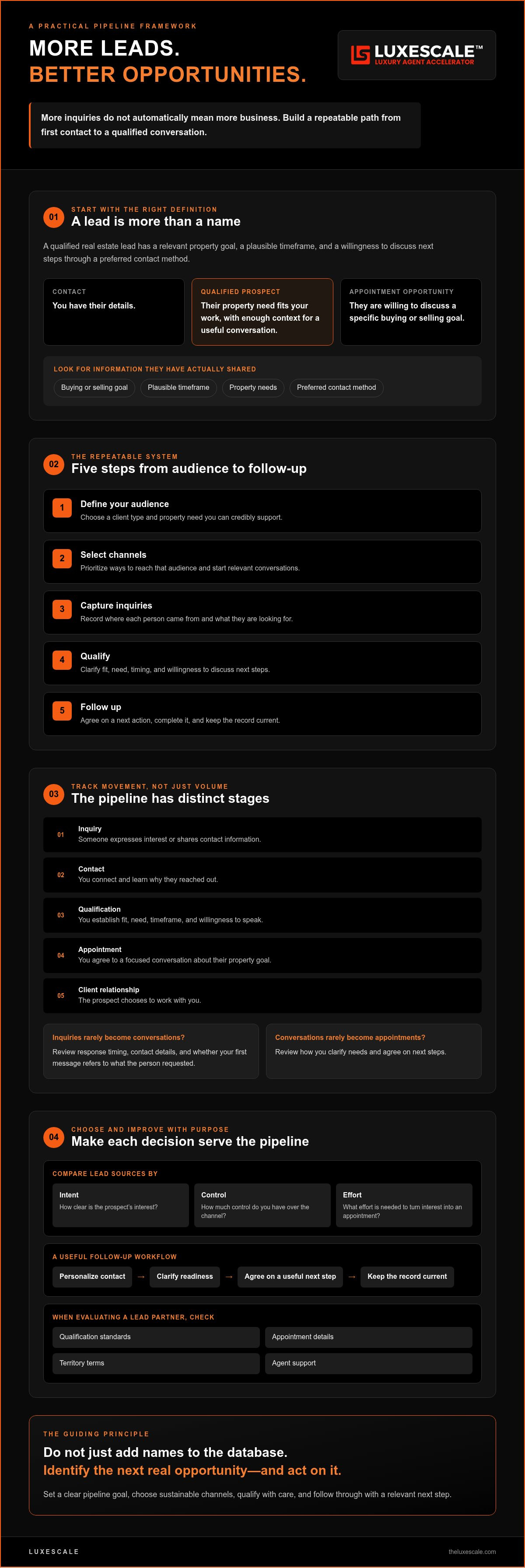
A contact is someone whose details you have. A qualified prospect has a property need that fits your work and has shared enough information to guide a useful next conversation. An appointment opportunity goes further: the prospect is willing to speak with you about a specific buying or selling goal. These are different stages. Treating every new name as appointment-ready can waste time and make it harder to see what’s actually working in your pipeline.
A qualified real estate lead is a person with a relevant property goal, a plausible timeframe, and a willingness to discuss next steps through a preferred contact method. This practical definition makes lead generation more than collecting contact details. It connects attracting interest with deciding which conversations merit focused attention. That distinction is central to how to generate more real estate leads without confusing activity with progress.
What makes a real estate lead worth pursuing?
Look for information the person has actually shared, not assumptions. They might state that they plan to sell, describe the type of home they hope to buy, give a rough timeframe, or say whether they prefer a call, email, or text. Each detail helps you judge fit and select a relevant next step.
Someone browsing homes without a stated plan may still be exploring. A homeowner asking about preparing for a move later this year has given you a clearer reason to talk. Neither person should be pressured. Qualification means understanding their needs, timing, and interest, then agreeing on whether and how to continue.
Why more names do not automatically mean more closings
Lead volume can hide weak intent, poor fit, or slow follow-up. A form submission with little context may require more discovery than a referral who has already explained their plans. Even a promising inquiry can go cold if the record is incomplete or your response arrives after the prospect has moved on.
Track how prospects progress, not just how they enter your pipeline:
- Inquiry: Someone expresses interest or shares contact information.
- Contact: You connect and learn why they reached out.
- Qualification: You establish fit, need, timeframe, and willingness to speak.
- Appointment: You agree to a focused conversation about their property goal.
- Client relationship: The prospect chooses to work with you.
Look at where prospects stop moving. If inquiries rarely become conversations, check response timing, contact details, and whether your first message refers to what the person requested. If conversations don’t lead to appointments, review how you clarify needs and agree on next steps. Measure meaningful progress through the pipeline, not just incoming contacts.
Build a Real Estate Lead-Generation System Around Five Repeatable Steps
A practical lead-generation system is a repeatable process for attracting, recording, assessing, and following up with potential clients. Before adding a channel or campaign, set one clear pipeline goal, such as increasing qualified seller conversations or improving the share of inquiries that become appointments. A specific goal helps you choose activity based on the outcome you need, rather than on what’s easiest to launch.
Use five steps to build the process:
- Define your audience. Choose the type of client and property need you can credibly support.
- Select channels. Prioritize ways to reach that audience and start relevant conversations.
- Capture inquiries. Record where each person came from and what they’re looking for.
- Qualify. Clarify fit, need, timing, and willingness to discuss next steps.
- Follow up. Agree on a next action, complete it, and keep the record current.
Choose a target audience and a clear value proposition
Focus on a client need, property type, or area of service that matches your experience. For example, if you work with sellers preparing for a move, share useful guidance about planning the sale and invite homeowners to discuss their priorities. Give people a specific reason to respond, such as talking through what they need to prepare, rather than promising an outcome you can’t control. A clear focus also makes it easier to choose channels and assess whether an inquiry fits.
Capture, qualify, and follow up with every inquiry
Use a consistent intake record, whether it’s a spreadsheet or another system you already use. For each inquiry, note its source, the person’s stated need, timeframe, preferred contact method, current status, next action, and eventual appointment outcome. That record helps you see what’s moving forward, what needs attention, and which channels are contributing useful conversations.
Set a follow-up cadence you can maintain. Respond promptly, refer to what the person actually shared, and make each contact useful. If they don’t reply, vary the timing or channel only when appropriate, and respect requests to stop contacting them. Don’t assume silence means readiness or permission for repeated outreach. Record the agreed next step so the conversation can continue with context.
For more focused guidance on seller pipelines, see these seller lead strategies. Agents looking to complement their own prospecting can also explore qualified seller appointments and related agent support from LuxeScale.
Compare Real Estate Lead Sources by Intent, Control, and Effort
Choosing how to generate more real estate leads is a resource decision, not a search for one universally best channel. Compare each source by the intent it tends to signal, how much of the process you control, and the work required to qualify and follow up. These are practical tendencies, not guarantees. Audience fit, execution, and market conditions all affect what a channel produces.
| Channel | Likely intent | Agent control | Qualification effort | Follow-up needs |
|---|---|---|---|---|
| Referrals | Often tied to a known need or introduction | Moderate; you control the conversation, not the referral flow | Confirm the person’s plans and expectations | Personal, timely contact that acknowledges the introduction |
| Sphere outreach | Varies; existing relationships may surface future needs | High over who you contact and what you share | Discover whether a property goal exists | Consistent, relationship-led check-ins |
| Educational content | Ranges from general interest to active research | High over the topic, limited over who engages | Ask what prompted the inquiry and what help is needed | Capture responses and continue with relevant information |
| Digital inquiries | Can signal active interest, but readiness differs | Moderate; source and inquiry experience shape the interaction | Clarify intent, timing, and fit | Prompt, contextual outreach and planned follow-up |
| Direct outreach | Unknown until the recipient responds | High over targeting and message, subject to contact permissions | Establish whether there is a genuine need | Respect preferences and stop requests; avoid assuming interest |
| Referral partners | Depends on the partner’s screening and referral process | Shared; the partner influences access and qualification | Understand what was verified and what remains to ask | Clarify handoff details and the agreed next step |
When organic relationships and content may fit
Sphere outreach and educational content can keep your expertise visible and give past clients and prospects a useful reason to reconnect. They work best as consistent activities, not one-off campaigns. Interest won’t become an opportunity unless people have a clear way to respond and you capture their inquiry. For more on relationship-led opportunities, explore this guide to luxury real estate referrals.
When paid, data-led, or referral channels may fit
These sources can extend your reach, but vary in how much control you have and how much qualification remains your responsibility. A delivered contact isn’t necessarily a vetted prospect, and a vetted prospect doesn’t necessarily have an appointment scheduled. Before committing, ask how consent is obtained, who owns the relationship, whether contacts are shared, how territory is handled, and what referral terms apply. Get the definitions in writing or otherwise clear before you begin, then assess the source by the quality of its conversations and appointments, not just its contact count.
Turn More Real Estate Leads Into Appointments With a Consistent Follow-Up Process
A consistent follow-up process gives each inquiry a clear next action instead of leaving the conversation to memory. Use the same basic sequence whether a prospect comes from a referral, a digital inquiry, or another source:
- Review the context. Check what prompted the inquiry and any communication preferences already provided.
- Make contact. Use an appropriate channel and refer to the person’s stated interest.
- Ask and listen. Learn about their property situation, goals, and timing.
- Qualify. Assess whether their needs align with your expertise and whether they’re open to a conversation.
- Agree on a next step. That may be an appointment, a later check-in, or useful information they requested.
- Record the outcome. Note the response, qualification status, next action, and any appointment set.
Personalization doesn’t require a long message. A brief reference to the person’s stated goal shows you paid attention and helps make the exchange relevant. If they don’t respond, use a measured cadence that respects their preferences and any request to stop. Don’t treat silence as consent or assume an inquiry means someone is ready to transact.
Ask questions that reveal fit and readiness
Use open questions to understand the situation without turning the exchange into an interrogation. You might ask, “What’s prompting you to consider a move?” or “What timing are you thinking about?” For a buyer, ask what they’re hoping to find and what would help them move forward. Listen for their priorities and decision process, but let them decide how much to share. Use their answers to choose the next step rather than launching into an automatic pitch.
Prepare for the appointment and improve the process
Before an appointment, review your notes and prepare information relevant to the prospect’s stated needs. That preparation keeps the conversation focused and saves the person from having to repeat details they’ve already shared. For more guidance, read this luxury listing appointment guide.
Review results by lead source: responses received, prospects qualified, appointments set, and next actions completed. If one source generates inquiries but few substantive conversations, examine the handoff, initial message, or qualification details before increasing activity. This is how to generate more real estate leads while improving the path from initial interest to a useful appointment.
If qualified seller conversations would complement your existing prospecting, explore LuxeScale’s approach to qualified listing appointments.
Choose a Real Estate Lead Partner That Supports Qualified Appointments
Evaluate a lead partner by the opportunity it delivers and the clarity of its process, not simply by the number of contacts it provides. Before adding a referral source to your pipeline, establish how prospects are qualified, what information comes with the handoff, and what responsibilities remain with you. Those details help you decide whether the partnership complements your existing lead-generation system.
Questions to ask before accepting a referral opportunity
Use these questions to assess whether a partner’s process aligns with your business and expectations:
- Qualification: How are seller intent, readiness, and contact details established? What has the homeowner agreed to discuss?
- Appointment details: Is an appointment scheduled, or are you receiving a contact to pursue? What context will you receive beforehand?
- Territory: How is territory defined, is it exclusive, and what availability can the partner confirm?
- Support: What training, coaching, or other support accompanies the opportunity?
- Terms and measurement: How does the referral arrangement work, how is success evaluated, and what follow-up is expected from the agent?
Get clear answers before you commit. A scheduled appointment, a qualified prospect, and a contact record are different deliverables. Confirm which one is being offered, how referral terms apply, and what happens after the introduction. Check current territory availability rather than assuming it’s guaranteed.
How LuxeScale can complement an agent’s lead-generation system
LuxeScale identifies and qualifies affluent homeowners who are ready to sell, then schedules listing appointments for agents. This can complement your referrals, sphere outreach, and other prospecting channels. It doesn’t replace every source or the agent’s role in building trust and guiding the listing conversation.
The service also includes complementary coaching, training, and live video education. That support can help agents prepare for conversations with high-end clients and approach an appointment with relevant questions. LuxeScale uses a performance-based referral model: there are no monthly or recurring out-of-pocket charges, and the referral fee is 20% at closing. Before deciding whether it fits your business, ask about territory availability, what qualification includes, what support is provided, and how outcomes are assessed.
A disciplined approach to how to generate more real estate leads includes choosing partners whose process and expectations are transparent. Review the service details and confirm eligibility and terms before moving forward. Explore LuxeScale’s qualified listing appointment service.
Build a Pipeline You Can Rely On
More leads create more opportunity only when your process moves the right prospects toward a meaningful conversation. Define what qualifies, choose channels that suit your audience, and track each prospect’s progress from first inquiry to appointment. Consistent, thoughtful follow-up helps you make the most of promising conversations without treating every contact as ready to transact.
That’s the practical answer to how to generate more real estate leads: build a repeatable system, measure progress beyond contact volume, and refine your approach based on what you learn. The right partner can complement your own prospecting with qualified affluent homeowner prospects and scheduled listing appointments, alongside coaching, training, and live video education.
LuxeScale uses a performance-based referral model with a 20% fee at closing and no monthly or recurring out-of-pocket charges. Review the terms and confirm they fit your business before moving forward. Explore LuxeScale’s qualified luxury listing appointments to learn more about the service. With a clear process and deliberate follow-up, you can build a more focused pipeline and approach your next opportunity with confidence.
Frequently Asked Questions
How can real estate agents generate leads without cold calling?
Agents can build relationships and attract inquiries through referrals, sphere outreach, educational content, and professional referral partners. Share practical information that helps people make property decisions, and give them a clear way to start a conversation. Track inquiries and follow up based on each person’s stated needs and contact preferences. These channels still require consistent effort, but they let you create opportunities without relying on unsolicited calls.
What is the best way to generate real estate leads?
The best approach is a repeatable system matched to your audience, expertise, and capacity to follow up. Define the clients you can serve well, choose appropriate channels, capture inquiries, qualify their needs, and agree on next steps. If you’re deciding how to generate more real estate leads, measure progress toward qualified conversations and appointments, not just contact volume. Review which sources contribute useful opportunities, then adjust your effort accordingly.
How do you get more listing leads as a real estate agent?
Give homeowners useful reasons to discuss their plans with you. Maintain relationships with past clients and your sphere, share helpful seller-focused guidance, and consider referral sources that explain how they qualify prospects. Ask about the homeowner’s goals and timing before suggesting a next step. A listing lead is more useful when you understand the person’s situation and they’re open to a conversation about selling.
Are paid real estate leads worth it?
Paid leads may be worthwhile if they generate qualified conversations and appointments at an acceptable overall cost to your business. Don’t judge a source by its lead price alone. Consider the time needed to reach and qualify prospects, how many become appointments, and whether the source shares contacts with other agents. Before committing, clarify contact permissions, lead ownership, referral terms, and what happens after a lead is delivered.
How can real estate agents tell if a lead is qualified?
A qualified lead has a relevant property need, a stated goal, a plausible timeframe, and willingness to discuss next steps. Ask open questions about what’s prompting the move, what the person hopes to accomplish, and how they prefer to communicate. Qualification is about establishing fit, not pushing someone to act. Someone exploring options may need useful information or a later check-in, rather than an immediate appointment.
How quickly should an agent follow up with a new real estate lead?
Follow up as promptly as you reasonably can, using the contact method the person provided or prefers. A timely response keeps the conversation connected to the inquiry. Refer to what they asked about, ask a relevant question, and suggest a suitable next step. If they don’t respond, use a measured follow-up cadence, record each attempt, and respect any request to stop contacting them.
Can a real estate referral partner provide listing appointments?
Yes. Some referral partners qualify seller prospects and arrange listing appointments, but clarify exactly what the partner provides. LuxeScale identifies and qualifies affluent homeowners who are ready to sell, then schedules listing appointments for agents. Its support includes coaching, training, and live video education. LuxeScale uses a performance-based referral model with a 20% fee at closing and no monthly or recurring out-of-pocket charges. Confirm current terms, territory availability, and eligibility directly before deciding whether the service fits your business.

Article by
Mark Coppens
Mark Coppens is the Founder and Chairman of LuxeScale and Co-Team Lead of Living Vogue | eXp Luxury. He is an active elite-level luxury agent and the author of the upcoming book, POWER POSITIONING: From Missiles to Mansions – Why People Really Buy, and is a nationally recognized speaker on luxury real estate, consumer psychology, marketing, and business growth.
A U.S. Army veteran with an MBA in Marketing, Mark has generated more than $1 billion in career sales and now leads one of the nation's fastest-growing luxury referral platforms, referring more than $2 billion in luxury real estate opportunities each month to partner agents across the United States. He specializes in helping real estate agents generate more listings, break into the luxury market, and build scalable businesses through qualified referrals, award-winning training, coaching, and proven systems. His practical, psychology-driven approach has helped agents across the country increase their income while attracting more affluent clients and building lasting, referral-driven businesses.