
Listing Leads: How to Find, Qualify, and Convert Seller Prospects
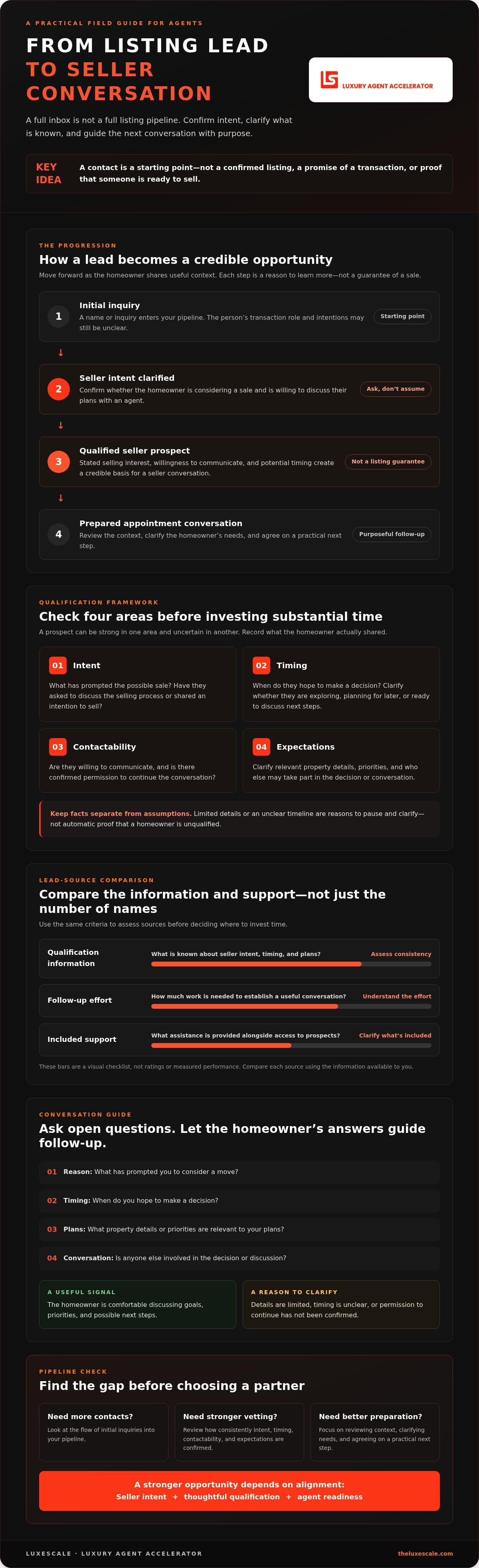
A full inbox is not a full listing pipeline. You can collect plenty of listing leads and still have few credible seller conversations if homeowners are only browsing, their timing is unclear, or follow-up is inconsistent. The opportunity is not simply to add names. It is to identify who has a genuine reason to sell and move the conversation forward with purpose.
For agents, the difference between a contact and a viable listing opportunity determines where valuable time goes. This guide explains how listing leads progress from an initial inquiry to a qualified seller prospect, and how to build a more dependable appointment pipeline without treating every inquiry as equally promising.
You’ll learn how to assess lead sources using consistent criteria, recognize signals of seller intent, and follow up in a way that builds toward a useful listing conversation. We’ll also look at how qualified affluent homeowner prospects, scheduled appointments, and agent preparation fit together. A strong opportunity depends on more than the lead alone: seller intent, qualification, and your readiness all need to align.
Key Takeaways
- Separate an initial inquiry from a genuine seller opportunity by confirming the homeowner’s intent and willingness to discuss working with an agent.
- Use consistent criteria to assess listing leads, including timing, contactability, and expectations. Keep confirmed details separate from assumptions.
- Compare lead sources by the qualification information they provide, the follow-up effort they require, and the support included.
- Prepare for a stronger seller conversation by reviewing the context, clarifying the homeowner’s needs, and agreeing on a practical next step.
- Identify whether your pipeline needs more contacts, stronger vetting, or better appointment preparation before choosing a partner.
What Are Listing Leads, and When Do They Become Seller Opportunities?
A listing lead is a prospective home seller who may consider hiring a real estate agent to sell a property. The term describes a potential seller relationship, not a confirmed listing or a promise that a transaction will happen.
A name in a database or a one-time inquiry is only a starting point. To become a credible seller opportunity, the contact needs to show some intent to sell, be willing to discuss their plans, and have a timeline worth clarifying. Qualification helps you decide whether to continue the conversation and what follow-up makes sense, rather than treating every contact as equally ready.
How Is a Listing Lead Different from a General Real Estate Lead?
A general real estate contact could be a buyer, a seller, someone exploring the market, or a person with no immediate transaction in mind. A buyer prospect may need help finding a property; a seller prospect may need guidance on preparing and marketing a home. Their likely transaction role shapes the questions you ask and the support you offer.
An inquiry does not establish that role by itself. Someone requesting property details may be a buyer, while a homeowner asking about a possible sale could be researching without a near-term plan. Even an active property listing in a Multiple Listing Service (MLS) shows that a home is being marketed, not that every person connected to it is a prospective seller for your business. Confirm the person’s role and intentions before deciding how to follow up.
What Makes a Homeowner a Potential Seller?
Look for information the homeowner has actually shared. A stated intention to sell, a request to discuss the selling process, or a willingness to arrange a conversation can signal potential. These clues justify thoughtful follow-up, but they do not establish that the homeowner is ready to list or will choose you as their agent.
Timing needs its own conversation. A homeowner considering a move may be exploring options, planning for a later date, or ready to discuss next steps now. Do not infer a deadline from one comment or assume that a homeowner’s circumstances prove intent. Ask open questions, such as what has prompted the possible move and when they hope to make a decision.
Readiness also includes willingness to engage. If someone is comfortable discussing their goals, priorities, and next steps, you have a stronger basis for a seller conversation than you do with a name and no context. Treat each signal as a reason to learn more, not as a guarantee of a sale. That distinction helps you prioritize follow-up while keeping expectations grounded.
How to Assess Listing Lead Quality Before Investing Your Time
A consistent qualification process helps you separate useful context from unanswered questions before committing substantial time. Assess each prospect across four areas: intent, timing, contactability, and expectations. A lead may have a clear reason to sell but no confirmed timeline, or a near-term plan but little willingness to speak. Each detail affects the next step.
A qualified listing lead is a homeowner whose stated selling interest, willingness to communicate, and potential timing give an agent a credible basis for a seller conversation. This is a working definition, not a guarantee of a listing. Qualification should reflect what the homeowner has actually shared, rather than assumptions based on a name, property, or profile.
Which Qualification Questions Reveal Seller Intent?
Keep questions respectful and conversational. Start with what prompted the homeowner to consider a sale, then clarify their preferred timing and whether they are ready to discuss possible next steps. Ask about property details that are relevant to their plans, and whether anyone else will participate in the decision or conversation. The National Association of REALTORS® Profile of Home Buyers and Sellers offers broader context on seller behavior; use it to inform your approach, not to presume what an individual homeowner wants.
How Can Agents Spot an Unqualified or Premature Inquiry?
Limited details, an unclear timeline, or no confirmed permission to continue the conversation are reasons to pause and clarify. They do not automatically mean the prospect lacks serious intent. A homeowner may need time to decide or may not yet know what their plans involve. Avoid pressing for certainty they cannot provide.
Use a simple record to keep facts separate from assumptions:
- Confirmed: What the homeowner said about their plans, timing, property, and preferred contact.
- Unconfirmed: Anything inferred, such as readiness to list, decision authority, or a specific sale date.
- Next step: The open question to resolve and a follow-up point agreed with the homeowner.
This discipline protects your time without dismissing a prospect who is simply early in the process. Fit and readiness are more useful measures than raw contact volume: a smaller set of prospects with clear context can make it easier to prioritize thoughtful conversations. If you’re evaluating support with qualified affluent seller prospects and listing appointments, explore LuxeScale’s seller lead and appointment support.
Compare Listing Lead Sources by Qualification, Access, and Support
Different sources provide different levels of context. A referral from someone in your sphere may come with personal insight, while a marketing inquiry could be only a name and a request for information. A qualified appointment referral may include prior qualification and a scheduled conversation. Compare what you will actually receive, not just how many listing leads a source claims to provide.
| Source | Qualification visibility | Agent effort | Support provided |
|---|---|---|---|
| Sphere referral | Often includes a personal introduction or some context; confirm the seller’s plans directly. | Build trust and establish intent, timing, and next steps. | Usually depends on the referring person and the agent’s own process. |
| Agent-generated marketing inquiry | Varies by what the homeowner shared in the inquiry; readiness may be unclear. | Respond, establish the person’s role, and qualify interest and timing. | Depends on the agent’s marketing and follow-up approach. |
| Qualified appointment referral | May include confirmed seller context and an appointment; check what was actually established. | Review the context and prepare for the conversation. | Can include qualification and appointment scheduling; confirm what preparation support is included. |
What Should Agents Compare Across Lead Sources?
Ask how the source establishes seller intent and what information you will receive before first contact. Is it a contact to pursue, a referral with context, or a scheduled listing appointment? Then review access: whether opportunities are limited by territory, how they are assigned, what support accompanies them, and which referral terms apply. For a closer look at how to assess a partner, see this guide to luxury real estate referral partners.
How Do Performance-Based Referrals Differ from Monthly Lead Services?
A recurring-charge model generally bills on a regular schedule, while a performance-based referral arrangement ties payment to a defined outcome, such as closing. Neither structure is automatically the better choice; consider your cash flow, capacity to follow up, and the terms you agree to. Confirm the exact fee, eligibility requirements, payment timing, and what happens if a transaction does not close. LuxeScale has no monthly or recurring out-of-pocket charges, and its referral fee is 20% at closing. Review the applicable terms before deciding whether the arrangement suits your business.
Lead-source performance also depends on the agent’s follow-up, market conditions, and fit for the seller’s needs. A well-qualified appointment creates a stronger starting point, not a guaranteed listing. Evaluate the whole process, from the information provided to the support that helps you prepare.
Turn a Listing Lead into a Credible Seller Conversation
A promising inquiry is only the starting point. A focused sequence helps you turn the available context into a useful conversation without assuming the homeowner is ready to list or that you will win their business.
- Review the context. Read the referral notes or inquiry and identify what is confirmed and what still needs asking.
- Respond promptly. A timely, considerate reply keeps the conversation moving. Use the contact method the homeowner prefers, when known.
- Clarify needs. Ask what matters to the homeowner, what is prompting a possible sale, and what they hope to understand.
- Confirm next steps. Agree on the purpose, format, and timing of any follow-up or appointment. Do not present the meeting as a commitment to hire you.
This approach replaces a scripted pitch with preparation and genuine listening. Your goal is to understand the seller’s priorities and establish whether you can help. For a deeper framework, read this guide to mastering luxury listing appointments.
What Should an Agent Do Before the First Seller Call?
Review the referral notes, then list the gaps you need to clarify, such as motivation, timing, property context, or who will join the discussion. Prepare questions around the homeowner’s goals rather than opening with a broad pitch. Before an appointment, confirm its details and the prospect’s preferred contact method so both sides know what to expect.
How Can Agents Build Credibility with Affluent Homeowners?
Connect your relevant experience to the homeowner’s stated priorities. If they value a clear process, explain how you approach communication and decision-making. If they have questions about positioning, describe how you would assess the property before recommending a plan. Keep claims specific and supportable. For help structuring your presentation, explore this guide to luxury listing presentations.
Set expectations clearly. Explain what you can cover in the conversation, invite the homeowner to raise concerns, and leave room for them to decide what they want to do next. A scheduled appointment creates an opportunity to establish fit; it does not mean the listing is yours. Strong listing leads become productive conversations when the agent arrives prepared, listens closely, and follows through on agreed actions.
If you’re looking to connect qualified seller prospects with listing appointments and agent preparation, explore LuxeScale’s affluent seller leads and listing appointments.
Build a More Reliable Listing Lead Pipeline with the Right Partner
A dependable pipeline is built on more than a steady flow of names. Qualification helps identify homeowners with relevant selling intent. Appointment context gives you a clearer starting point. Preparation helps you lead a thoughtful, informed conversation. When those pieces work together, you can spend less time sorting through unknowns and more time serving prospects who fit your expertise.
Start by identifying the gap in your current process. If you have the capacity to follow up but too few seller conversations, you may need additional prospect access. If inquiries arrive without useful context, stronger vetting may be the priority. If appointments are happening but you are unsure how to guide high-end conversations, focus on preparation and presentation skills. The right support should address the actual constraint, not simply add volume.
When Does a Listing Appointment Service Fit an Agent’s Goals?
An appointment service may suit agents who want direct conversations with prospective sellers rather than a generic contact database. LuxeScale identifies and qualifies affluent homeowners who are ready to sell, then schedules listing appointments for agents. Complementary coaching, training, and live video education support agents as they prepare for high-end seller conversations.
Preparation can strengthen your approach, but it does not replace your role. You are responsible for conducting the appointment, understanding the homeowner’s needs, presenting your value, and earning the listing. An appointment creates an opportunity, not a guaranteed outcome.
What Should Agents Confirm Before Moving Forward?
Get clear answers before deciding whether a partner fits your business. Ask how seller prospects are qualified, what information accompanies each appointment, and what the appointment represents. Confirm whether opportunities are available in your territory, then review the referral terms, including the fee and the conditions for payment at closing. Ask how opportunities are assigned and whether any exclusivity terms apply. Do not rely on assumptions where written terms can provide clarity.
LuxeScale has no monthly or recurring out-of-pocket charges; its referral fee is 20% at closing. Review the exact agreement and payment conditions so you understand how the arrangement works for your business. Then consider whether you have the capacity to respond to appointments, the expertise to serve the homeowners you’re targeting, and the growth goals to make the opportunity worthwhile.
If qualified affluent seller prospects, scheduled listing appointments, and complementary agent preparation align with your needs, explore whether LuxeScale’s support is a fit for your pipeline.
Build Your Next Seller Conversation with Confidence
A stronger pipeline starts with distinguishing a contact from a credible seller opportunity. Assess intent, timing, and willingness to talk, then compare lead sources by the context and support they provide. Consistent follow-up and thoughtful preparation help turn suitable listing leads into productive seller conversations, though no lead or appointment guarantees a listing.
LuxeScale qualifies affluent homeowner prospects before referral and schedules listing appointments for agents, with complementary coaching and training to support preparation for high-end conversations. Its model has no monthly or recurring out-of-pocket charges; the referral fee is 20% at closing. Review the applicable terms and confirm the details that matter to your business before moving forward.
If qualified seller prospects and appointment support fit your growth goals, explore LuxeScale listing appointments and agent support. With a clear process and the right preparation, you can approach your next seller conversation with greater focus and confidence.
Frequently Asked Questions
What are listing leads in real estate?
Listing leads are prospective sellers who may consider hiring an agent to sell a property. They can come from referrals, marketing inquiries, or appointment services, and they vary in readiness. A name or inquiry is only a starting point: confirm the homeowner’s intent, possible timing, and willingness to talk before treating the contact as a viable opportunity. A qualified lead still does not guarantee the homeowner will list with you.
How do you qualify a real estate listing lead?
Qualify a prospect by asking what prompted them to consider selling, when they might want to act, and whether they are ready to discuss next steps. Clarify relevant property context and who else may be involved in the decision. Keep confirmed details separate from assumptions, such as an inferred sale date. If important information is unknown, note it and agree on an appropriate follow-up rather than dismissing the prospect.
Are listing leads the same as seller leads?
The terms are often used to describe the same general group: homeowners who may sell and could consider working with an agent. However, a “lead” can mean anything from a basic contact to a prospect whose intent and timing have been discussed. Ask what a provider means by each term. A seller lead or referral is not necessarily a scheduled appointment, and an appointment does not guarantee a listing.
How can real estate agents get more listing leads?
Agents can build seller opportunities through referrals from their sphere, consistent marketing that invites homeowner inquiries, and services that identify and qualify prospective sellers. Choose methods that match your expertise and capacity to follow up. Focus not only on generating contacts, but also on learning what prompted a possible sale and establishing a clear next step. For example, a referral may offer useful context, while a marketing inquiry may need more qualification.
Are paid listing leads worth it for real estate agents?
Paid listing leads may be worthwhile if the quality, access, and support justify the investment for your business. Compare the information provided, your follow-up workload, the terms of payment, and how opportunities fit your expertise. Track outcomes such as meaningful seller conversations and closed business, not just contact volume. Results depend on the source, your follow-up, market conditions, and fit; no lead purchase guarantees a listing.
What should I ask a listing lead provider before signing up?
Ask how prospects are qualified, what information accompanies each contact or appointment, and whether you receive a referral or a scheduled seller conversation. Confirm territory availability, any exclusivity terms, and the exact referral fee and payment conditions, including what triggers payment. Also ask what coaching or training is included. Read the agreement carefully and assess whether the opportunity fits your capacity, expertise, and growth goals.
How quickly should I follow up with a listing lead?
Respond as soon as you reasonably can while respecting the homeowner’s preferred contact method and any stated timing. A prompt, relevant reply can keep the conversation moving, but avoid sending repeated messages without regard for the prospect’s wishes. Refer to what they shared, ask a useful question, and offer a clear next step. If they are not ready to talk, agree on whether and when follow-up would be welcome.

Article by
Mark Coppens
Mark Coppens is the Founder and Chairman of LuxeScale and Co-Team Lead of Living Vogue | eXp Luxury. He is an active elite-level luxury agent and the author of the upcoming book, POWER POSITIONING: From Missiles to Mansions – Why People Really Buy, and is a nationally recognized speaker on luxury real estate, consumer psychology, marketing, and business growth.
A U.S. Army veteran with an MBA in Marketing, Mark has generated more than $1 billion in career sales and now leads one of the nation's fastest-growing luxury referral platforms, referring more than $2 billion in luxury real estate opportunities each month to partner agents across the United States. He specializes in helping real estate agents generate more listings, break into the luxury market, and build scalable businesses through qualified referrals, award-winning training, coaching, and proven systems. His practical, psychology-driven approach has helped agents across the country increase their income while attracting more affluent clients and building lasting, referral-driven businesses.