
High-End Residential Listing Referrals: How Fees and Follow-Up Work
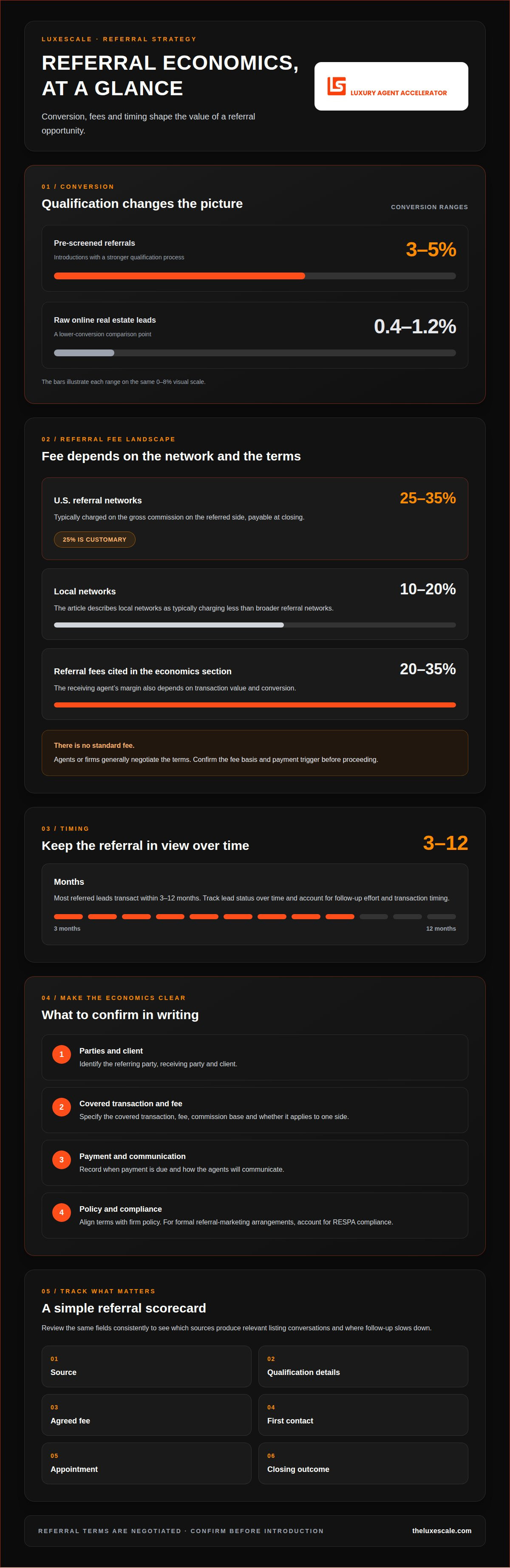
A high-end residential listing referral can expand your reach, but the fee is part of the deal. U.S. referral networks typically charge 25-35% of the gross commission on the referred side, payable at closing; 25% is customary. There’s no standard fee, so the agents or firms involved generally negotiate the terms.
That structure can help agents grow beyond their immediate market, provided they manage the relationship and follow-up carefully. The fee matters, but so do the quality of the introduction and how the opportunity is handled.
This guide explains how referral networks work, how fees affect transaction economics, and how relationship-building, timely follow-up, and reciprocity can strengthen your pipeline. It also shows how qualified listing opportunities and focused support can fit into a deliberate growth strategy.
Key Takeaways
- Clarify the referral terms before accepting an introduction so expectations around the referred client and closing are aligned.
- Assess referral opportunities by lead quality and follow-up needs, not just by the potential commission.
- Build a focused network of trusted professional and community relationships, then keep those connections active with genuine value.
- Respond promptly and personalize follow-up to maintain trust and keep a promising referral moving.
- Practice reciprocity by making thoughtful introductions and delivering a professional experience that encourages future referrals.
1. How Do Real Estate Referral Networks Work in 2026?
A real estate referral network connects an agent with a prospective client outside that agent’s existing pipeline. The referring agent or network receives part of the receiving agent’s gross commission when the transaction reaches closing. In the United States, network fees typically range from 25% to 35% of the gross commission on the referred side; 25% is customary. There’s no standard fee, so the agents or firms generally negotiate the terms.
Trusted agents, past clients, and professionals with relevant relationships are strong sources of high-end residential listing referrals. Agent-to-agent introductions can be especially useful when a homeowner plans to sell in a market the referring agent doesn’t serve. A personal introduction also gives the receiving agent context, such as the homeowner’s timing, property needs, or reason for moving.
Referral options differ by structure. Agent-to-agent relationships rely on personal trust and negotiated terms; local networks typically charge 10% to 20%, while broader referral networks often use higher fee ranges. Platforms can organize introductions and referral tracking, while direct partnerships let agents manage the relationship themselves. Compare them by lead qualification, communication process, fee basis, and what happens if a lead doesn’t close.
A written referral agreement should identify the referring and receiving parties, the client, the covered transaction, the fee, and when payment is due. It should also specify whether the fee applies to one side of the transaction and how the agents will communicate. Firm policies and agent negotiations determine referral terms. For formal referral-marketing arrangements, account for RESPA compliance.
Practices vary across U.S. states and local markets because firms set policies and agents negotiate referral terms. Local networks may use lower fees than broader networks, while a luxury market’s property values and client expectations can shape how agents assess an opportunity. Confirming the applicable firm policy and agreeing to the terms before making an introduction helps prevent misunderstandings.
Data science can bring more discipline to referral decisions without replacing professional judgment. Organize records by source, client location, property profile, response time, and whether the referral reached closing. Reviewing these details can show which relationships produce relevant introductions and where follow-up slows down. For example, if introductions from a particular market consistently match your service area, that source may deserve closer attention.
Strong referral partnerships extend an agent’s reach, give clients a local point of contact, and create opportunities for reciprocal business. For high end residential listing referrals, follow a practical sequence: identify a suitable partner, agree on written terms, make an introduction with context, and track the outcome through closing. Each step protects the relationship and makes the process measurable.
2. Agent conversion rates and referral-fee economics
Referral economics depend on two variables: how many introductions become clients and what share of commission the referral fee consumes. Pre-screened referrals typically convert at 3-5%, while raw online real estate leads convert at 0.4-1.2%. A stronger qualification process can change the expected return, but agents should compare lead quality and fee terms together.
Volume changes the calculation. Those figures are gross commission before referral fees and other deductions. Most referred leads transact within 3-12 months, so tracking the lead’s status over time matters. A projected return should account for follow-up effort, transaction timing, and the fee that applies at closing.
Compare referral networks by fit, not brand recognition alone. For seller and listing agent referrals, assess whether introductions match your property type, geography, price segment, and capacity. Agent-to-agent referrals may include useful client context, while a platform may organize the handoff and tracking. If comparing Agent Pronto, review the same criteria: disclosed fee, calculation basis, payment trigger, lead qualification, and clarity of terms before accepting a referral.
Fee transparency means understanding the amount or percentage, the commission base, and the event that triggers payment before the transaction proceeds. Put those terms in the written agreement and align them with brokerage policy. Referral fees typically range from 20% to 35%, but the receiving agent’s margin also depends on transaction value and conversion. A willing agent should evaluate the full economics, not just the headline percentage.
Luxury referrals carry additional exposure because a weak introduction can consume substantial time before a listing is won. Watch for requests to pay an unexplained upfront fee, vague claims about a seller’s readiness, pressure to share sensitive client details, or terms that differ from the written agreement. Confirm the introduction and fee arrangement directly with the referring agent before acting.
Use a simple scorecard: source, qualification details, agreed fee, first contact, appointment, and closing outcome. Review those fields consistently to identify which referral network produces relevant listing conversations. For agents building a pipeline around qualified seller opportunities, structured listing appointment opportunities can be one option to consider.
3. Building business through relationships and personal databases
Repeat clients and personal introductions can create a durable source of real estate business. Approximately 82% of real estate transactions come from repeat and referral business. That figure makes relationship maintenance a business-development priority, not an occasional courtesy. After closing, agents can ask clients for a review while the experience is fresh, then make a genuine, straightforward referral request. A specific request works best: invite the client to introduce someone who is considering selling or buying, rather than asking broadly for “any leads.”
Start with at least five potential referral partners in your local community. Consider professionals whose work brings them into contact with homeowners or buyers, such as attorneys, financial professionals, and home-service providers. The opportunity is not simply exchanging names. A partner should understand the client profile you serve, and you should know when that partner can help your clients. A clear introduction gives both professionals a reason to stay connected.
Build a personal database around useful relationship details, not just names and phone numbers. Record how you know each person, their preferred contact method, the last meaningful interaction, and whether they are a past client, buyer, seller, or professional partner. Add context after a conversation, such as a planned move or a referral they offered. These notes help you make relevant follow-ups instead of sending the same generic message to every contact.
Local partnerships can develop through community involvement, shared client education, and dependable introductions. There are 25 types of businesses identified as potential referral partners for real estate agents, giving you options beyond other agents. For example, a relocation professional may encounter a household preparing to sell, while a local business owner may know buyers entering the area. Keep the relationship useful by sharing relevant information and referring clients when the match is appropriate.
Set clear expectations before either partner sends a client. Agree on the type of introduction, how the receiving agent will follow up, and how both parties will share updates. If a referral fee applies, put the terms in writing and align them with firm policies. Clear expectations reduce confusion about client communication, transaction progress, and each party’s role.
For high-end residential referrals, segment your database by geography, property needs, and relationship source. This makes it easier to connect an affluent buyer with a relevant agent or recognize when a homeowner may need listing guidance. Review the database after each closing and update your notes. A disciplined process turns conversations into a more reliable network, while thoughtful service gives clients and partners a reason to refer again.
4. Referral lead nurturing and follow-up
Respond to a referred lead while the introduction is still fresh. Agents are advised to contact referrals in under five minutes, then acknowledge who connected them and why. A brief, personal message establishes context before asking for a conversation. If a buyer or seller can’t speak, agree on a suitable time and record that preference for the next follow-up.
Speed matters, but relevance matters too. Harvard Business Review reported that companies contacting a web-generated lead within one hour were nearly seven times more likely to qualify it than companies waiting at least an hour longer. Although that study concerned web leads, it reinforces the value of prompt contact. For a referral, start with the shared connection and the client’s stated needs.
Qualify luxury listing referrals by asking about the homeowner’s reason for selling, expected timing, property priorities, and preferred communication style. Ask one focused question at a time. For example, “What would need to happen before a move makes sense?” invites useful context without turning the first exchange into an interrogation. Before ending the conversation, confirm the next step, such as a call or property discussion.
To turn an introduction into a productive client relationship, keep the referring agent informed at appropriate milestones. Confirm receipt, say whether you made contact, and share the agreed next step without disclosing private details unnecessarily. This shows follow-through and builds trust between agents. If the prospect isn’t ready, ask permission to reconnect later and note their preferred timing.
Keep a consistent record for every referral. Track the source, date received, first response, contact outcome, needs discussed, next action, and eventual transaction status. A record makes missed follow-ups visible and helps distinguish a serious seller from an early-stage inquiry. It also helps agents assess whether their time and any commission-sharing arrangement fit the opportunity.
Tailor each follow-up to the conversation instead of sending identical messages to your entire network. A seller preparing a property may need a different next step from a buyer exploring neighborhoods. Share information that addresses the client’s stated priorities, then ask whether it was useful. This feedback can guide your next exchange and keep communication relevant.
Build a repeatable follow-up sequence without making every lead feel automated. After the first contact, use the client’s preferred channel and agreed timing. If there’s no response, send a concise reminder referring to the introduction, then pause rather than crowding the prospect. Record each attempt so another agent doesn’t duplicate it. For high end residential listing referrals, respectful persistence and clear handoffs help protect client confidence and partner relationships.
5. Reciprocity and giving referrals first
Reciprocity works when each introduction meets a real client need, not when agents keep score. A listing agent might connect a relocating seller with a trusted local professional, who could later introduce a homeowner preparing to sell. That referral may come months later, or not at all. Make a useful connection because it serves the client, then let trust grow through consistent follow-through.
Start with people already in your professional network. Identify which connections regularly serve homeowners, buyers, or sellers, then learn what clients they can help. For example, an agent might introduce a seller to a moving specialist after the client mentions an upcoming relocation. A relevant introduction shows you’re attentive to the client’s circumstances and gives the partner a clear reason to remember the relationship.
Make each referral easy to act on. Ask the client’s permission before sharing contact details, explain why the connection may help, and introduce both parties in a direct message. Include a concise note about the need, such as a seller seeking neighborhood expertise or a buyer moving into the area. This context helps the receiving professional respond appropriately and prevents either person from wondering why the introduction was made.
Reciprocity also depends on how you handle the referrals you receive. Acknowledge the referring partner, contact the prospect promptly, and share a brief status update when appropriate. If the client isn’t ready to move forward, say so respectfully without revealing private information. If the introduction leads to a transaction, thank the partner and explain what made the handoff useful. That feedback strengthens future connections without turning the relationship into a tally of favors.
Keep a simple record of introductions and outcomes. Note the source, client need, date, response, and whether the connection led to a conversation or transaction. Review the record during business planning to see which relationships produce relevant opportunities and which need more communication. For example, an agent who receives buyer introductions from a relocation contact can share useful market insights in return.
For sellers, reciprocity means prioritizing a suitable match over a quick exchange. Refer a homeowner to someone with relevant local knowledge, communicate the client’s stated priorities, and respect the receiving agent’s role. That standard protects your reputation across the community and gives partners confidence in future introductions. Build your seller referral pipeline with opportunities aligned to your listing goals.
LuxeScale: Luxury Listing Appointments
LuxeScale helps agents build a high-end pipeline with Luxury Listing Appointments and Affluent Seller Leads. These qualified, appointment-ready opportunities are designed for agents focused on affluent homeowners and listing conversations. Affluent Buyer Leads are also available. The service includes award-winning training, coaching, systems, and support to help agents strengthen their conversion process.
The model is performance-based: referrals carry a 20% fee at closing, with no monthly or recurring out-of-pocket charges. This approach may fit agents who want referral opportunities without ongoing monthly costs, while recognizing that the fee applies when a transaction closes.
Ready to explore whether qualified luxury appointments fit your business goals? Check your territory with LuxeScale to take the next step.
Turn Referral Relationships Into a Stronger Pipeline
Make referral growth part of your regular business routine. Choose one relationship to strengthen, one part of your follow-up process to improve, and one outcome to track. Consistent execution helps you see which connections fit your business and where a more focused approach could build momentum.
For high-end residential listing referrals, results depend on matching each opportunity to your expertise and giving every relationship thoughtful attention. LuxeScale provides Luxury Listing Appointments, Affluent Buyer Leads, and award-winning training, coaching, systems, and support. These resources help agents pursue qualified opportunities while developing the skills and processes to manage them effectively.
Consider the kind of opportunity that best fits your goals, then take a clear next step. Contact LuxeScale about referrals to discuss how referral opportunities may fit your business. You can build a more intentional path forward, one strong client relationship at a time.
Frequently Asked Questions
How Do Real Estate Referral Networks Work in 2026?
A referral network connects a prospective client with a suitable agent through an introduction, then tracks the handoff through the transaction. The receiving agent and referring party establish the terms, including the referral fee and payment trigger. For example, an agent helping a seller relocate can introduce the homeowner to an agent in the new market. Clear expectations help the agents coordinate without confusing the client.
Do referral networks require exclusivity?
Exclusivity isn’t universal across referral networks. It depends on the network’s terms or the agents’ agreement for a particular lead. Before accepting an introduction, establish whether the client is being referred only to you or to several agents, and whether time or territory limits apply. A written understanding helps you plan follow-up and avoid conflicting outreach to the same seller.
How fast should you respond to a referral lead?
Respond promptly while the referring person’s context is still fresh. A quick acknowledgment can identify who made the connection and suggest a convenient next step. If the prospect doesn’t answer, leave a concise message referring to the introduction, then follow the prospect’s preferred contact method and timing. Record each attempt to prevent duplicate outreach.
What is the difference between a referral network and a lead generation company?
A referral network connects an agent with a prospect through an introduction, often from another agent or a network. A lead-generation company typically provides contact information gathered through its own process, leaving the agent to establish the relationship. The distinction matters: an introduction may include context about the prospect’s needs, while a contact record may require the agent to learn that context during follow-up.
Who should Realtors® partner with?
Realtors® can build relationships with professionals who regularly serve homeowners, sellers, or incoming buyers. Depending on their clients, useful partners may include relocation specialists, attorneys, financial professionals, and home-service businesses. Choose partners whose clients align with your expertise and whose work you can confidently recommend. For example, a relocation contact can introduce a household preparing to sell, while you help clients moving into the area.
How do luxury real estate agents build a referral network?
Begin with past clients, professional contacts, and businesses that serve affluent homeowners. Explain the property types and clients you work with, then learn which introductions would help your partners. After a successful transaction, ask satisfied clients for a review and a straightforward introduction to someone considering a move. Keep relationships active with useful updates and relevant introductions, not by treating referrals as owed favors.
What referral fees are customary for luxury home listings in the U.S.?
A customary agent-to-agent referral fee is 25% of the receiving agent’s gross commission; broader referral networks typically range from 25% to 35%. These are market conventions, not a fixed national rate. The final arrangement depends on the parties’ negotiation and applicable firm policies. Clarify the commission base, covered side of the transaction, and closing trigger in writing before accepting the referral.
Which luxury real estate referral networks and platforms are available?
Options include direct agent-to-agent partnerships, local referral groups, broader referral networks, and platforms that coordinate introductions. Agent Pronto is one example discussed in comparisons; evaluate any platform’s lead process and fee terms before joining. LuxeScale is another option, offering Luxury Listing Appointments and Affluent Buyer Leads. Its program provides a minimum of 6 and maximum of 8 qualified luxury client appointments per month, with limited territories.

Article by
Mark Coppens
Mark Coppens is the Founder and Chairman of LuxeScale and Co-Team Lead of Living Vogue | eXp Luxury. He is an active elite-level luxury agent and the author of the upcoming book, POWER POSITIONING: From Missiles to Mansions – Why People Really Buy, and is a nationally recognized speaker on luxury real estate, consumer psychology, marketing, and business growth.
A U.S. Army veteran with an MBA in Marketing, Mark has generated more than $1 billion in career sales and now leads one of the nation's fastest-growing luxury referral platforms, referring more than $2 billion in luxury real estate opportunities each month to partner agents across the United States. He specializes in helping real estate agents generate more listings, break into the luxury market, and build scalable businesses through qualified referrals, award-winning training, coaching, and proven systems. His practical, psychology-driven approach has helped agents across the country increase their income while attracting more affluent clients and building lasting, referral-driven businesses.