
How to Advance Your Real Estate Agent Career to Luxury
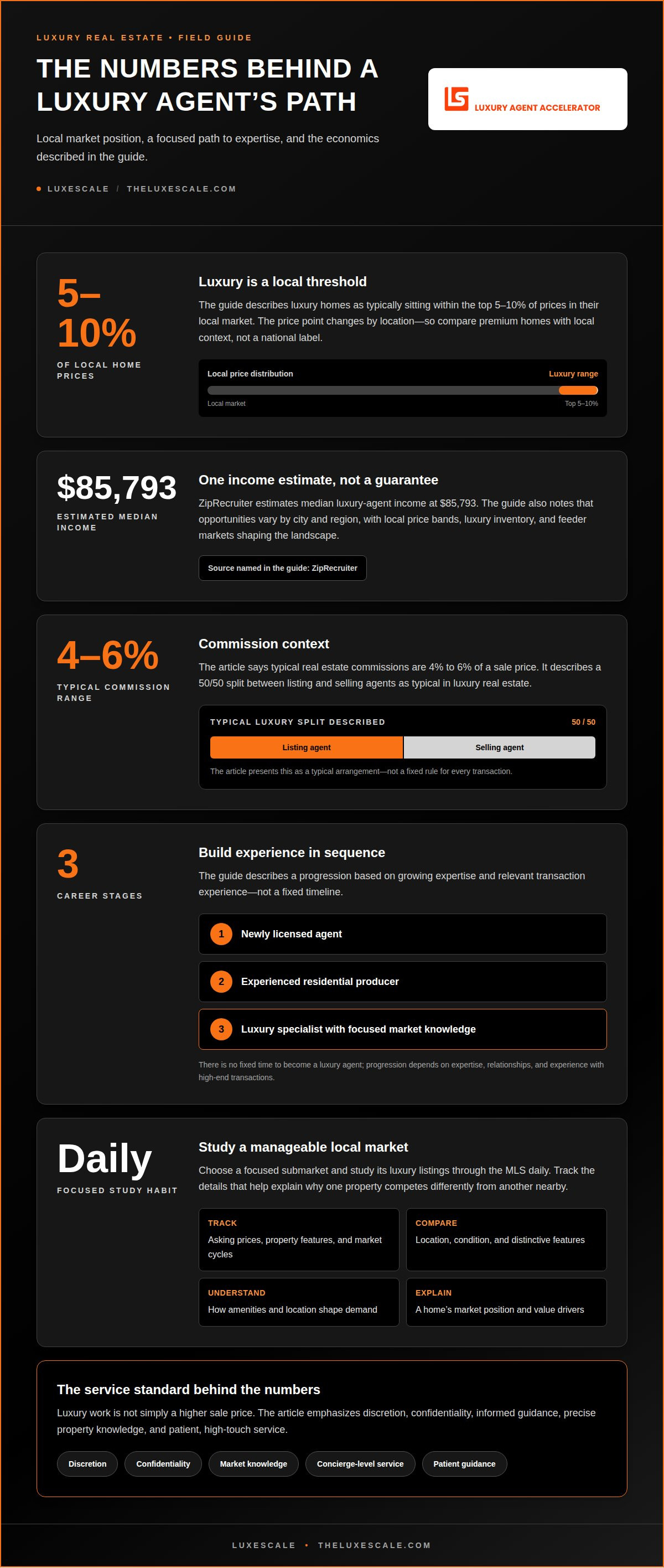
A luxury career is built on expertise, trust, and service, not simply a higher sale price. A real estate agent’s career progression to luxury starts with mastering a focused local market, then building the credibility and relationships to serve high-net-worth buyers and sellers. Luxury homes typically sit within the top 5-10% of prices in their local market, so the threshold depends on where you work.
If you’re drawn to the properties and potential of this market, look beyond the listing price. Luxury clients expect discretion, confident guidance, and a strong grasp of a home’s features and market position. Meeting those expectations takes deliberate preparation.
This guide explains what luxury agents do and how to make the transition in practical steps. You’ll learn how to sharpen your market expertise, build a credible personal brand, develop valuable professional connections, find your first high-net-worth client, and prepare for the longer timelines and higher service demands luxury transactions can bring.
Key Takeaways
- Build deep expertise in a focused local market so you can explain a property’s value and serve affluent clients with confidence.
- Create a consistent professional brand across your online presence and marketing materials to make your positioning clear.
- Use mentorship, co-listing opportunities, and strategic relationships to develop experience and strengthen your professional network.
- Build genuine visibility in the communities you want to serve, creating natural opportunities to connect with potential clients.
- Prepare for luxury transactions with discretion, property knowledge, and patient, high-touch service throughout a longer sales process.
What Is a Luxury Real Estate Agent?
A luxury agent advises buyers and sellers on high-value properties, market positioning, and discreet service. Build that expertise by studying a defined market, its listings, and the considerations behind each transaction.
-
Define Luxury by Local Market
Set your luxury threshold using local prices, not a national label. Properties in the top 5-10% of a given market can be considered luxury, but the price point changes by location. Compare premium homes with the local average and assess features such as architectural distinction, materials, wine cellars, home theaters, and whole-home automation. Avoid treating every expensive property as luxury without understanding its local context.
-
Build Hyper-Local Market Expertise
Choose a focused submarket and study its luxury listings daily through the MLS. Track asking prices, property features, market cycles, and which homes attract affluent buyers. Note how local amenities and location shape demand, then refine your knowledge across a manageable area rather than claiming expertise across an entire region. Your analysis should help explain why one property competes differently from another nearby.
-
Understand Affluent Client Expectations
Prepare to discuss more than square footage and finishes. Learn how building materials, their costs, and property details affect a home’s presentation and value. Affluent clients may expect discretion, confidentiality, concierge-level service, and informed guidance on investment or lifestyle properties. Avoid overpromising. Answer questions with precise market knowledge and protect private transaction details throughout the client relationship.
- Research inventory and pricing before advising clients. Compare a property’s location, condition, and distinctive features with relevant local listings; broad averages can obscure meaningful differences. Career stages typically progress from a newly licensed agent to an experienced residential producer, then to a luxury specialist with focused market knowledge and relevant transaction experience. ZipRecruiter estimates median luxury-agent income at $85,793. Typical real estate commissions are 4% to 6% of a sale price, with a 50/50 split between listing and selling agents described as typical in luxury real estate.
- Develop the skills and record your target market rewards. There’s no fixed time to become a luxury agent; progression depends on building expertise, relationships, and experience with high-end transactions. Opportunities vary by city and region because local price bands, luxury inventory, and feeder markets differ. Strengthen your luxury listings marketing with high-end photography, drone footage, professionally produced video tours, virtual staging, and 3D walkthroughs. Use visual storytelling to show how a property’s design, setting, and amenities fit its market.
Personal branding and online presence
Your personal brand should make your expertise easy to recognize and your value clear. Build a consistent digital presence that supports the luxury market you want to serve.
- Define your professional position. Choose the audience and property types you want your brand to represent. A listing agent focused on historic estates, waterfront properties, or contemporary architecture can make that specialization clear in a profile and client communications. Describe your market knowledge specifically rather than making broad claims of excellence. A focused position helps prospective clients understand why your experience fits their needs.
-
Build a Polished Personal Brand
Align your headshot, biography, writing style, and contact details across social media, your website, business cards, yard signs, and listing brochures. Review these materials together: inconsistent names, imagery, or claims can weaken recognition. Keep the design polished and readable, and show your market expertise through concrete examples. Don’t imply a luxury transaction record you haven’t built.
- Keep every channel consistent. Create simple brand standards for colors, typography, photography, and tone, then apply them across the platforms where potential clients encounter you. Consistency doesn’t mean copying identical content everywhere. Adapt the format while preserving the same professional identity. A social post and a printed brochure can use different layouts but should still feel connected.
-
Market Luxury Properties and Your Brand
Plan each listing’s marketing around the property’s distinctive value, then make your role in that work clear. Use accurate descriptions, carefully chosen images, and property details that help buyers understand the home. Social media is a listing-marketing strategy recommended for 2025, but avoid relying on polished visuals alone. Your commentary should add useful local context and demonstrate sound judgment.
- Study strong local positioning. Review the personal brands of the top 25 luxury agents in your local market. Notice how they present expertise, explain property features, and maintain a recognizable voice. Use those observations to identify gaps in your own presence, not to imitate another agent’s identity. Invest your time in improvements that clarify your specialization and make your communications more useful.
- Connect brand, marketing, and relationships. Essential skills include presenting a property accurately, negotiating with composure, and building professional connections through credible, consistent communication. A brand earns attention; listening and preparation help sustain trust during negotiations and introductions. If you’re ready to build a stronger pipeline alongside that work, explore luxury listing opportunities.
Professional networks and luxury brokerages
Relationships create access to luxury buyers, referrals, and practical market insight. For a real estate agent, career progression to luxury depends on building connections that strengthen expertise and create opportunities to learn.
-
Network With High-Net-Worth Individuals
Show up consistently at galas, charity events, art shows, and private clubs connected to the communities you want to serve. Focus conversations on shared interests and useful local knowledge, not an immediate sales pitch. A conversation about a community project, for example, can reveal what someone values without turning an introduction into a sales approach. Respect privacy, listen carefully, and don’t treat every introduction as a lead.
- Choose a luxury-focused team or brokerage. Compare how each environment supports your target market, learning, and client service. A luxury-focused team can provide exposure to high-end listings and established working practices. A brokerage with substantial luxury transactions may also connect you with experienced agents who can mentor you. Prioritize opportunities to contribute and learn rather than choosing a firm for its name alone. A real estate agent’s career progression to luxury becomes more credible when your working environment supports relevant experience.
-
Build Connections in the Luxury Community
Develop professional relationships with private lenders, wealth managers, and developers whose work overlaps with real estate. Learn what each partner contributes, then make introductions only when they serve a client’s stated needs. Attend relevant community events and follow up by referring to a specific point from your conversation. This builds familiarity and trust without making every interaction feel transactional.
- Learn alongside an established luxury agent. Ask about shadowing, assisting at an open house, or attending a luxury-focused conference session. Observe how the agent prepares for a showing, handles property questions, and communicates with clients. Note the preparation behind each interaction, then apply those lessons to your own client work. Never present another agent’s transactions as your personal sales record.
- Explore co-listing as a practical learning route. Partnering with an experienced agent on a luxury home can help you understand listing preparation, buyer expectations, and transaction coordination. Agree on responsibilities before the work begins. Contribute meaningfully to the listing and client experience, then reflect on the skills you developed. Shared work can build relevant experience while giving clients the benefit of an experienced team.
- Stay useful to your network. Share relevant local trends, property insights, and introductions that match a contact’s interests. A developer may value a thoughtful update about neighborhood activity, while luxury buyers may appreciate clear information about a property’s distinctive features. Keep communication specific and respectful. Avoid generic updates that offer no practical value.
- Build a referral-ready reputation. Follow through on commitments, communicate clearly, and protect sensitive client details. These habits matter to luxury buyers and professional partners alike. After a useful interaction, stay connected with a relevant update or thoughtful introduction. Referrals grow from demonstrated reliability, not from asking every new contact for business.
How do I find my first HNW client?
Earn your first high-net-worth client through visible expertise, thoughtful networking, and dependable service. Each interaction should demonstrate how you’ll guide buyers and sellers through a considered property decision.
-
Network With Prospective Luxury Clients
Become a familiar, useful presence in the community you want to serve. Participate in local activities at parks, churches, and gyms, and learn which neighborhood topics matter to residents. Ask thoughtful questions before discussing real estate. A conversation about a community improvement, for example, can reveal what someone values about their area without turning an introduction into a sales pitch.
- Make your expertise easy to see. Share useful local observations on social media, such as how a property’s setting affects its appeal or what distinguishes nearby homes. Keep each post accurate, specific, and relevant to buyers and sellers. Don’t imply that you’ve handled luxury transactions you haven’t completed. Clear, informed communication gives prospective clients a reason to remember you.
-
Build Relationships Through Client Service
Start each relationship by listening for the client’s priorities, preferred communication style, and decision concerns. Then tailor your updates: a seller may need clear feedback on listing interest, while a buyer may value concise property comparisons. Keep promises, communicate changes promptly, and handle private details with discretion. These actions show how your expertise translates into reliable service.
- Prepare for the first consultation. Review the client’s stated goals and relevant property information before you meet. Organize a focused discussion around location, condition, features, and the client’s intended use. If a buyer is considering a home with distinctive finishes, be ready to explain what you know and identify questions that need further research. Preparation creates confidence without overstating your knowledge.
- Deliver a considered client experience. Keep the process organized by confirming the next step after each conversation and sharing information in a format the client can use. For a seller, that could mean a concise recap of the listing discussion. For a buyer, it could mean a clear summary of property trade-offs. Avoid generic follow-ups that overlook the client’s priorities.
- Turn every interaction into stronger professional practice. After a showing or consultation, note which questions arose and where your explanation could be sharper. Use those observations to deepen your property knowledge and improve future client conversations. Keep in touch with past contacts through relevant updates, not repeated requests for business. A reputation for useful guidance can encourage introductions when someone’s real estate needs change.
Differences and demands in luxury real estate
Luxury specialization brings longer sales cycles, demanding client expectations, and complex property decisions. In 2025, luxury properties took an average of 319 days to sell and sold an average of 13% below their initial listing price.
- Plan for longer timelines. Use the 319-day average as a reminder to manage your pipeline carefully, not as a promise about an individual listing. A luxury property may need sustained marketing and continued seller communication. Set clear expectations about updates, showing feedback, and pricing discussions, so a longer period on the market doesn’t leave clients unsure about your work.
- Prepare for pricing conversations. Luxury properties sold an average of 13% below their initial listing price in 2025. Explain how buyer response, comparable properties, and changing market conditions inform pricing decisions. If a seller’s expectations exceed the evidence, present the reasoning clearly and discuss how the listing strategy may need to adapt. Avoid treating an ambitious asking price as proof of likely value.
- Learn the property beyond its presentation. Study materials, finishes, construction details, and amenities before a showing or listing appointment. A client may ask how a particular stone, custom finish, or home system affects upkeep or appeal. Explain what you know accurately, and don’t guess when a technical question calls for specialist input. This preparation supports sound decisions about lifestyle and investment properties.
- Coordinate complex decisions. A luxury transaction can involve attorneys, wealth advisors, and international stakeholders, each with different priorities and timelines. Keep communication organized by recording decisions, clarifying next steps, and following through with the relevant parties. A buyer’s advisor, for example, may focus on investment considerations while the buyer weighs lifestyle needs. Your role is to keep the real estate process clear.
- Protect discretion throughout the process. Luxury clients may expect confidentiality around their identity, property details, and transaction plans. Share information only for a clear professional purpose, and discuss marketing exposure with the client before promoting a home on social media. A polished public listing should respect the seller’s privacy preferences while meeting prospective buyers’ practical needs.
- Assess whether the work fits your goals. A luxury career demands sustained involvement, genuine interest, and persistence beyond the potential commission. Longer timelines can affect workload planning, while detailed service expectations require preparation between appointments. Build your expertise step by step, and pursue opportunities that develop the judgment these transactions require.
If you’re prepared to take on this work, explore luxury listing appointments as a practical next step.
LuxeScale: Luxury Listing Appointments
LuxeScale helps agents enter the luxury market with Luxury Listing Appointments and Affluent Seller Leads. These opportunities can support agents who have developed local expertise and are ready to work with high-net-worth sellers. Affluent Buyer Leads can also connect agents with buyers seeking guidance on luxury properties.
Each opportunity is accompanied by award-winning training, coaching, systems, and support designed to help agents strengthen their approach to referred prospects. This can be a practical next step when you’re ready to build luxury-market experience while continuing to deliver informed, attentive service.
Contact LuxeScale to discuss how these opportunities could fit your career goals.
Make Your Next Move Deliberate
Your next step is to turn ambition into a focused business decision. Choose the market and client profile you want to serve, then identify the experience that would make your value more credible. A real estate agent’s progression to a luxury career is strongest when each opportunity builds relevant judgment, not just a more elevated image.
Set one practical priority for the coming weeks. You might deepen your knowledge of a target area, strengthen a professional relationship, or pursue a luxury transaction that expands your experience. Measure progress by the quality of your preparation and the trust you earn, not by appearances alone. Consistent action gives your positioning substance.
If you’re ready to discuss a next step for your business, contact LuxeScale. Keep building with purpose, and let your expertise earn its place in the luxury market.
Frequently Asked Questions
What licenses and qualifications are required to sell luxury homes in the U.S.?
There’s no separate nationwide license for selling luxury homes; agents need the real estate license required in their state. Requirements generally include pre-licensing coursework and passing a state exam, and details vary by state. Specialized education can strengthen your expertise. For the Certified Luxury Home Marketing Specialist designation, applicants need three closed residential transactions in the top 10% of their local market within 24 months of applying.
How do new agents build experience and a client base before entering the luxury market?
Build relevant experience by working with an established luxury agent before seeking independent high-end assignments. Ask to shadow a transaction, assist with an open house, or contribute to a co-listing, and agree on your responsibilities upfront. These opportunities expose you to client communication and transaction demands while developing a credible record. Maintain relationships with people you meet through professional and community activities, and follow up with useful, relevant information.
What sales volume or price range qualifies as luxury real estate in different U.S. markets?
Luxury is defined locally, not by one nationwide sale price or transaction volume. A useful benchmark is properties priced significantly above the local average, often within the top 5-10% of that market. The threshold can differ sharply between U.S. markets because typical prices and available inventory vary. Compare a home with relevant local properties and market conditions rather than applying a fixed dollar cutoff across cities.
How can agents find mentors, join luxury brokerages, or qualify for luxury networks?
Start by approaching agents and brokerages with a demonstrated luxury transaction history. Explain what you want to learn and offer specific support, such as assisting at an open house or contributing to a co-listing. To qualify for the Certified Luxury Home Marketing Specialist designation, applicants need three qualifying closed transactions within 24 months of applying. Professional relationships with private lenders, wealth managers, and developers can also broaden your industry network.
How do luxury real estate agents differ from traditional residential agents?
Luxury agents handle property decisions that can involve distinctive materials, complex ownership priorities, and extended sale timelines. Their work calls for detailed property knowledge, discretion, and coordination with professionals such as attorneys and wealth advisors. A traditional residential transaction may involve fewer stakeholders, while a luxury sale can require careful alignment of different priorities. Strong service means explaining relevant trade-offs clearly and keeping communication organized throughout the process.

Article by
Mark Coppens
Mark Coppens is the Founder and Chairman of LuxeScale and Co-Team Lead of Living Vogue | eXp Luxury. He is an active elite-level luxury agent and the author of the upcoming book, POWER POSITIONING: From Missiles to Mansions – Why People Really Buy, and is a nationally recognized speaker on luxury real estate, consumer psychology, marketing, and business growth.
A U.S. Army veteran with an MBA in Marketing, Mark has generated more than $1 billion in career sales and now leads one of the nation's fastest-growing luxury referral platforms, referring more than $2 billion in luxury real estate opportunities each month to partner agents across the United States. He specializes in helping real estate agents generate more listings, break into the luxury market, and build scalable businesses through qualified referrals, award-winning training, coaching, and proven systems. His practical, psychology-driven approach has helped agents across the country increase their income while attracting more affluent clients and building lasting, referral-driven businesses.