
How to Build Credibility With Affluent Clients Through Proof
Affluent clients don’t take polished claims as proof. Understanding how to build credibility with affluent clients means demonstrating expertise, trustworthiness, reliability, and transparency in the way you work, not just in how you present yourself.
Credentials and a confident image can open the conversation, but clients also notice whether you listen closely, explain decisions clearly, and follow through. Credibility grows when your conduct matches your promises, especially in high-stakes real estate relationships.
This guide shows how to make that proof visible. You’ll learn to present relevant credentials and client examples, lead with empathy, communicate transparently, and build consistency into every interaction. The result is a practical way to earn confidence without relying on broad promises: demonstrate what you know, show how you work, and let credible evidence support your claims.
Key Takeaways
- Make expertise tangible with relevant credentials, genuine client feedback, and case studies that show the work behind the result.
- Build trust through attentive listening and clear communication, especially when discussing expectations, decisions, and challenges.
- Strengthen credibility by setting realistic expectations and following through consistently across every client interaction.
- Use specific client examples to demonstrate how your experience applies to the needs of affluent buyers and sellers.
- Connect trust, expertise, reliability, and transparency in your client experience so your actions reinforce the proof you present.
1. Showcasing credentials, testimonials, and case studies
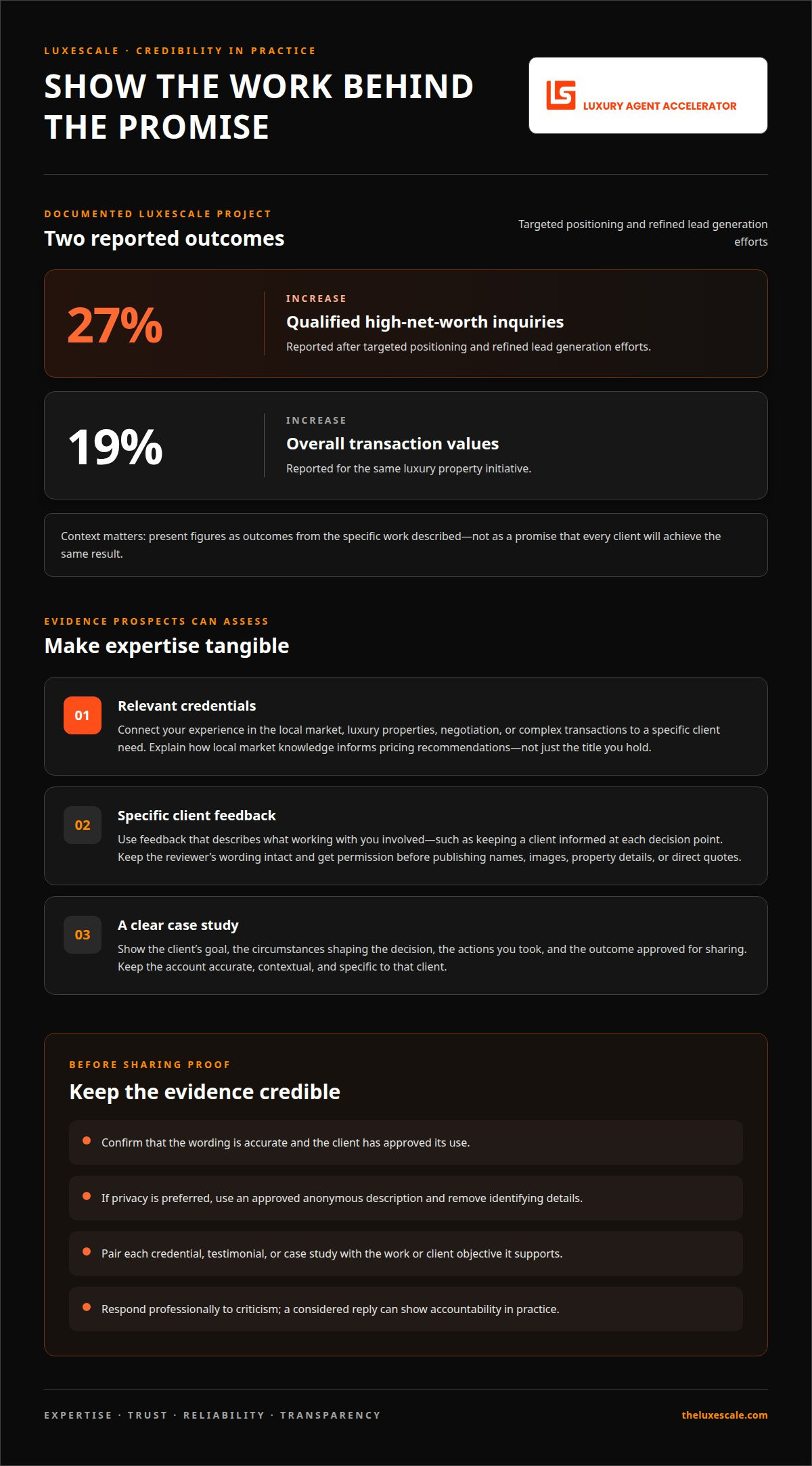
Affluent clients look for credentials relevant to the advisor’s work, supported by clear evidence of ability. In real estate, explain your experience with the local market, luxury properties, negotiation, and complex transactions. Connect each credential or area of expertise to a client need. For example, describe how local market knowledge informs pricing recommendations, rather than relying on a title alone.
Recommendations are persuasive when they describe a specific experience. After a successful transaction, ask whether the client would share feedback about your communication, judgment, or handling of a challenge. Keep the request direct and respectful. For example, “Would you be comfortable describing how the pricing strategy worked for you?” gives the client a useful starting point without scripting their response.
Use testimonials that show what working with you involved. “The agent kept me informed at each decision point” gives prospects more context than “Great service.” Ask permission before publishing a client’s name, image, property details, or direct quote. If the client prefers privacy, use an approved anonymous description and remove details that could identify them.
Customer reviews can reinforce testimonials wherever prospects assess your reputation. Choose feedback that illustrates different strengths, such as responsiveness, market expertise, or calm problem-solving. Keep the reviewer’s wording intact, and respond professionally to criticism rather than relying only on praise. A considered reply that addresses a specific concern shows how you handle accountability in practice.
A case study turns a client example into a clear account of your process. Describe the client’s goal, the circumstances shaping the decision, the actions you took, and the outcome the client approved you to share. A seller case study, for example, might explain how you presented comparable properties, discussed pricing options, and coordinated next steps. Don’t imply that one client’s outcome is typical for every seller.
Make each proof point easy to assess. Pair a credential with the work it supports, a testimonial with the service it describes, and a case study with a specific client objective. Before publishing, confirm the wording is accurate and the client has approved its use. This disciplined approach helps affluent prospects evaluate your expertise without relying on broad claims masterfully as you learn how to build credibility with affluent clients.
Positive customer reviews can also extend beyond a profile or property page. Feature them in email campaigns, on social media, and on a business’s website, choosing comments that support the service described. In recent consumer studies, the vast majority of buyers reported feeling more positively about using a business after reading genuine positive feedback. Businesses can use client references and video testimonials to demonstrate that they deliver the value they promise. Professional credentials further help demonstrate expertise when they relate clearly to the work clients need.
A contextualized case study can make outcomes concrete without suggesting every client will achieve the exact same result. In a documented project by LuxeScale, targeted positioning and refined lead generation efforts resulted in a 27% increase in qualified high-net-worth inquiries. Following this strategy, the same luxury property initiative saw overall transaction values increase by 19%. Present such figures with enough context for readers to understand the work being described, and ensure any client-facing account is accurate and approved.
2. Empathy and transparency in stakeholder relationships
Empathy starts with understanding what a client values before recommending a course of action. In a luxury home sale, a seller may prioritize privacy, timing, or certainty over the highest possible listing price. Ask focused questions, listen without interrupting, and reflect the priority back: “You’d rather limit showings than maximize exposure.” This shows attention and gives the client room to correct your assumptions.
Affluent clients expect discretion, clear permission before you share personal or property details, and care in sensitive conversations. Explain who will receive information and why, then get approval before using identifying details in marketing or public examples. For instance, discuss a property’s features without naming its owner or address unless the client has agreed.
Tailor communication to each client’s stated preferences, decision-making style, and expectations. One client may want a concise digital update after each showing; another may prefer a scheduled call with context and recommendations. Agree on the channel and update rhythm early, then keep messages direct. In a pricing discussion, present the options, supporting rationale, and trade-offs without burying the decision in jargon.
Confidence and empathy work together. A client facing a complicated decision needs a calm explanation, not certainty unsupported by evidence. Separate what you know from what remains to be assessed. For example, explain how comparable listings inform a pricing range, then clarify how property condition and buyer response may affect the strategy. This shows sound judgment while respecting the client’s need to make an informed choice.
Transparency also means setting clear expectations. Explain the next steps, decision points, and responsibilities in plain language. If a showing schedule changes, promptly share the reason and revised plan. If a client raises a concern, acknowledge it specifically, explain the available response, and follow through. These actions strengthen relationships because clients can see how you handle decisions, not just hear assurances.
Your professional website and public communications should reinforce the same standards. Use clear service descriptions, a straightforward contact path, and useful market information. Keep the expertise and contact details on your digital profiles consistent. In public commentary, offer practical perspectives rather than inflated claims. For example, explain the factors behind a neighborhood trend instead of calling every property a standout opportunity.
When your next step is to build relationships with qualified affluent buyers or sellers, explore affluent client opportunities that support those conversations.
3. Keeping promises and practicing consistency
Consistency turns a polished first impression into a trustworthy working relationship. Affluent clients compare what an advisor promises with what happens next. If you commit to sending comparable sales before a pricing meeting, deliver them when agreed. If new information changes the analysis, explain what changed and why. A partner earns confidence through visible follow-through, not a confident presentation alone.
Map the client journey across its main touchpoints: first inquiry, consultation, property showing, offer, and closing. Set a clear standard for each stage. For example, acknowledge an inquiry within the timeframe you stated, arrive prepared for the showing, and summarize agreed actions after the meeting. Consistent practices reduce uncertainty by helping clients anticipate how information and decisions will be handled.
Keep your language and conduct aligned across channels. A professional website that promises discreet, responsive service should reflect that approach in emails, phone calls, and meetings. If a social post presents you as a careful market analyst, support that positioning with specific, measured explanations in client conversations. This alignment makes your reputation easier to assess and keeps the experience cohesive.
Values matter most when a choice becomes inconvenient. If a property has a drawback, explain it before the client discovers it during a showing. If a preferred timeline conflicts with a practical constraint, outline the options instead of promising an outcome you can’t control. Honesty and discretion under pressure show clients that your standards aren’t reserved for easy moments.
Use simple systems to make follow-through repeatable. After each conversation, record the client’s priorities, decisions, open questions, and agreed next steps. Review the notes before the next interaction and close outstanding items. For example, if a buyer asks about access, confirm the arrangements before scheduling another visit. A reliable process keeps important details from getting lost between busy days.
Consistency also means responding well when something goes wrong. Tell the client what happened, what you’re doing next, and when they’ll receive an update. Then meet that revised commitment. Avoid defensive explanations that shift responsibility. A clear correction can preserve confidence; silence or changing explanations can damage it. Clients need a dependable response, not a performance of perfection.
Credibility grows through repeated, honest actions across interactions with clients and vendors. Ask for feedback after meaningful milestones, such as a pricing review or completed transaction. Listen for recurring gaps between your stated standards and the client’s experience. Then adjust your approach, explain the change, and apply it consistently. That cycle turns values into a reputation clients can experience firsthand.
4. Using real client examples to demonstrate expertise
A focused specialty helps affluent clients understand where your expertise applies. Choose a defined area, such as luxury property sales in a particular neighborhood, and demonstrate your knowledge with relevant examples. A case study might explain how you assessed comparable listings, identified buyer priorities, and advised a seller on positioning. Focus on your decisions and reasoning, not on claiming every outcome is repeatable.
Build your specialty around work you can explain precisely. If you focus on historic homes, discuss how property condition, buyer interests, and local context shape a transaction. If relocation is your strength, show how you coordinate a client’s priorities across a move. A clear focus establishes relevance. Broad claims such as “I serve every kind of client” offer little evidence of depth.
Use client examples to make your process visible. Structure each story around the client’s goal, the key constraint, your approach, and the decision that followed. An anonymized seller example could show how you weighed privacy against exposure when planning showings. Explain the options discussed and why the client chose one. Don’t add an outcome or detail the client hasn’t approved.
Present examples where your audience can assess them. A concise case study on your professional website gives prospects more context than a short social media post. Use social media to share a focused insight, such as how a neighborhood feature may affect buyer interest. Keep each example consistent with your actual role, and get permission before identifying a client, property, or transaction.
Confidence comes from explaining your judgment clearly. In a consultation, describe the evidence behind a recommendation, acknowledge relevant trade-offs, and invite the client to discuss priorities. For example, explain how a pricing strategy reflects comparable properties and the seller’s preferred timeline. Avoid superlatives or dismissing another perspective. A measured explanation demonstrates expertise while leaving the client in control of the decision.
Common mistakes include making broad claims without examples, exaggerating results, sharing private details, and acting as though every client has identical needs. Name-dropping without explaining relevant experience can also weaken trust. Anyone creating marketing content should use approved examples and consistent language. Before publishing, check that each story is accurate, approved by the client, and clearly connected to your specialty. That discipline lets the evidence carry the message.
A CPA firm can build credibility by specializing in a particular area and demonstrating its proficiency across its website, social media, advertising, and marketing. A strong portfolio of work can demonstrate a business’s ability to perform and meet client expectations. An illustrative case study reports that ABC Corp's website traffic increased by 43% within the first 90 days after implementing the agency's solutions. Present such figures with their context, making clear what work was done and what the example can, and cannot, show.
5. Building credibility with affluent clients
Trust grows when expertise, character, consistency, and transparency work together. Before proceeding, an affluent seller may assess an advisor’s market judgment, discretion, communication, and follow-through. Make each quality observable. Explain the reasoning behind a recommendation, clarify what happens next, and act in line with the client’s stated priorities. This is how to build credibility with affluent clients through proof, not prestige signals alone.
Affluent clients evaluate service by its relevance, clarity, and execution. They want to understand what a service covers, how communication will work, and which decisions remain theirs. Explain the process plainly. For example, describe how you’ll assess a property’s position, discuss marketing choices, and share updates. Be clear about what you control and what depends on buyer response or changing market conditions.
Discuss fees transparently alongside the work and service level involved. Explain what a fee covers, when it applies, and how it relates to the agreed scope. Avoid vague descriptions that leave clients guessing about what they receive. A clear conversation helps clients assess value against their priorities, such as discretion, market insight, or coordination. They can then compare the proposed service with the outcomes and support they value.
Build trust by making your expertise useful before asking for a decision. Share a concise market perspective, explain a relevant trade-off, or outline how you would approach a seller’s timing concern. This encourages informed discussion and shows that your recommendations respond to the client’s circumstances rather than follow a fixed script. The goal isn’t to impress with volume, but to make your judgment easy to evaluate.
Showcase your approach across the full client experience. A thoughtful first conversation, an organized property presentation, and clear follow-up should reinforce the same standard. Use the client’s preferred communication channel, recap decisions, and identify the next action. If a question needs more analysis, explain what you’ll examine and return with a considered response. This shows competence and respect without overstating certainty.
Credibility also depends on fit. Explain where your expertise is strongest and how it applies to the client’s goals. If a seller prioritizes privacy, discuss how that preference shapes your proposed process. If a buyer values market context, explain which factors inform your guidance. Clear alignment helps affluent clients decide whether the relationship meets their needs, while honest boundaries protect trust.
For real estate professionals ready to build stronger relationships with affluent prospects, explore affluent buyer and seller opportunities.
LuxeScale
LuxeScale helps real estate agents pursue affluent client relationships through qualified opportunities and practical business support. Its offerings include Luxury Listing Appointments, Affluent Buyer Leads, and Affluent Seller Leads, alongside award-winning training, coaching, systems, and support. This can be a relevant next step when you’re ready to apply the credibility practices above while developing your luxury-market business.
Use LuxeScale’s free training and coaching to strengthen how you prepare for conversations, explain your approach, and follow through with prospects. Qualified, appointment-ready opportunities provide a chance to put those practices into action with affluent buyers and sellers.
To discuss how LuxeScale can support your next steps, contact LuxeScale.
Make your next client conversation count
Credibility becomes commercially meaningful when it helps the right clients take a confident next step. Put your proof to work in conversations where your expertise can address a buyer’s or seller’s needs. A focused plan for how to build credibility with affluent clients connects what you can demonstrate with the opportunities you pursue.
LuxeScale supports agents seeking Luxury Listing Appointments and Affluent Buyer Leads, alongside award-winning training, coaching, systems, and support. These resources can help you develop your luxury-market business while putting your client-facing skills into practice.
If you’re ready to explore a next step for your business, contact LuxeScale. Build with intention, and let every client interaction strengthen the professional reputation you’re working toward.
Frequently Asked Questions
What are the four pillars of credibility?
The four pillars are trust, expertise, reliability, and transparency. Treat them as separate questions a prospective client can assess: Is your advice informed? Do you act in the client’s interest? Can they depend on your follow-through? Are your reasoning and process clear? For example, a buyer considering two homes should understand why you recommend one, which trade-offs matter, and what information supports your view.
What is business credibility?
Business credibility is the confidence people place in a company’s claims, judgment, and conduct. It develops when those claims match what clients experience. A real estate advisor, for example, earns credibility by explaining their role accurately, demonstrating relevant market knowledge, and behaving professionally throughout a transaction. A strong reputation may prompt a first conversation, but clients judge credibility through the quality and integrity of their actual interactions.
How important are referrals and introductions when serving wealthy clients?
Referrals and introductions can provide useful context and reduce uncertainty in an initial conversation. Their value depends on the recommendation’s relevance, not just who made it. If a client introduces you to a prospective seller, acknowledge the connection without assuming the prospect has already agreed to work with you. Ask about their goals directly, then build your own professional relationship through informed, respectful service.
How can professionals build credibility with affluent clients in the United States?
For professionals asking how to build credibility with affluent clients in the United States, start with evidence relevant to the client’s situation. Explain how your experience applies to their property, decision, or priorities, and make your recommendations easy to understand. Adapt your examples to the market and transaction rather than relying on broad claims. Protect client privacy, respect their communication preferences, and let your conduct support your expertise.

Article by
Mark Coppens
Mark Coppens is the Founder and Chairman of LuxeScale and Co-Team Lead of Living Vogue | eXp Luxury. He is an active elite-level luxury agent and the author of the upcoming book, POWER POSITIONING: From Missiles to Mansions – Why People Really Buy, and is a nationally recognized speaker on luxury real estate, consumer psychology, marketing, and business growth.
A U.S. Army veteran with an MBA in Marketing, Mark has generated more than $1 billion in career sales and now leads one of the nation's fastest-growing luxury referral platforms, referring more than $2 billion in luxury real estate opportunities each month to partner agents across the United States. He specializes in helping real estate agents generate more listings, break into the luxury market, and build scalable businesses through qualified referrals, award-winning training, coaching, and proven systems. His practical, psychology-driven approach has helped agents across the country increase their income while attracting more affluent clients and building lasting, referral-driven businesses.