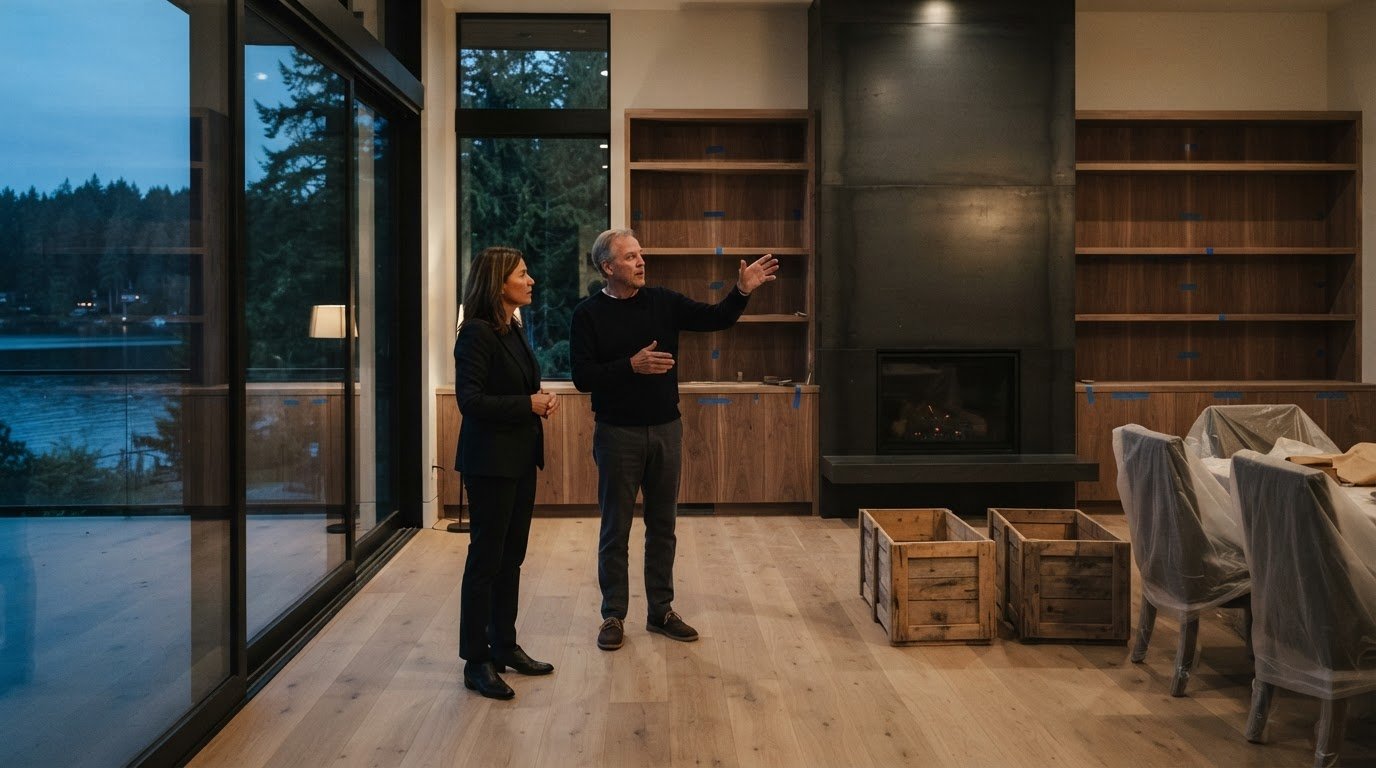
How to Get Million Dollar Listings by Assessing Seller Readiness
Million-dollar listings are earned before the listing presentation. Then assess whether the seller’s expectations, property, and timing align with a credible plan to sell.
A polished image can open a conversation, but it cannot replace market knowledge or a seller’s confidence in your judgment. High-value homeowners need an agent who can explain a property’s market position, communicate clearly, and shape a selling strategy around their priorities.
Build visibility in a focused market, strengthen referral networks, assess seller readiness, and learn to connect with affluent buyers. Collaboration can also help you pursue luxury opportunities while protecting your time and building a deliberate path into the market.
Key Takeaways
- Build credibility in a focused luxury market by tracking local activity and cultivating relationships that can lead to seller conversations.
- Assess a seller’s expectations, the property’s condition, and the timeline before recommending a listing strategy.
- Shape buyer outreach around the property’s likely audience, using strong visual assets and a compelling story rather than a feature list alone.
- Consider partnering with established luxury agents to contribute to high-end listings and build experience through collaboration.
- Explore targeted listing appointments, affluent seller and buyer leads, and relevant coaching and support to strengthen your luxury-market pipeline.
1. Building expertise, trust, and referral relationships to get million-dollar listings
Choose a target neighborhood and track its active listings, closed sales, and pending transactions. Use that record to explain how a property compares with relevant high-end sales, rather than relying on broad market claims.
Turn your research into a repeatable client experience. Prepare a concise briefing on recent neighborhood activity, likely buyer profiles, and a pricing strategy supported by comparable sales. If a homeowner asks why one property might attract a different response, explain the differences in location, condition, features, and competing inventory. Specific reasoning earns more trust than a confident but unsupported valuation.
Treat luxury open houses as relationship-building opportunities, not just appointment windows. Welcome neighbors, learn what draws them to the area, and follow up with useful market information. Build referral relationships with professionals whose work intersects with a sale, such as attorneys, financial advisers, and designers. Keep conversations focused on service and shared client needs. Consistent follow-through makes referrals more likely.
Study experienced luxury agents to identify patterns in their positioning and client experience. Notice how they present market knowledge, communicate with sellers, and explain a property’s story. Adapt the principles to your own voice instead of copying another agent’s branding. In a focused neighborhood, consistent visibility and credible advice can distinguish your practice.
There is no standard commission specifically for selling million-dollar homes. Discuss compensation with the seller as part of the listing agreement. A property’s price tier does not establish a universal commission rate.
In the United States, luxury listings do not have a separate nationwide disclosure framework triggered solely by price. Prepare each listing in line with applicable federal, state, and local requirements, including those affecting advertising, agency, fair housing, and property disclosures. Identify the rules for the property’s location before marketing begins.
Luxury-focused referral networks can connect agents with sellers and established practitioners in a target market. Relevant professional education may also demonstrate specialized knowledge, but a credential alone will not win a listing. Prioritize networks with meaningful connections, then show sellers your market analysis and service approach. Buyer demand, property types, comparable sales, and competition vary by market, so tailor each presentation to the neighborhood.
2. Evaluating seller expectations, property readiness, and timeline
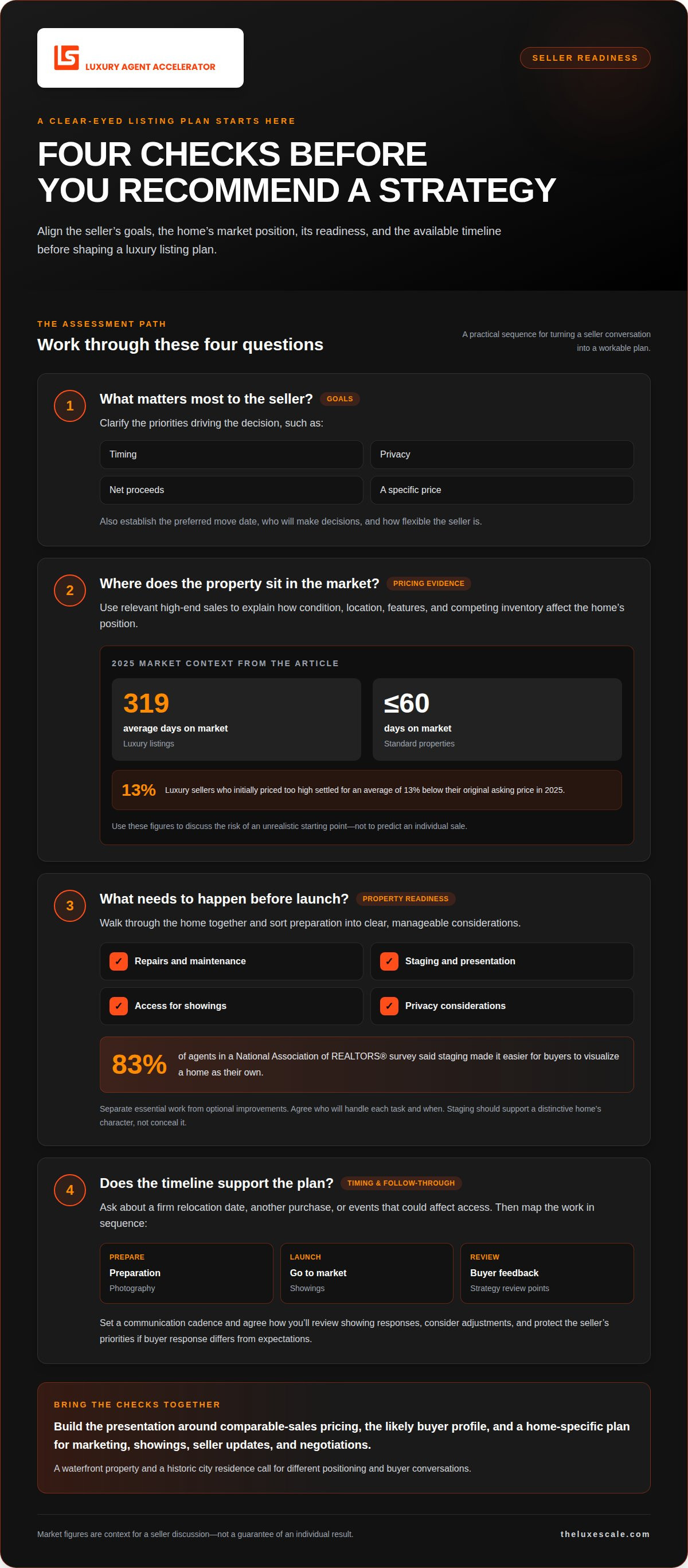
A luxury listing appointment should establish whether the seller’s goals fit the property’s market position. Start by asking what matters most: timing, privacy, net proceeds, or a specific price. Then clarify the preferred move date, who will make decisions, and how flexible the seller is. These details show whether the conversation is ready to become a workable listing plan.
Pricing expectations need evidence and context. Compare the property with relevant high-end sales, then explain how condition, location, features, and competing inventory affect its position. Luxury listings averaged 319 days on market in 2025, compared with 60 days or less for standard properties. Luxury sellers who initially priced too high settled for an average of 13% below their original asking price in 2025. Use those figures to discuss the cost of an unrealistic starting point, not to predict an individual sale.
Property readiness is more than appearance. Walk through the home with the seller and identify repairs, maintenance, staging, access, and privacy considerations. Separate essential work from optional improvements, then agree on who will handle each task and when. Staging can help buyers picture themselves in a home: 83% of agents in a National Association of REALTORS® survey said it made that visualization easier. For an estate with distinctive finishes, staging should support its character rather than conceal it.
Connect the seller’s timeline to preparation, launch, and likely buyer activity. Ask whether there is a firm relocation date, another purchase, or an event that affects access. Then map the sequence: preparation, photography, launch, showings, feedback, and review points. Since properties may need different exposure periods, set a communication cadence and explain how you’ll revisit the strategy if buyer response differs from expectations.
Build a luxury listing presentation around comparable-sales pricing, the likely buyer profile, and a tailored plan for marketing, showings, seller updates, and negotiations. Make recommendations specific to the home. A waterfront property and a historic city residence call for different positioning and buyer conversations.
Readiness also includes the seller’s willingness to act on feedback. Agree in advance how you’ll review showing responses, consider adjustments, and protect the seller’s priorities. For an expired listing, explain why the previous approach may have missed its audience and what the relaunch would change. A focused seller readiness conversation can help clarify whether the opportunity is prepared for a deliberate listing strategy.
3. Marketing to high-net-worth buyers
Start with the buyer, not the property’s price. Define who is most likely to value the home’s location, design, and use. A downtown penthouse may appeal to a buyer seeking walkability, while a country estate may suit someone prioritizing privacy and land. This profile guides the property story, imagery, and marketing channels.
Build the campaign around the property’s strongest differentiators. Translate features into buyer benefits: a chef’s kitchen can support entertaining, while a separate guest house offers flexible space. Avoid a long inventory of rooms and finishes. Instead, show how the home functions through a clear narrative supported by professional photography and video.
Plan visual assets to answer buyers’ questions before a showing. Use wide exterior views to establish the setting, room sequences to clarify the layout, and detailed images to highlight distinctive materials. For a waterfront home, include views that explain its relationship to the shore. For a historic residence, show original details alongside practical updates.
Choose distribution based on the buyer profile and property location. A city condominium may call for digital exposure and outreach to relocation networks. A secluded property may benefit from carefully managed introductions through trusted real estate contacts. Coordinate timing and access with the seller, especially when privacy matters. Every channel should reinforce the same positioning.
Marketing to affluent buyers also depends on useful, accurate information. Prepare details about renovations, operating features, and neighborhood access, then present them consistently across campaign materials. Explain features that need context. For example, describe how a separate studio connects to the main residence instead of leaving buyers to infer how it is used.
What does it cost to market a million-dollar property? The price depends on the case and is provided after a quote request; factors include the property, creative production, distribution choices, and campaign scope. Set priorities with the seller before commissioning assets, so each expense serves a defined audience or sales objective.
Measure campaign response through meaningful signals, not impressions alone. Track which inquiries lead to qualified conversations, which materials prompt questions, and where prospects disengage. If buyers repeatedly ask about access or layout, revise the presentation to address those points. Use feedback to refine the message while keeping the property’s core positioning consistent.
Coordinate marketing with showings and seller communication. Confirm how prospects will receive property information, how viewing requests will be handled, and when the seller will receive updates. A buyer who encounters a coherent story online should find the same clarity during a private tour. That continuity helps turn attention into serious consideration.
4. Partnering on high-end listings
Partnering with an established luxury agent can help you contribute before leading a high-end listing independently. Identify a specific capability you bring, such as local knowledge, transaction coordination, or strong client communication. A clear contribution gives a potential partner a practical reason to involve you.
Look for a working relationship built on complementary strengths. An agent experienced in selling rural estates, for example, may value a partner who understands a nearby city’s buyer pool. Discuss how you’ll divide responsibilities before accepting a co-listing. Clarify who leads seller communication, manages showing requests, coordinates marketing approvals, and handles offer discussions.
Document the working arrangement through the appropriate brokerage process. Define each agent’s responsibilities, decision-making authority, client communication, confidentiality expectations, and compensation arrangements. Clear terms help prevent duplicated work and conflicting instructions. Follow your brokerage’s policies and applicable requirements for the transaction.
A sample responsibility plan can keep execution orderly. One agent might lead the seller relationship and pricing conversations, while the other coordinates property access and tracks buyer feedback. Both agents should know who will answer each inquiry. If a buyer asks about a feature, the designated contact can respond consistently rather than sending conflicting messages.
Supporting a luxury listing can also be a focused way to learn. With the lead agent’s approval, observe how they prepare seller updates, manage private showings, and respond to negotiation developments. After each milestone, discuss what happened and why. A debrief after the first showing, for example, can show how feedback informs the next seller conversation.
Protect the partnership through reliable execution. Confirm appointments promptly, keep organized notes, and share material updates with the lead agent. If a seller changes access instructions, communicate the change before the next visit. Small operational errors can disrupt a carefully managed client experience, so use agreed communication channels and keep responsibilities visible.
Agree on how the relationship will be presented to the seller. Clearly introduce each agent’s role, then keep that division consistent in meetings and written updates. If the lead agent handles negotiations, the supporting agent should direct related questions to them. A unified team presentation clarifies accountability and ensures the seller knows whom to contact.
Choose collaborations for learning and contribution, not just access to a prestigious address. A well-defined support role can build transaction experience, deepen relationships, and demonstrate your judgment under pressure. Once you’ve identified a credible partner, propose a specific way to support an upcoming listing. Clear scope, dependable follow-through, and respectful communication lay a stronger foundation for future co-listing opportunities.
5. What marketing strategies attract luxury real estate sellers?
Luxury sellers notice marketing that demonstrates local knowledge, not just polished branding. Choose a defined neighborhood and publish useful, specific insights about its property market. For example, explain how a renovated historic home differs from a nearby newer build. Give homeowners considering a sale a clear takeaway. Consistent, relevant information positions you as a resource before a listing conversation begins.
Use professional visual assets to show how a property feels and functions. A strong exterior image establishes the setting, while carefully sequenced interior photography explains the flow. Pair those visuals with a story about the home’s architecture, setting, or design. A house near a trail, for instance, can be presented through its connection to outdoor living, not merely its lot features.
Make your marketing easy for potential sellers to assess. Create a sample campaign showing the photography approach, property narrative, and intended distribution channels. A seller considering a private estate could see how you’d present its grounds, guest spaces, and access. Use examples from your work only with appropriate permission, and explain your role in each campaign.
Build visibility where potential sellers already have local connections. Participate in neighborhood events, support relevant community organizations, and share market insights with referral partners. A homeowner who meets you at a local arts event may later recognize your name through a property update. Keep each interaction useful: answer a market question or share a relevant observation instead of forcing a listing pitch.
Expired luxury listings need a clear relaunch story. Explain why the previous campaign may not have reached its likely buyer, what you would change, and how you would manage the seller’s time, privacy, and price position. A relaunch might revise the property narrative, refresh visual assets, or adjust showing arrangements. Connect each proposed change to a specific issue rather than promising a different result.
Track which marketing efforts lead to meaningful seller conversations. Note whether local reports, open-house follow-ups, or property stories prompt questions about pricing and timing. Use those responses to refine your next campaign. If a neighborhood update leads a homeowner to ask about recent sales, prepare a focused discussion around comparable properties and their priorities.
Make your next step concrete: prepare a sample campaign for one target neighborhood, then use it to open conversations with qualified homeowners. If you want structured opportunities to put that approach into practice, pursue luxury listing appointments suited to your growth goals.
LuxeScale: Luxury Listing Appointments
LuxeScale helps agents pursuing luxury listings connect with affluent homeowners ready to sell. Its Luxury Listing Appointments provide qualified seller conversations for agents who want to build a luxury pipeline without relying solely on individual prospecting.
Agents can also access Affluent Seller Leads and Affluent Buyer Leads, alongside award-winning training, coaching, systems, and support. This combination can help you develop luxury-market experience through listing opportunities and guidance on converting them into client relationships.
Consider this next step if your market strategy is in place, but consistent access to affluent prospects remains a challenge. Contact LuxeScale to discuss how its offerings may fit your business goals.
Turn your luxury-market strategy into deliberate growth
Make luxury business development a consistent part of your practice. Decide which opportunities fit your expertise, capacity, and market direction, then use that standard to guide where you invest your time. A focused pipeline gives you room to build deeper relationships and deliver a more intentional client experience.
LuxeScale offers Luxury Listing Appointments, Affluent Buyer Leads, and award-winning training, coaching, systems, and support. These offerings can complement your own market-building efforts as you develop your luxury business.
If expanding your reach is a priority, take the next step and discuss your goals with LuxeScale. Contact LuxeScale to discuss your goals. Keep building with focus, sound judgment, and a clear view of the opportunities you want to pursue.
Frequently Asked Questions
How do agents get million-dollar listings?
Agents win million-dollar listings by combining trusted relationships with a credible plan for each property. Make a first meeting useful by bringing a short summary of seller priorities, relevant comparable sales, and proposed next steps. Clarify who approves decisions, what matters most to the seller, and how they prefer to receive updates. This makes your value practical and specific, rather than relying on luxury branding alone.
Is it hard to sell a million-dollar house?
Selling a million-dollar house can call for more tailored preparation and buyer outreach than selling a broadly comparable home. Distinctive features, privacy preferences, property condition, and seller timing all shape the marketing plan. A gated home, for instance, may need controlled showing access, while a design-led residence may need a presentation that explains its architectural details. Clear communication helps sellers see how the plan responds to their property.
Want to Learn How to Break Into Luxury Real Estate?
Build practical experience and support before taking on a luxury client alone. LuxeScale provides award-winning training, coaching, systems, and support alongside luxury buyer and seller opportunities. Apply what you learn to strengthen client conversations, prepare for common objections, and develop a deliberate approach to affluent prospects. The goal is to use new skills in real client interactions, not simply collect information about luxury real estate.
What qualifications and experience do agents need to sell million-dollar homes?
Agents need the real estate qualifications required where they practice, along with the ability to serve the client and transaction effectively. Luxury-specific credentials can support professional development, but practical skills matter too. An agent should be able to explain comparable sales, communicate discreetly, coordinate complex property details, and respond calmly during negotiations. Experience with a mentor or co-listing partner can help develop these capabilities.
How can a real estate agent get luxury home listings?
Create a repeatable seller prospecting routine instead of relying on occasional networking. Share a concise property-market update with past clients and professional contacts, for example, then follow up with a useful conversation about their plans. A tailored review of a homeowner’s likely preparation needs can make the discussion relevant. You can also pursue LuxeScale Luxury Listing Appointments and Affluent Seller Leads to connect with potential listing clients.
How do agents build relationships with high-net-worth homeowners?
Build relationships through relevant service, discretion, and consistent follow-through. Ask homeowners about their priorities before making recommendations, and respect how they want sensitive details handled. If someone is considering a move, offer a clear next step, such as outlining the information needed for a property review. Follow up when promised, share only pertinent updates, and keep the conversation focused on the homeowner’s needs rather than an immediate pitch.

Article by
Mark Coppens
Mark Coppens is the Founder and Chairman of LuxeScale and Co-Team Lead of Living Vogue | eXp Luxury. He is an active elite-level luxury agent and the author of the upcoming book, POWER POSITIONING: From Missiles to Mansions – Why People Really Buy, and is a nationally recognized speaker on luxury real estate, consumer psychology, marketing, and business growth.
A U.S. Army veteran with an MBA in Marketing, Mark has generated more than $1 billion in career sales and now leads one of the nation's fastest-growing luxury referral platforms, referring more than $2 billion in luxury real estate opportunities each month to partner agents across the United States. He specializes in helping real estate agents generate more listings, break into the luxury market, and build scalable businesses through qualified referrals, award-winning training, coaching, and proven systems. His practical, psychology-driven approach has helped agents across the country increase their income while attracting more affluent clients and building lasting, referral-driven businesses.