
How to Market Yourself as a Luxury Realtor Through Branding
A polished image can earn attention, but local expertise gives affluent clients a reason to remember you. To answer how to market yourself as a luxury realtor, build a consistent brand around the market you know, then demonstrate that knowledge through useful online content and genuine community relationships.
Luxury clients expect more than attractive listing photos. They look for sound judgment, clear communication, and insight into the neighborhoods and lifestyles behind a property. Make those strengths visible before a prospective client ever speaks with you.
This guide explains how to shape a distinctive personal brand, strengthen your website and social presence, build relationships in the luxury community, and create local content that demonstrates your market knowledge. The aim is a focused strategy that connects your expertise with the clients and opportunities you want to attract.
Key Takeaways
- Define a distinctive personal brand around your local expertise, service standards, and the clients you want to reach.
- Align your headshot, website, and social profiles so every touchpoint presents a consistent, polished impression.
- Build lasting community relationships through thoughtful follow-up and meaningful in-person connections.
- Strengthen the communication and relationship skills that help luxury clients feel understood and well supported.
- Create useful local real estate content that demonstrates your neighborhood knowledge and gives prospective clients a reason to engage.
1. Building a luxury real estate personal brand
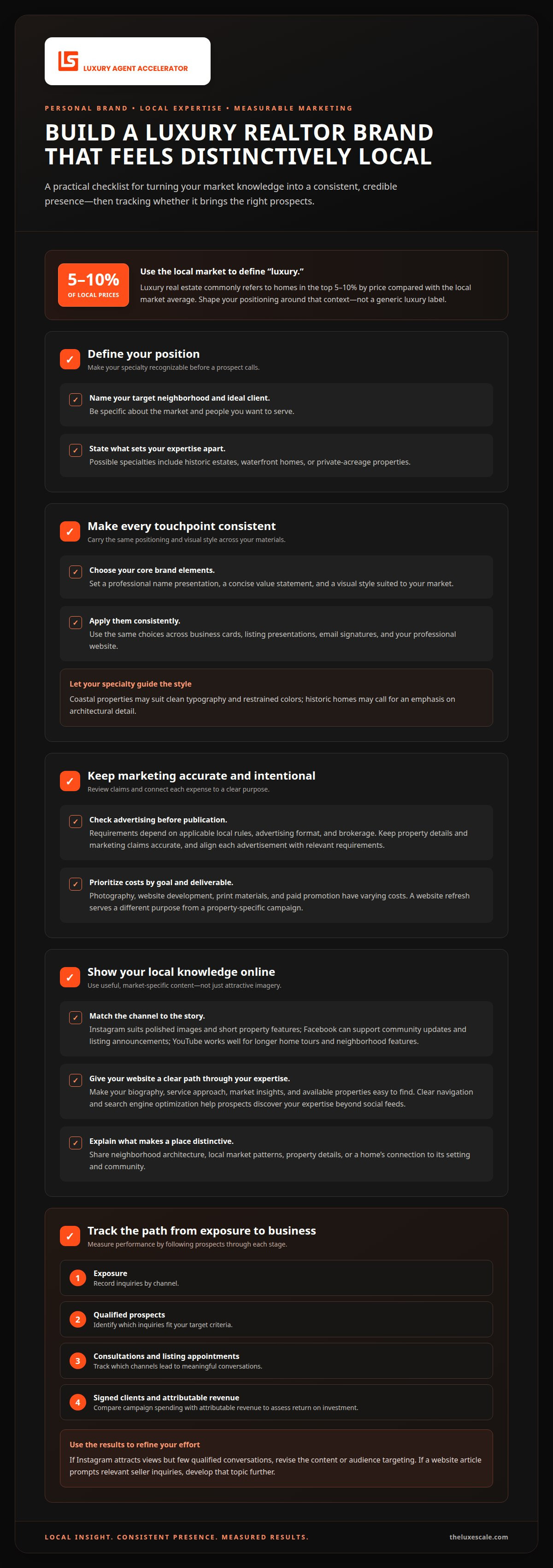
A polished personal brand makes your expertise recognizable before a prospect calls. Start by defining your target neighborhood, ideal client, and strongest point of difference. For example, you might specialize in historic estates, waterfront homes, or private-acreage properties. Luxury real estate commonly refers to homes in the top 5-10% by price compared with the local market average. Use that local context to shape your positioning, rather than relying on a generic luxury label.
Next, translate your positioning into consistent brand choices. Select a professional name presentation, a concise value statement, and a visual style suited to your market. An agent focused on coastal properties might use clean typography and restrained colors, while one specializing in historic homes could emphasize architectural detail. Apply those choices across business cards, listing presentations, email signatures, and your professional website. Consistency reinforces the same expertise at every interaction.
In the United States, advertising requirements depend on applicable local rules, the advertising format, and your brokerage. Keep property details and marketing claims accurate, and align each advertisement with relevant requirements before publication. A clear review process helps ensure your website copy, social posts, and print materials are consistent.
Marketing costs vary with the work involved, including photography, website development, print materials, and paid promotion. Set priorities by matching each expense to a specific goal, such as presenting a listing or generating qualified inquiries. A website refresh serves a different purpose from a property-specific campaign, so assess each investment against its intended audience and deliverable.
To attract affluent buyers and sellers, combine a credible online presence with relevant local insight. Use your website, Instagram, search engine optimization, Facebook, and YouTube to reach different audiences. Make the content specific: explain a neighborhood’s architecture, highlight a property’s distinctive features, or discuss local market patterns. Strong branding earns attention; useful information gives prospects a reason to engage.
Measure performance by tracking the path from exposure to business outcome. Record inquiries by channel, identify which prospects fit your target criteria, and track consultations, listing appointments, and signed clients. Compare campaign spending with attributable revenue to assess return on investment. If Instagram attracts views but few qualified conversations, revise the content or audience targeting. If a website article prompts relevant seller inquiries, develop that topic further.
A practical plan for how to market yourself as a luxury realtor links each brand element to a measurable objective. Set a consistent visual identity, publish market-specific information, and use the same positioning across your website and marketing materials. Review performance regularly and shift effort toward channels that produce meaningful prospects. This disciplined approach builds a polished presence while tying marketing decisions to business development.
2. Upgrading headshots, social media, and websites
Your headshot should look current, professional, and consistent with your online profiles. Choose a setting that fits your market, such as a refined city backdrop or a neighborhood streetscape. Use the same image across your website, Instagram, Facebook, and email signature. That continuity helps prospective clients connect your name with your local expertise.
Make your website a destination for clear, useful information. Give visitors a direct path to your biography, service approach, market insights, and available properties. Use concise copy and clear navigation so prospective clients can quickly understand your specialty. For example, an agent focused on waterfront homes can feature relevant neighborhood guides and property details.
Instagram, Facebook, and YouTube each support different kinds of luxury real estate storytelling. Instagram suits polished images and short property features; Facebook can support community updates and listing announcements. YouTube works well for longer home tours and neighborhood features. A professional website and search engine optimization help prospects discover your expertise beyond social feeds.
Build a lifestyle narrative around the property, not just its rooms. A coastal listing might pair architectural details with nearby beaches, dining, and community character. Make each post specific: explain what makes the home distinctive, then connect that feature to its setting. This gives buyers useful context and sellers a clear view of your marketing perspective.
For a listing campaign, sequence assets with purpose. Lead with professional photography that accurately shows the property, then use video to convey movement, layout, and atmosphere. A virtual tour can help viewers explore rooms remotely. On Instagram or Facebook, pair each asset with precise captions and a clear next step, such as viewing the full property details on your website.
Privacy requires deliberate choices. Before sharing images or property details, discuss the seller’s preferences about identifying information, visible valuables, and access details. Review every frame for personal photographs, documents, security features, or location clues the seller wants withheld. For discreet marketing, limit public-facing details and share more information directly with qualified prospects, following the seller’s instructions.
Keep content polished without making every post feel like an advertisement. Alternate listing features with neighborhood observations, design details, and practical explanations of the buying or selling process. A post about a home’s restored woodwork, for instance, can show your eye for meaningful details. Consistent themes make your profile feel curated and useful.
Agents who want to build their pipeline alongside a stronger digital presence can explore luxury listing appointments as another source of seller conversations.
3. Building relationships in the luxury community
Luxury-market relationships grow through repeated, relevant interactions, not a single networking event. Choose a local circle aligned with your target clients, such as neighborhood associations, arts organizations, or business groups. Attend consistently and contribute useful market knowledge. For example, an agent specializing in historic properties can share insight about architectural styles at a preservation event.
Build professional connections around the client experience. Estate attorneys, financial professionals, architects, interior designers, and relocation specialists may encounter people making significant property decisions. Focus on reciprocal trust: learn about each person’s expertise, communicate clearly, and make thoughtful introductions when they serve a client’s needs. Reliable relationships grow through useful collaboration, not an immediate request for referrals.
Referrals deserve a deliberate place in your relationship strategy. An estimated 63% of sellers found their real estate agent through a referral. Make it easy for satisfied clients and professional contacts to understand whom you serve. A concise introduction, such as “I advise buyers and sellers of historic homes in this neighborhood,” gives others a clear reason to remember you.
Consistency turns a first meeting into a lasting connection. After meeting someone at a community fundraiser or design showcase, send a brief, personal follow-up that refers to your conversation. Record the person’s interests and preferred contact method, then set an appropriate reminder. Automated reminders can help you follow through without relying on memory or sending generic messages.
In-person conversations still matter. Invite a past client to a neighborhood gallery opening, attend a local charity event, or meet a design professional for coffee. Begin with shared interests rather than business. If a homeowner mentions an upcoming move, offer a relevant market perspective instead of forcing a listing pitch.
Maintain a simple relationship plan. Group contacts by connection, such as former clients, community members, and professional collaborators. Set aside time to check in, share a useful local update, or congratulate someone on a milestone. A note about a neighborhood event or a new cultural venue feels more personal than an untargeted market email.
Protect trust through dependable communication. Respond thoughtfully, keep commitments, and treat personal details with discretion. If a client privately shares a preferred timeline, use it to guide follow-up rather than discussing it publicly. These small choices demonstrate judgment and help associate your name with professionalism across the community.
Automated reminders can support tasks and follow-ups. Make time to meet clients in person and strengthen trust through attentive conversation.
4. Developing soft skills and a luxury-agent mindset
Luxury clients value sound judgment as much as property knowledge. Build that judgment through deliberate practice over the next few months. After each client conversation, note what mattered most: timing, privacy, architecture, or a move-related concern. Use those observations to improve your questions and recommendations. This routine turns experience into a more precise service approach.
Start with active listening. Ask open questions, then summarize the client’s priorities before proposing a next step. A buyer comparing a downtown penthouse with a secluded estate, for example, may value privacy more than square footage. Confirming that priority helps focus the search and keeps polished presentations from distracting from the client’s actual decision criteria.
Discretion is another essential professional habit. Treat a seller’s plans, preferred timeline, and personal circumstances as confidential. Before sharing an update with another party, consider whether the client has authorized it. For example, avoid mentioning a homeowner’s relocation plans at a public event. Careful handling of information shows sound judgment without a dramatic display of exclusivity.
Refine your communication by making each update clear and purposeful. Explain what has happened, what decision is needed, and what comes next. A seller reviewing early interest in a property needs a concise account of feedback, not a stream of unfiltered impressions. For a buyer, distinguish confirmed property details from your interpretation. Accurate, measured language supports confident decisions.
Negotiation calls for preparation, patience, and control of tone. Before a conversation, identify the client’s priorities, points needing clarification, and available options. If a buyer raises a concern about a home’s layout, ask what function they need before responding. The answer may reveal a workable solution or confirm that another property fits better. Keep the client’s stated objectives central.
Luxury service also depends on adapting your approach to different people. One client may prefer detailed email updates, while another values a brief phone call. Ask about communication preferences early and record them. If a client wants property information before a showing, send organized details in advance. This small adjustment makes the process more efficient and demonstrates attentiveness.
Use reflection to build consistency. After a showing, negotiation, or seller meeting, identify one effective action and one skill to improve. You might notice that a concise property comparison helped a buyer decide, while a delayed follow-up created confusion. Apply that lesson to your next interaction. Across a few months, this repeatable review strengthens composure, clarity, and client-centered decision-making.
5. Creating local real estate content
Local content can distinguish your expertise from polished but interchangeable property promotion. Start with a defined area, such as a downtown district, coastal community, or historic neighborhood. Build a guide around what buyers and sellers need to understand there. Explain architectural character, everyday amenities, access routes, and the features that shape each property’s appeal.
Make each article answer a specific local question. A guide to historic homes could explain how architectural details vary by street. A waterfront overview might compare shoreline settings, views, and access to local amenities. Keep descriptions grounded in what you can observe and substantiate. Accurate detail signals familiarity, while broad claims about an entire neighborhood can weaken trust.
Connect property features to their setting. Instead of describing a home’s terrace alone, explain how its orientation relates to the garden, nearby landscape, or outdoor entertaining. A neighborhood profile can show how local cafés, galleries, parks, or cultural venues shape daily life. These details help prospective clients picture the experience of owning a home there.
Use a repeatable content workflow. Choose a neighborhood topic, gather accurate property and community details, identify the reader’s likely question, and draft a concise answer. Add a perspective based on your experience, such as what distinguishes one street from another. Before publishing, confirm descriptions match the property and do not imply unavailable amenities or access.
Turn local knowledge into several useful formats. A detailed neighborhood guide can become a short social post, an email update, or talking points for a property presentation. For example, a guide to a community’s architectural styles can support a post explaining what buyers should notice during a showing. Keep the core information consistent while adapting the format to each channel.
Build a content library around real client decisions. Topics might include preparing a distinctive home for market, understanding a neighborhood’s property character, or assessing how setting affects a home’s appeal. Use clear titles and descriptive sections so readers can find relevant answers. Link related neighborhood guides together, helping visitors move from a property question to broader local context.
Review which topics lead to meaningful conversations. Track inquiries that mention a guide, questions raised after a local post, and requests for advice about a featured area. Use those signals to refine future topics. Strong local content demonstrates expertise before a meeting, supports seller conversations, and gives buyers a clearer basis for exploring an area.
Ready to turn local seller interest into qualified conversations? Explore luxury listing appointment opportunities that align with your market expertise.
LuxeScale: Luxury Listing Appointments
LuxeScale connects real estate agents with Luxury Listing Appointments, Affluent Seller Leads, and Affluent Buyer Leads. If your brand and local content are ready, these opportunities can help you build conversations with affluent prospects while you focus on client service.
Agents developing their luxury-market business can also access accompanying award-winning training, coaching, systems, and support. This can be useful when you want to strengthen your approach to referred opportunities and align your marketing with a more consistent sales process.
Explore whether this next step fits your growth strategy. Contact LuxeScale to discuss luxury listing appointments and lead opportunities.
Turn Your Luxury Brand Into Your Next Opportunity
A strong luxury brand becomes more valuable when it leads to the right conversations. Identify where you want to grow, then align your positioning and business development with that goal. If you’re considering how to market yourself as a luxury realtor, focus on a recognizable presence and a reliable path from first impression to client relationship.
LuxeScale offers Luxury Listing Appointments and Affluent Buyer Leads, along with accompanying Award-Winning Training, Coaching, Systems, and Support. These opportunities can complement your own market strategy as you develop your luxury business and strengthen your approach to prospective clients.
Choose a next step that fits your business priorities and the clients you want to serve. Connect with LuxeScale to explore how its opportunities and support may fit your growth plans. Keep building with intention, and let each conversation reinforce the professional reputation you’re creating.
Frequently Asked Questions
How do luxury real estate agents build a personal brand?
Build a personal brand by making your expertise easy to recognize and substantiate. Choose a clear specialty, then support it with concise client stories that explain the challenge, your role, and the outcome without revealing private details. For example, describe how you helped a seller prepare a distinctive property for a complex transition. Maintain the same professional standards in every client interaction, not just public-facing materials.
How should a luxury realtor create a premium real estate website and portfolio?
Structure your website around what a prospective client needs to assess: your judgment, relevant experience, and working approach. Organize portfolio examples by property type or client objective, and briefly explain the strategy behind each example. Use clear navigation and direct contact details. Before publishing client stories or property images, obtain permission and remove private information that could reveal someone’s personal circumstances.
How can a realtor build relationships with affluent clients and referral sources?
Make each relationship useful before asking for business. Learn what a contact specializes in, listen for the decisions their clients face, and offer a relevant introduction or insight when appropriate. When a prospect is referred to you, acknowledge the introduction promptly, explain how you’ll follow up, and keep the referring contact informed in line with the prospect’s privacy preferences. This creates a professional experience for both the potential client and the person who connected you.
What luxury real estate networking events and memberships are worthwhile?
Prioritize settings where you can contribute meaningfully and meet people connected to your target market. Local arts organizations, preservation groups, charitable events, and professional gatherings can each create different relationship opportunities. Assess an event by its audience, the quality of conversation, and whether you can participate consistently. A relevant committee role or thoughtful contribution often builds stronger professional familiarity than attending once just to distribute business cards.
What local marketing strategies work best in a specific luxury real estate market?
Choose tactics based on the area’s property character and the questions clients ask. In a market known for historic architecture, explain how styles and features differ across communities. In a waterfront market, focus on property setting and lifestyle context. Pair useful local guidance with targeted conversations and track which topics prompt serious inquiries. This helps refine your messaging around genuine local demand rather than generic luxury language.

Article by
Mark Coppens
Mark Coppens is the Founder and Chairman of LuxeScale and Co-Team Lead of Living Vogue | eXp Luxury. He is an active elite-level luxury agent and the author of the upcoming book, POWER POSITIONING: From Missiles to Mansions – Why People Really Buy, and is a nationally recognized speaker on luxury real estate, consumer psychology, marketing, and business growth.
A U.S. Army veteran with an MBA in Marketing, Mark has generated more than $1 billion in career sales and now leads one of the nation's fastest-growing luxury referral platforms, referring more than $2 billion in luxury real estate opportunities each month to partner agents across the United States. He specializes in helping real estate agents generate more listings, break into the luxury market, and build scalable businesses through qualified referrals, award-winning training, coaching, and proven systems. His practical, psychology-driven approach has helped agents across the country increase their income while attracting more affluent clients and building lasting, referral-driven businesses.