
How to Pitch Ultra High Net Worth Home Sellers and Build Trust
Lead with discretion, relevance, and a clear plan, not a generic listing pitch. The most effective approach to pitching ultra high net worth home sellers is to earn trust by respecting their time, understanding their priorities, and presenting options that fit their goals, including a private, off-market strategy when appropriate. Consistent, thoughtful follow-up keeps the relationship active without turning it into pressure.
Affluent sellers expect preparation and discretion, so a standard sales script can fall short. They want an advisor who listens first, communicates efficiently, and explains the trade-offs behind each recommendation.
This guide explains how to tailor outreach to a seller’s schedule, build a concise and credible pitch, and discuss off-market options with care. You’ll also learn how to follow up in ways that strengthen the relationship and create a natural foundation for future referrals.
Key Takeaways
- Offer an off-market approach when privacy matters, and explain its trade-offs alongside a public listing strategy.
- Make outreach easy to fit into a seller’s schedule with concise communication and clear next steps.
- Build credibility by sharing relevant market insight and explaining the reasoning behind your recommendations.
- Follow up with useful, personal updates that keep the relationship warm without creating pressure.
- Earn referrals by being memorable, delivering a thoughtful experience, and making specific, considerate introduction requests.
Prime-market competition and off-market transactions
- Build a market-specific personal brand. Show sellers that your expertise extends beyond polished property photos. Share concise analysis of local inventory, buyer demand, zoning considerations, privacy, and relocation patterns. Almost 19% of the global ultra-high-net-worth population resides in 10 cities, so broad luxury claims won’t distinguish you in competitive prime markets. Use a neighborhood example to show how your strategy reflects the seller’s location and property.
- Lead with a tailored, evidence-based pitch. The best pitch for winning a luxury listing connects the owner’s priorities to a clear plan. Present relevant comparable properties, explain how distinctive features affect the likely buyer pool, and outline the trade-offs between broad exposure and controlled access. Avoid a generic promise of a fast sale: top luxury real estate transactions averaged at least 319 days on the market in 2024. Set expectations around strategy, not guarantees.
- Prepare the property before promoting it. Recommend a pre-listing walkthrough to identify presentation priorities, from deferred maintenance to staging and photography. Then outline the sequence: prepare the home, create strong visual materials, qualify interested buyers, and coordinate showings. For example, a home with a private entrance may need a different showing plan than one whose main draw is a panoramic view.
- Use educational marketing to demonstrate value. Share useful, focused material on topics such as wealth preservation, real estate tax implications, estate planning, second-home ownership, investment diversification, and privacy. Stay within your professional role. If a seller is weighing a second property against other investments, explain how carrying costs and property positioning affect the sale, without offering financial or tax advice.
- Present off-market options transparently. Some ultra-high-net-worth sellers prefer a private sale because they don’t want property details made public. Explain how limited exposure may support privacy, while a public listing can reach a wider audience. Agree on what information may be shared, who can receive it, how inquiries will be screened, and when to revisit the strategy. Let privacy shape the plan without obscuring its trade-offs.
- Address rules, fees, valuation, and local differences directly. U.S. disclosure rules vary by state and locality, so identify the requirements that apply to the property and transaction before launch. There’s no single typical commission rate or listing fee for ultra-luxury homes. Fees are negotiated and depend on the agreed services and listing terms. Value the home using relevant comparable sales, condition, unique features, and current buyer demand. Practices differ by market because inventory, buyer profiles, privacy preferences, and requirements vary. Common pitching mistakes include overstating value, pushing public exposure, or proposing a standard plan without evidence.
Wealthy clients’ work habits and time constraints
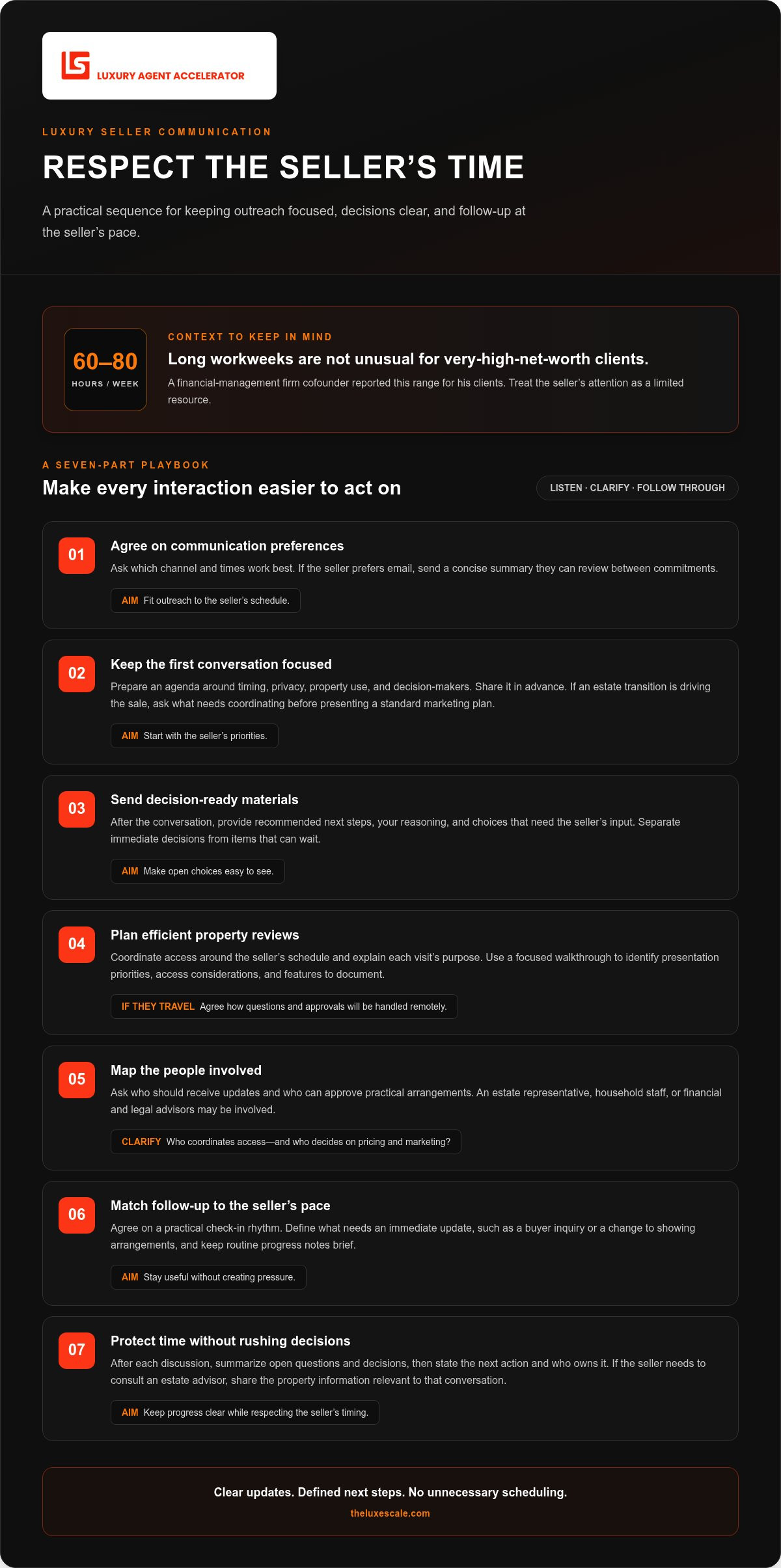
- Assume time is tightly allocated. A financial-management firm cofounder reported that 60- to 80-hour workweeks are not unusual for his very-high-net-worth clients. Treat a seller’s attention as a limited resource. Before pitching, clarify their preferred communication channel and suitable times. If they prefer email, send a concise summary they can review between commitments instead of requesting an open-ended meeting.
- Make the first conversation focused. Prepare an agenda around the seller’s priorities: timing, privacy, property use, and decision-makers. Share it in advance so the owner knows what to expect. If an estate transition is driving the sale, for example, begin by asking what needs coordinating rather than launching into a standard marketing presentation.
- Send decision-ready materials. After the conversation, provide a concise briefing with your recommended next steps, the reasoning behind your approach, and any choices requiring the seller’s input. Separate immediate decisions from items that can wait. A seller managing several properties can quickly see which details you need before discussing pricing or launch timing.
- Offer efficient ways to review the property. Coordinate access around the seller’s schedule and explain the purpose of each visit. A focused walkthrough can identify presentation priorities, access considerations, and features that need documentation. If the owner travels often, agree on how to handle questions and approvals remotely, with clear written updates instead of repeated scheduling requests.
- Map the people involved before asking for decisions. A luxury real estate sale may involve an estate representative, household staff, or financial and legal advisors. Ask the seller who should receive updates and who can approve practical arrangements. A property manager might coordinate access, for example, while the owner retains authority over pricing and marketing choices.
- Match follow-up to the seller’s pace. Agree on a practical check-in rhythm and define what warrants an immediate update, such as a buyer inquiry or a change to showing arrangements. Keep routine progress notes brief. If the owner is weighing a sale against keeping liquid assets available, present property-related facts clearly without straying into financial advice.
- Protect time without rushing the decision. Summarize open questions and decisions after each discussion, then state the next action and who owns it. If a seller needs to consult an estate advisor, share the property information relevant to that conversation. This keeps the process moving while giving the owner room to make considered choices.
Positioning as a trusted advisor
Ultra-high-net-worth sellers expect discretion, informed guidance, responsive communication, and a strategy grounded in their priorities. They want an agent who explains decisions clearly, respects their time, and manages complexity without making the transaction feel like a sales script.
- Begin with the seller’s definition of success. Ask what matters most before recommending a plan. One owner may need a sale coordinated with a relocation, while another may prioritize control over property access. Reflect those goals in a short written summary. It shows you listened and gives both of you a clear basis for assessing your recommendations.
- Use evidence that fits the property. Bring relevant comparable sales, active competition, and property-specific observations to the discussion. Explain how the home’s design, condition, setting, and use may shape buyer interest. If a feature appeals to a narrower audience, describe how you would position it instead of implying that every feature carries equal weight.
- Make trade-offs visible. Present options in plain language and connect each one to the seller’s goals. A seller choosing between a public launch and controlled exposure should understand how each approach can affect reach, privacy, and access. Your recommendation is more credible when the owner can see both its rationale and its limitations.
- Keep your expertise within clear boundaries. A sale may intersect with estate, tax, or investment questions. Explain property matters directly, but don’t speculate about legal or financial outcomes. If an owner asks how a sale affects an estate plan, prepare the relevant property details for their advisor. That’s more useful than offering advice outside your role.
- Set a disciplined buyer-management approach. Explain how you’ll handle inquiries, access, and feedback before the first showing. For a home with a separate guest residence, clarify how you’ll present the feature and coordinate visits. Specific procedures help sellers understand what your service looks like in practice and how buyers will experience the property.
- Make pitching ultra high net worth home sellers a process of listening and proof. Confirm the seller’s preferred communication channel, decision-makers, and expectations for updates. After each discussion, send a concise recap with agreed actions and the next milestone. This demonstrates organization and gives the owner a clear record of the conversation.
- Align your pitch with your execution. Success in pitching ultra high net worth home sellers depends on delivering what you promised. Provide analysis as agreed, explain new information as it emerges, and support recommendations for adjustments with evidence. Consistency between your words and actions positions you as a practical advisor throughout the listing process.
Relationship nurturing and follow-up
- Agree on a follow-up rhythm together. Ask how often the seller wants updates and which channel works best. A homeowner who prefers email may welcome a concise Friday summary, while another may want a call after a specific development. Record the preference and follow it consistently. Outreach feels considered when it respects the seller’s stated boundaries.
- Make each contact useful. Give the seller a reason to hear from you beyond “just checking in.” Share a relevant sale, a change in inventory, or a clear answer to an open question. If a nearby property attracts similar buyers, for example, explain what its listing activity may mean for positioning without treating it as a direct valuation.
- Follow through on every commitment. If you promise a property analysis, introduction, or showing update, deliver it as agreed. If a detail takes longer to obtain, send a brief progress note and state the next action. This prevents the seller from having to chase you and demonstrates organized real estate service.
- Use meaningful milestones, not empty touches. Reach out when there’s a decision to make, a buyer response to share, or a planned review point. If a seller is deciding whether to prepare a guesthouse before launch, send substantiated information about relevant costs and timing. Skip market roundups that have no connection to the property or the seller’s goals.
- Keep a record of the relationship. Note the seller’s communication preferences, property priorities, key contacts, and unanswered questions in your working process. Review those details before each conversation. If the owner has said privacy matters more than broad exposure, make sure your next recommendation addresses that preference instead of restarting the discussion.
- Adapt when circumstances change. A relocation date may shift, a family member may join the decision, or an estate matter may affect the seller’s timing. Ask what has changed, update the plan, and summarize any revised actions. Don’t assume an earlier priority still applies. A focused question can prevent weeks of follow-up based on outdated expectations.
- Close the loop after each interaction. Send a brief recap stating the decision made, who owns each next step, and when you’ll reconnect. After discussing showing access, for example, confirm the approved process and who will coordinate entry. Clear follow-up keeps the relationship moving while giving the seller control over decisions and timing.
Confidence in the process. That approach builds trust, credibility, and long-term relationships more effectively than aggressive outreach or high-volume tactics. In affluent circles, seek introductions to specific people or organizations rather than asking contacts broadly whom they know.
Reputation and referrals
Agents demonstrate credibility through relevant transaction examples, clear communication, and consistent follow-through. Show how your experience applies to the seller’s property, then support each recommendation with evidence and a specific next step.
- Present a focused track record. Choose examples that match the seller’s property type, location, or priorities. Explain your role, the challenge, and how you handled it. If privacy mattered in a past sale, describe how you managed property information and buyer access. Keep client details confidential unless you have permission to share them.
- Make your reputation easy to remember. Nearly 70% of clients would refer their real estate agent to friends or family if they remembered the agent’s name. Use the same professional name and clear contact details across your presentation, follow-up, and public profiles. After a meeting, send a short note that reinforces your role and the agreed next action.
- Ask for specific introductions. Instead of asking a contact broadly whom they know, identify the person or organization you hope to meet. For example, ask a past client to introduce you to a business owner preparing to sell an investment property. A precise request is easier to understand and act on than a general appeal for referrals.
- Build trusted professional relationships. Affluent sellers may rely on friends, colleagues, or advisors when choosing an agent. Build relationships with relevant people by sharing useful property insight and following through on commitments. Keep interactions professional. A thoughtful introduction from a trusted contact can create a more credible first conversation than an unsolicited pitch.
- Let service quality create proof. During a sale, report material updates promptly, explain buyer feedback clearly, and document agreed decisions. If a showing creates a security or scheduling concern, respond with a practical adjustment. These moments show how you work under pressure and give the seller a concrete reason to recommend you later.
- Stay useful after closing. Send a concise closing follow-up, then remain in touch with relevant updates rather than repeated sales requests. A note about a nearby market change may be valuable if it connects to the seller’s stated interests. At the time of his Stay Paid interview, financial advisor Mark Minor had built a $500 million book of business primarily through referrals.
- Turn referral strategy into a repeatable practice. Track who introduced each prospect, thank the connector, and follow up with the new contact promptly. The page states that 99.99% of luxury agents’ clients were first introduced through reputation or referrals. Strengthen your affluent seller pipeline with a deliberate approach to connecting with prospective sellers.
LuxeScale: Luxury Listing Appointments
LuxeScale helps agents build luxury-market opportunities through Luxury Listing Appointments and Affluent Seller Leads. Use these opportunities when you’re ready to develop conversations with affluent homeowners considering a sale, while focusing on tailored advice and seller relationships.
Agents can also access Affluent Buyer Leads and accompanying award-winning training, coaching, systems, and support. These resources complement the work of qualifying prospects, presenting a clear listing strategy, and guiding each conversation with confidence. They’re a practical next step if you want to strengthen your pipeline while building trust through consistent follow-up.
Visit LuxeScale to explore its agent opportunities.
Turn Trust Into Your Next Opportunity
Make trust a repeatable part of your business, not something reserved for a single listing presentation. Build a deliberate pipeline, then give every prospective seller the same attentive, well-prepared experience. Consistency helps your reputation travel through relationships that matter in affluent markets.
Pitching ultra high net worth home sellers is more effective when your expertise is matched with relevant opportunities and practical support. LuxeScale offers Luxury Listing Appointments, Affluent Buyer Leads, and accompanying award-winning training, coaching, systems, and support to help agents develop their luxury business.
If you’re ready to strengthen your approach and explore opportunities aligned with your goals, contact LuxeScale to discuss your approach. Take the next step with intention, and keep building the trusted relationships that move your business forward.
Frequently Asked Questions
What marketing works best for high-net-worth individuals?
Marketing works best when it reflects a specific audience’s interests and the property’s defining features. For a contemporary waterfront home, for example, create a concise digital presentation emphasizing architecture, access, and maintenance details instead of generic luxury language. Use consistent messaging across your website, email, and listing materials. Track which inquiries lead to substantive conversations, then refine the content around questions prospective clients actually ask.
How do luxury real estate agents find affluent clients?
Agents find affluent clients by developing a focused network and making their expertise easy to recognize. Map the professional and community circles relevant to your target market, then contribute useful real estate insight where appropriate. A concise presentation on property trends can give a financial professional or business owner a reason to remember your work. Follow up with a specific, relevant resource rather than a broad request for business.
How do you build trust with luxury buyers and sellers?
Build trust by making your process understandable to both sides of the transaction. For a buyer comparing distinctive homes, explain how their features, condition, and access differ without steering them toward a preferred option. For a seller, distinguish verified property information from your interpretation of likely buyer interest. Clear records, timely answers, and candid explanations help clients make informed decisions without relying on sales language.
How do agents find and approach ultra-high-net-worth home sellers?
Start with a credible introduction and a relevant reason for contact, not a generic sales message. Keep the first approach brief, explain why your property expertise fits the owner’s situation, and offer a useful next step. LuxeScale provides Affluent Seller Leads and Luxury Listing Appointments by identifying and qualifying affluent homeowners ready to sell and scheduling listing appointments. These structured opportunities can help agents begin seller conversations.
What marketing strategies work best for high-end home listings?
Build listing materials around the property’s strongest verifiable features, and give each asset a clear purpose. Pair polished photography with accurate specifications, a readable floor plan, and copy that explains how the home functions. Before launch, review every public-facing detail for consistency. Once inquiries begin, use buyer questions to identify missing information and update the presentation so serious prospects can assess the property clearly.

Article by
Mark Coppens
Mark Coppens is the Founder and Chairman of LuxeScale and Co-Team Lead of Living Vogue | eXp Luxury. He is an active elite-level luxury agent and the author of the upcoming book, POWER POSITIONING: From Missiles to Mansions – Why People Really Buy, and is a nationally recognized speaker on luxury real estate, consumer psychology, marketing, and business growth.
A U.S. Army veteran with an MBA in Marketing, Mark has generated more than $1 billion in career sales and now leads one of the nation's fastest-growing luxury referral platforms, referring more than $2 billion in luxury real estate opportunities each month to partner agents across the United States. He specializes in helping real estate agents generate more listings, break into the luxury market, and build scalable businesses through qualified referrals, award-winning training, coaching, and proven systems. His practical, psychology-driven approach has helped agents across the country increase their income while attracting more affluent clients and building lasting, referral-driven businesses.