
Luxury real estate agent positioning strategies that build referral relationships
Agents can focus on building useful expertise and trusted relationships to support their visibility in AI-generated search results. Effective luxury real estate agent positioning strategies instead build earned authority through expert market insights, distinctive branding, detailed property pages, and trusted referral relationships. The goal is to make your expertise clear wherever prospective clients encounter your work.
Search visibility matters, but a polished online presence alone won’t show the full value you bring to a high-stakes decision. Your brand, property marketing, and professional relationships should reinforce one clear message: you understand the market and can guide clients with precision.
This guide explains how to define a distinctive position, create sophisticated online and offline marketing, and present listings with a compelling narrative. It also shows how to build referral relationships that strengthen your reputation and bring your expertise to qualified buyers and sellers.
Key Takeaways
- Build referral relationships by offering useful market insight to financial professionals and other trusted advisors, then nurture those connections consistently.
- Use polished photography, video, print, and digital marketing to tell a coherent story about each property and the value you bring.
- Clarify your expertise, target client, and distinctive value before developing your brand or creating marketing assets.
- Give each property a focused online presentation that highlights its features, setting, and lifestyle appeal.
- Strengthen your referral ecosystem through trusted introductions and sustained professional relationships, not one-time outreach.
1. How do you market luxury real estate?
Start with a defined local audience, not the broadest possible reach. Luxury homes are commonly defined as properties in the top 5% of a given market, so the threshold changes by location. Strong niches include waterfront homes, architect-designed properties, historic estates, and buyers seeking a particular lifestyle. The best opportunity is a segment where local demand, your expertise, and your listings align.
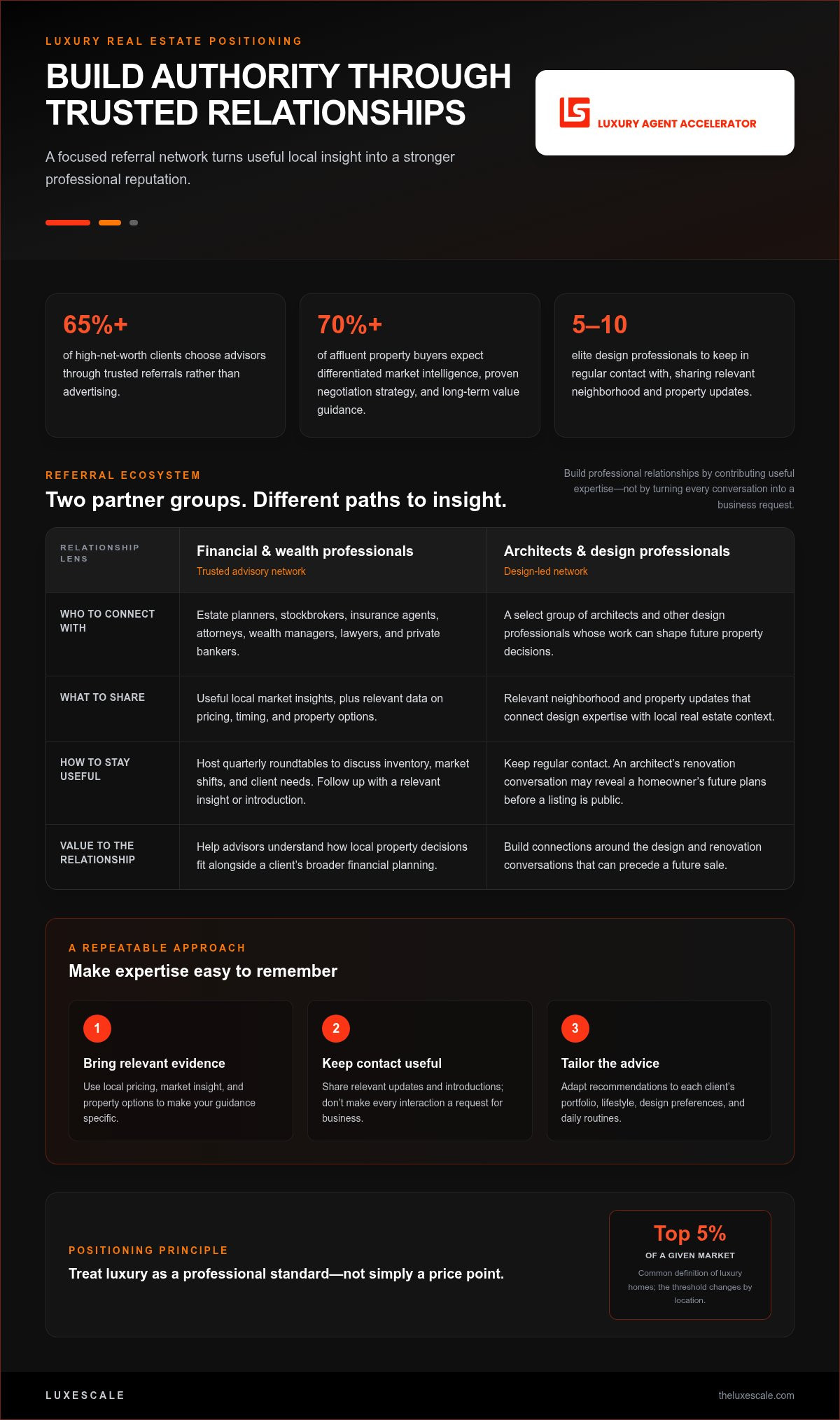
Build visibility through trusted professional relationships. Over 65% of high-net-worth clients choose advisors through trusted referrals rather than advertising. Develop working relationships with estate planners, stockbrokers, insurance agents, attorneys, wealth managers, lawyers, and private bankers. Share useful local market insights, then stay in touch without making every conversation a request for business.
Position yourself as a real estate advisor to wealth professionals. Their clients may need guidance on property decisions alongside broader financial planning, so explain how local pricing, timing, and property options affect a transaction. Over 70% of affluent property buyers expect differentiated market intelligence, proven negotiation strategy, and long-term value guidance from their real estate advisor. Bring relevant data to each conversation.
Make relationship-building a repeatable practice. Host quarterly roundtables for financial advisors to discuss inventory, market shifts, and client needs. Follow up with a relevant insight or introduction. This gives wealth professionals a concrete reason to remember your expertise when a client considers buying or selling.
Include architects and design professionals in your referral network. Maintain regular contact with a select group of 5–10 elite design professionals, sharing relevant neighborhood and property updates. Their work can influence real estate decisions months or years before a property enters the market. For example, an architect’s renovation conversation may reveal a homeowner’s future plans before a listing is public.
Treat luxury as a professional standard, not simply a price point. Provide a high level of service in every transaction, adapting recommendations to each client’s portfolio, lifestyle, design preferences, and daily routines. This broader perspective helps buyers assess a property in the context of their plans, rather than as an isolated purchase.
To attract high-end listings, lead with local pricing evidence and a tailored marketing plan. Explain comparable properties, likely buyer segments, and the home’s distinctive story. Use data rather than opinion, and frame negotiation around timing, opportunity cost, leverage, and the seller’s long-term equity. This makes your advice specific to the property and the client’s goals.
Affluent buyers expect relevant market knowledge, clear communication, discretion, and reliable follow-through. Demonstrate your experience with a precise biography and sales history that identify the markets, property types, price points, and documented notable sales you can speak to. Keep professional details consistent across profiles, and use testimonials that describe your negotiation skills, discretion, or luxury-market knowledge.
2. Sophisticated online, print, photo, and video marketing
Build a coordinated campaign around the property, its likely buyers, and the surrounding community. A waterfront home needs different visuals and language from a historic townhouse or contemporary retreat. Carry the same core narrative across the property page, social channels, email, print materials, and agent presentations. Each channel should reinforce the others and present a consistent impression of the listing.
Positioning should reflect local market indicators, not a single national template. In some markets, buyers may prioritize building services and convenient access; in others, water views or indoor-outdoor living may matter more. Architectural provenance, land, and neighborhood character can also shape demand. Research local inventory and buyer preferences, then tailor the property story accordingly.
Give each listing a polished digital home with a clear description, floor plan, location context, and next action. Pair architectural photography with interior details, twilight exterior images, and video tours that show how rooms connect. For remote buyers, a virtual walkthrough can clarify flow and scale. An industry-reported survey found 81% of buyers rated listing photos as the most useful feature during their online home search.
Extend the story through print and social media. Use a carefully sequenced brochure for private presentations, Instagram for visual storytelling, LinkedIn for market commentary, and YouTube for longer tours or neighborhood breakdowns. Email can share a concise property perspective with interested readers. Give each format a distinct role while keeping photography, color treatment, and messaging consistent.
Marketing works best when sales, business development, and content teams share the same target. Before producing assets, define the buyer profile, the property’s strongest differentiators, and the desired action. A home with expansive views might lead with its outlook, while the sales team prepares details about access, upkeep, and nearby amenities. Alignment gives buyers a coherent experience from discovery through inquiry.
Nurture interest with useful follow-up, not repeated listing blasts. After a prospect views a property page, send a relevant neighborhood update or explain a design feature. Review performance weekly using page engagement, inquiry sources, lead quality, and showing outcomes. If visitors engage with the floor plan but not the video, adjust the page sequence and follow-up message.
Keep advertising claims accurate and supportable. Describe access as “exclusive” only when the listing’s actual terms justify that wording, and avoid unsupported scarcity or investment claims. Use inclusive language and property-focused criteria rather than wording that signals a preference for particular kinds of people. These practices protect credibility across marketing channels.
Make each campaign measurable by connecting its audience, message, and next action. Refine the work based on buyer response. This discipline turns polished marketing into a repeatable business-development tool and helps agents focus on the channels that prompt meaningful engagement.
3. Establishing a luxury real estate brand and value proposition
Build your value proposition around a defined market, a specific expertise, and a client benefit. For example, an agent focused on architect-designed homes can explain how design, materials, and neighborhood context shape a property’s appeal. This specificity helps affluent clients see why your perspective is relevant, rather than hearing another broad promise of premium service.
Before creating a listing narrative, clarify the property’s intended audience and strongest distinction. Describe the architect’s intent, the provenance of notable materials, and the neighborhood’s history. Then connect those details to daily life, such as entertaining, privacy, or access to cultural destinations. Specifics give buyers a meaningful way to assess the home beyond its room count.
Keep the property story aligned with your personal brand. If your positioning emphasizes discreet, data-led advice, use measured language in listing copy, presentations, and client communications. A dramatic campaign promising an unmatched lifestyle may undermine that position. Affluent clients should encounter the same standards in your biography, property pages, private presentations, and conversations.
Consistency is practical, not merely visual. Use the same professional name, brokerage, office address, and phone number across profiles and directories. Choose a refined color palette, readable typography, and professional headshot, then apply them across signage, brochures, and presentations. These repeatable choices make your identity recognizable without relying on exaggerated luxury cues.
Make your expertise verifiable. Specify the markets, property types, and price points you serve, and describe documented sales accurately. Replace broad claims such as “market leader” with evidence, such as experience with historic estates or waterfront listings. Detailed testimonials can reinforce that proof by describing your discretion, negotiation approach, or knowledge of a particular neighborhood.
Build personal credibility by sharing useful expertise publicly. Publish a local market analysis or contribute a long-form feature to a publication your buyers already read. In a luxury market, one respected testimonial can carry more weight than dozens of generic reviews. Earned authority gives prospects a reason to trust your judgment before a private conversation begins.
Common credibility mistakes include inconsistent branding, vague claims of exclusivity, generic property copy, and sales histories without specifics. Correct them by aligning every claim with documented experience, the home’s actual features, or a clear client benefit. This discipline helps attract affluent clients who value precision over spectacle.
Finally, test your value proposition in real conversations. Ask a trusted client or professional advisor what they believe you do best after reviewing your biography and a listing presentation. If their answer misses your intended specialty, revise the wording and examples. Strong luxury real estate agent positioning strategies make your expertise clear, distinctive, and supported by evidence.
4. Dedicated property websites and landing pages
A dedicated property page gives each luxury home a focused place to tell its story. Keep the address, key features, location context, and inquiry action easy to find. A successful page feels designed for that property, not copied from a generic template. Its structure should help buyers understand the home before arranging a showing.
Lead with the features that distinguish the property. For a modern home, explain the architect’s intent, materials, and connection between indoor and outdoor spaces. For a historic residence, describe its period details and neighborhood context. Specifics demonstrate authority and help the right audience decide whether the home fits their priorities.
Organize the page around how people experience the property. Pair a clear overview with a floor plan, room-by-room details, and practical information about the setting. A buyer considering a city penthouse may value entertaining areas and neighborhood access. Someone looking for a retreat may focus on privacy, landscape, and spaces for guests.
Use visual assets to make those distinctions tangible. Arrange architectural and interior photography in a sequence that guides visitors from arrival through the main living areas. Add a video tour or virtual walkthrough when remote buyers need to understand the home’s flow. Captions should add context, not repeat what visitors can already see.
Make the next action specific and straightforward. Offer a clear way to request property information or arrange a private showing. Place that action near relevant details, such as the floor plan or a feature description. Keep the inquiry form focused so prospective buyers can express interest without navigating unrelated content.
Connect each landing page to the broader brand while preserving the property’s distinct identity. Use consistent contact details and visual standards, then give the home its own headline and narrative. This balance helps visitors recognize your professional identity without making the property story feel interchangeable with other listings.
Use audience signals to refine follow-up. If a visitor spends time on the architectural details, share more about the design or materials. If they explore neighborhood content, provide relevant local context. Retargeting can bring previous viewers back to a property page, while careful audience selection keeps advertising focused on people likely to care about that home.
Review practical indicators such as page engagement, inquiries, inquiry sources, and showing outcomes. If visitors open the page but rarely request details, reconsider the opening message or the placement of the next action. If buyers repeatedly ask about a feature, make that information easier to find. Each adjustment should improve clarity for the audience.
Dedicated pages also support professional referrals. A financial advisor or design professional can share a concise property presentation with a relevant buyer. Make the page easy to understand on its own, with a clear property narrative and accurate details. This makes your expertise visible while giving referral partners a useful resource to pass along.
5. Referral ecosystems and relationship-building
A referral ecosystem works when partners understand whom you serve and when to introduce you. Map the people who influence a client’s housing decisions, then identify the specific value you can add. Wealth managers may encounter clients planning a property move; attorneys may advise during estate transitions. Earn confidence by sharing relevant market context before asking for introductions.
Executive relocation creates another relationship pathway. Connect with relocation consultants, corporate human resources teams, and professionals who support incoming executives. A relocating leader may need a home, neighborhood guidance, and a clear understanding of local options. Prepare a concise relocation briefing with market context, lifestyle considerations, and a practical introduction to the communities you know.
Make each referral useful to the person making it. Ask what the referred client prioritizes, then tailor your first conversation to that need. For example, an executive arriving with family may value school access and commute patterns, while a relocating professional may prioritize privacy and travel connections. A thoughtful match strengthens the partner’s confidence in your judgment.
Build partnerships through consistent contribution, not transactional outreach. Share a relevant market observation with an estate attorney, invite a relocation consultant to discuss client needs, or connect a buyer with a trusted design professional. Follow through promptly, respect confidentiality, and report back when appropriate. These actions make your expertise easier to understand and referrals easier to make.
Referrals and paid lead generation serve different roles. Trusted introductions arrive with context, while advertising can extend visibility to audiences beyond your existing network. Over 65% of high-net-worth clients choose advisors through trusted referrals rather than advertising, and 92% of affluent consumers trust earned authority, such as expert content, referrals, and insights, over traditional advertising. Use paid media to amplify credible authority and relationships, not replace them.
Measure the ecosystem by relationship quality as well as transaction outcomes. Track where introductions originate, which client needs recur, and which partnerships lead to relevant conversations. A periodic review can show whether relocation contacts, wealth professionals, or community relationships best align with your expertise. Use those patterns to focus outreach, improve follow-up, and give partners more useful information.
Keep the relationship reciprocal. Share a concise local update, introduce a partner when their expertise fits a client need, and recognize the trust involved in every introduction. For example, a financial professional who refers a relocating client should receive clear, discreet follow-up. Reliability at each handoff can strengthen confidence and support future referrals.
Agents seeking a more structured path to luxury-market opportunities can explore agent coaching, systems, and support designed to strengthen conversion and referral follow-through.
LuxeScale: Luxury Listing Appointments
LuxeScale helps agents pursue luxury-market growth through Luxury Listing Appointments and affluent buyer and seller leads. Turn to this support when your positioning is clear but you want more opportunities to apply it with prospective clients. The appointments connect agents with affluent homeowners ready to sell, while buyer leads can support agents building experience with high-end client needs.
Accompanying award-winning training, coaching, systems, and support help agents strengthen their approach to referred opportunities. These resources can help you refine conversations, follow-up, and conversion alongside your brand and referral-building work.
To explore whether LuxeScale fits your next stage of growth, visit LuxeScale online.
Turn your positioning into your next growth move
Your next step is to turn a clear market position into a repeatable business-development practice. Choose one audience to serve, one relationship to strengthen, and one proof point that makes your expertise tangible. Then put those choices into action consistently. Strong luxury real estate agent positioning strategies earn recognition through alignment between what you promise and how you serve.
If you’re ready to build momentum with additional opportunities, LuxeScale offers Luxury Listing Appointments and Affluent Buyer Leads, supported by award-winning training, coaching, systems, and support. These resources can complement the relationships and marketing foundation you’re developing while keeping your attention on meaningful conversations with prospective clients.
Contact LuxeScale to discuss your positioning and consider a practical next step for your business. With a focused approach and trusted relationships, you can keep strengthening your presence in the luxury market.
Frequently Asked Questions
How do you market luxury real estate?
Market luxury real estate by matching each property’s presentation to the buyers most likely to value it. For a home designed around entertaining, lead with the hosting experience; for a private retreat, emphasize seclusion and how the spaces support daily life. Make sure the listing description, viewing experience, and follow-up answer the questions that audience is likely to ask.
What are the most effective positioning strategies for luxury real estate agents?
The strongest luxury real estate agent positioning strategies connect a defined specialty with a clear client benefit. Choose a segment you can serve with credible expertise, such as historic homes or architect-designed properties, then make that focus visible in client conversations and professional materials. A clear position helps prospects understand when to call you and what distinctive perspective you bring to their decision.
How can a luxury real estate agent define and differentiate their personal brand?
Define your personal brand by identifying the client problem you solve especially well and the evidence that supports your claim. For example, if you specialize in complex estates, explain how you coordinate sensitive timelines and communicate with multiple decision-makers. Ask a past client to describe your most valuable contribution. Use their specific feedback to sharpen your message and distinguish it from generic claims of exceptional service.
What digital marketing channels work best for luxury real estate agents?
Choose digital channels according to the content and audience, rather than trying to post everywhere. Use Instagram to present a home’s visual character, LinkedIn to share professional insights, and YouTube for an in-depth property or community walkthrough. A focused email can give interested prospects context they can revisit. Review the quality of inquiries each channel generates, not just views or likes.
How can agents build referral networks with wealth managers, attorneys, and luxury brands?
Build referral relationships by making collaboration useful before requesting introductions. Offer a wealth manager a concise property-market perspective for a client considering a move, or share a relevant listing with an attorney handling an estate transition. For a luxury brand, consider an event or editorial conversation that serves both audiences. Follow up thoughtfully and protect client discretion so partners can refer with confidence.
How do luxury real estate positioning strategies differ across major U.S. markets?
Luxury positioning should reflect local inventory, buyer preferences, and demand rather than follow a national template. Emphasize the features that matter locally, such as building services and access, water views, indoor-outdoor living, architectural provenance, land, or neighborhood character.

Article by
Mark Coppens
Mark Coppens is the Founder and Chairman of LuxeScale and Co-Team Lead of Living Vogue | eXp Luxury. He is an active elite-level luxury agent and the author of the upcoming book, POWER POSITIONING: From Missiles to Mansions – Why People Really Buy, and is a nationally recognized speaker on luxury real estate, consumer psychology, marketing, and business growth.
A U.S. Army veteran with an MBA in Marketing, Mark has generated more than $1 billion in career sales and now leads one of the nation's fastest-growing luxury referral platforms, referring more than $2 billion in luxury real estate opportunities each month to partner agents across the United States. He specializes in helping real estate agents generate more listings, break into the luxury market, and build scalable businesses through qualified referrals, award-winning training, coaching, and proven systems. His practical, psychology-driven approach has helped agents across the country increase their income while attracting more affluent clients and building lasting, referral-driven businesses.