
Move from Residential to Luxury Sales with Smarter Pricing
Luxury sales reward precision, not simply a higher asking price. Moving from residential to luxury property sales means preparing for listings that may take longer to sell and pricing adjustments shaped by local demand and buyer response. The strongest approach pairs realistic pricing with a clear, distinctive property brand.
You already know that high-value homes need thoughtful positioning. The shift is aligning price, presentation, and timing with luxury buyers’ expectations. This article explains how luxury timelines and pricing adjustments differ, which signals can inform a price change, and how to build a property brand that highlights a home’s distinctive value.
Key Takeaways
- Set luxury listing timelines around local demand, buyer response, and a clear plan for reviewing the price.
- Build a distinct property brand by focusing the message on the home’s standout qualities and presenting them consistently.
- Strengthen your transition into luxury sales by developing relevant market knowledge, communication skills, and a track record of service.
- Build relationships with affluent clients through thoughtful, trust-centered conversations and a clear understanding of their priorities.
- Adapt your sales approach to the expectations of luxury buyers, including more tailored property presentations and viewings.
1. Luxury-home sale timelines and pricing adjustments
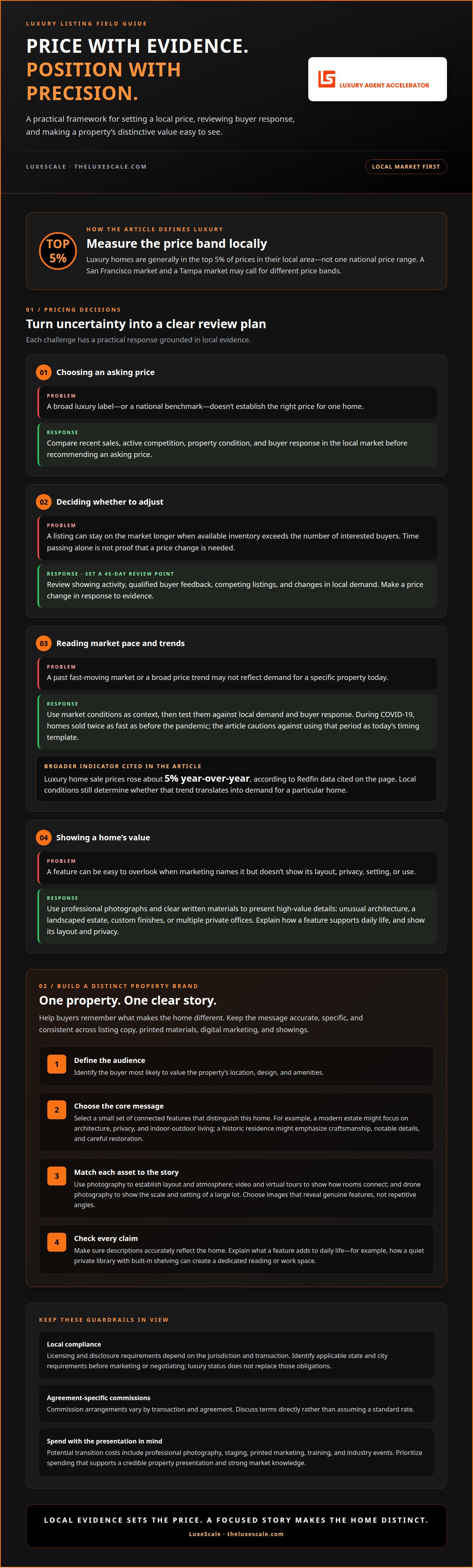
Luxury pricing starts with the local market, not a national dollar threshold. Luxury homes are generally defined as properties in the top 5% of prices in their local area. That means an agent working in San Francisco may assess a different price band than one working in Tampa. Compare recent sales, active competition, property condition, and buyer response before recommending an asking price.
Luxury listings can remain on the market longer when available inventory exceeds the number of interested buyers. A 45-day review point can help sellers and agents assess whether the price needs adjustment. At that meeting, compare showing activity, qualified buyer feedback, competing listings, and changes in local demand. A price change should respond to evidence, not simply the passage of time.
Market pace can also shift sharply. During COVID-19, homes were selling twice as fast as before the pandemic. That period illustrates why sellers should consider market conditions when choosing when to list, but it shouldn’t become a template for today’s timing. Luxury home sale prices have risen about 5% year-over-year, according to Redfin data cited on the page. Local conditions still shape whether that broader trend translates into demand for a specific property.
Remote work has made dedicated work areas a useful feature to present clearly. Show how multiple private home offices support focused work, client meetings, or separate household schedules. Don’t call a room an office without showing its layout and privacy. Professional photographs and written materials should also highlight distinctive, high-value features, such as unusual architecture, a landscaped estate, or custom finishes.
U.S. licensing and disclosure requirements depend on the jurisdiction and transaction. Treat compliance as a local step: identify the applicable state and city requirements before marketing or negotiating. Luxury status doesn’t replace those obligations.
There’s no single U.S. luxury price threshold: the top 5% is measured locally. Commission arrangements also vary by transaction and agreement, so discuss the terms directly rather than assuming a standard rate.
Transition costs depend on your strategy. Potential expenses include professional photography, staging, printed marketing, training, and industry events. Prioritize spending that supports a credible property presentation and strong market knowledge.
Build relationships through luxury real estate networks, professional events, charitable gatherings, and business groups where affluent homeowners participate. Follow up with useful market insight, not a generic sales pitch. Key challenges include longer listing periods, pricing misjudgments, and the time required to earn trust. U.S. markets also differ, so compare local inventory, buyer demand, and price bands before applying a strategy from one market to another.
There is no single U.S. luxury-home price threshold; luxury homes are generally in the top 5% of prices in their local area. Commission rates are not standard and vary by transaction and agreement, so the terms should be discussed directly.
2. Creating a property brand
A luxury property brand gives buyers a clear reason to remember a home among competing listings. Start with a focused message built around its strongest differentiators. For a modern estate, that might be architectural design, privacy, and seamless indoor-outdoor living. For a historic residence, the story could emphasize original craftsmanship, notable details, and careful restoration. Keep the message accurate and specific to the home.
Build the presentation around that message. Use consistent language across listing copy, printed materials, digital marketing, and showings. High-quality printed materials can reinforce a polished impression, especially when they highlight the same distinctive features buyers see online. Choose typography, imagery, and layout to suit the property instead of relying on generic luxury styling. A coastal home, for example, calls for a different visual emphasis from a city penthouse.
Make the property’s defining qualities easy to understand. Explain what a feature adds to daily life, not just what it is. Instead of listing “private library,” describe how its quiet position and built-in shelving create a dedicated reading or work space. If a home has multiple private offices, show how they are separated and can be used. Precise copy helps buyers picture the property without overstating its value.
Visual assets should carry the same story. Professional photography can establish the home’s layout and atmosphere, while video and a virtual tour help buyers understand how rooms connect. Drone photography can show the scale and setting of a large lot. Select images that reveal genuine features, such as a landscaped garden, custom millwork, or a distinctive entrance. Avoid repetitive angles that dilute the strongest impression.
Use a simple review process before publishing:
- Define the audience: Identify the buyer most likely to value the property’s location, design, and amenities.
- Choose the core message: Select a small set of connected features that distinguish this home.
- Match each asset: Align photographs, descriptions, printed pieces, and tours with that message.
- Check every claim: Ensure descriptions accurately reflect the property and its features.
A coherent property brand is not a substitute for accurate pricing or strong service. It gives those decisions a recognizable frame, so buyers can quickly grasp what makes the home distinct. Agents shaping a luxury-focused presence can explore luxury market resources as a next step in developing a consistent approach to affluent listings.
Keep the message focused as you develop materials, so each piece reinforces the same distinctive qualities instead of introducing competing themes. A concise, consistent presentation makes the property’s identity easier to recognize across formats. Review wording and imagery together to ensure they support the chosen message and accurately represent the home. If a detail does not strengthen that central idea, consider leaving it out.
Invest in high-quality printed marketing materials that reflect the property’s character and match its digital presentation. Give each piece a clear purpose, with careful attention to typography, imagery, and layout. Printed materials should communicate the home’s defining qualities, not simply add another format to the campaign. Consistent choices across every touchpoint create a polished impression and help prospective buyers understand what makes the property distinctive.
3. Moving from Residential to Luxury Real Estate
Moving from residential to luxury property sales takes more than working with higher asking prices. Agents need to understand the local luxury market, communicate precisely, and manage complex client expectations. Residential transaction experience provides a foundation. The next step is applying those skills to properties where architecture, privacy, land, and amenities can shape buyer decisions.
Build market knowledge through specific comparisons. Study recent luxury listings and sales in the markets you intend to serve. Note how property type, condition, location, and distinctive features affect positioning. A waterfront home, for example, competes on different attributes than a city penthouse. Learn the details behind each comparable instead of relying on a price range alone.
Experience also means being ready to discuss the entire property. A buyer may ask about its layout, custom finishes, grounds, or private office spaces. Prepare accurate descriptions and know which details deserve attention during a showing. If a property has a separate guest suite, explain its access and relationship to the main residence. Clear, direct answers build confidence without overstating features.
Develop the capabilities luxury clients expect through deliberate practice:
- Pricing analysis: Explain how relevant sales and competing listings inform a pricing recommendation.
- Presentation: Coordinate listing language and visuals around the property’s genuine strengths.
- Negotiation: Listen closely, clarify priorities, and communicate proposals with care.
- Transaction management: Track decisions, documents, deadlines, and communication across the parties involved.
- Local fluency: Discuss neighborhood amenities and property characteristics accurately.
Formal qualifications and licensing requirements are separate from luxury-market expertise. Keep any required real estate credentials current for the jurisdiction where you work. Then pursue training that sharpens relevant skills, such as luxury pricing, presentation, negotiation, and client communication. A designation can support professional development, but practical knowledge of your target market remains essential.
Make your experience visible through evidence, not broad claims. Present a focused portfolio that explains your role in each transaction, the property’s relevant features, and how you guided the process. Use anonymized examples when client privacy matters. A clear case study of a challenging negotiation can demonstrate judgment more effectively than a generic claim of expertise.
Finally, build a repeatable learning plan. Review local luxury inventory regularly, attend relevant professional education, and seek feedback after client interactions. Treat each listing appointment as preparation for the next: understand the property, anticipate questions, and communicate a market-grounded strategy. That discipline turns residential experience into a credible luxury practice.
4. How do luxury real estate agents find and build relationships with high-net-worth clients?
Luxury relationships often begin before a homeowner decides to sell. Build visibility through business groups, charitable events, private clubs, and professional networks. Attend with a clear purpose: understand the community, contribute useful insight, and make thoughtful introductions. At a neighborhood fundraiser, for example, focus on shared interests before discussing property services.
Professional referrals can create a stronger foundation than broad, untargeted outreach. Build connections with financial advisers, estate attorneys, architects, interior designers, and relocation professionals. Each serves clients facing property decisions from a different angle. Share timely market information and communicate reliably, so relationships develop through practical value rather than repeated requests for introductions.
A digital presence supports in-person connections. Publish concise market commentary about a specific neighborhood, property type, or buyer trend. A useful post might explain how a hillside home’s access, views, and privacy affect its appeal. Use accurate examples, protect client confidentiality, and avoid presenting one transaction as a promise of future results. Consistency makes your expertise easier to assess.
When a potential client responds, qualify the opportunity through a focused conversation. Ask what prompted the move, which property features matter, and what timing they have in mind. A seller considering a waterfront estate may prioritize discretion and a carefully managed showing plan. A buyer seeking a city residence may focus on location, floor plan, and convenient access to work.
Trust grows through disciplined follow-through. After a meeting, send a short recap of the client’s priorities and the agreed next step. If the client wants comparable market information, provide relevant properties with clear explanations. Keep communications secure and share sensitive details only with the appropriate parties. Respect the client’s preferred contact method and pace instead of sending frequent, generic updates.
Build a repeatable relationship process:
- Identify a community: Focus on a neighborhood, professional network, or property niche you can understand deeply.
- Contribute first: Share useful local insight or support a relevant community event.
- Listen carefully: Record the client’s priorities, constraints, and preferred communication style.
- Follow through: Deliver the promised information and confirm the next step.
- Stay connected: Send relevant updates when they match the client’s interests.
Long-term relationships depend on discretion as much as market knowledge. An agent who carefully protects a seller’s privacy, communicates clearly, and honors agreed boundaries earns credibility beyond a single transaction. Treat each introduction as the beginning of a professional relationship, not an immediate listing opportunity.
5. How do luxury property sales differ from standard residential sales?
Luxury transactions call for a property-specific strategy, not a standard listing template with elevated language. A downtown penthouse and a secluded country estate attract different buyer priorities. Your task is to translate each property’s features into clear, accurate value. That changes how you handle pricing discussions, marketing, showings, and client communication.
Presentation matters because distinctive features may drive a buyer’s interest. For a home with a private dock, explain access and the relationship between the house and shoreline. For a residence with custom stonework, show the craftsmanship through precise images and descriptions. Broad claims like “one of a kind” don’t tell buyers why the property might suit them.
Viewing arrangements can also differ. Appointment-only showings, rather than public open houses, are recommended for luxury properties. This lets you coordinate each visit around the seller’s privacy and the buyer’s needs. Before a showing, prepare a concise property overview, confirm which spaces are available, and plan how to present features such as a guest wing or landscaped grounds.
Buyer qualification is another practical distinction. A focused conversation can clarify a prospective buyer’s preferred location, intended use, and desired features. A buyer seeking a second home, for example, may prioritize privacy and outdoor living. Someone relocating for work may value a dedicated office and convenient access to daily amenities. These details help you present relevant properties and make each viewing more purposeful.
Communication should remain individualized throughout the transaction. A seller may want detailed updates on showing feedback, while a buyer may need clear explanations of the property’s layout and features. Summarize decisions in writing, keep marketing claims accurate, and handle private information discreetly. For a complex estate, a single point of contact can help organize conversations among the seller, buyer, and transaction professionals.
Use a tailored process for each listing:
- Position the home: Identify the features most relevant to likely buyers.
- Prepare the showing: Arrange access and guide attention to meaningful details.
- Adapt communication: Match updates and explanations to each client’s priorities.
- Review buyer response: Use questions and feedback to refine the presentation.
Luxury sales aren’t simply standard transactions with a larger figure. They require disciplined positioning, attentive service, and a showing experience suited to the home and its audience. Explore luxury listing opportunities to support your next step into this market.
When moving from residential to luxury property sales, you must account for more than just a higher price tag; financial context can also shape the conversation. A Redfin Premier agent in Boston said a 6.3% mortgage rate versus a 6.1% rate would make little difference to some buyers purchasing homes above $1 million. The same agent noted that broader economic shifts have a distinct impact at this tier. This underscores the value of understanding each buyer’s priorities rather than relying on broad assumptions.
LuxeScale: Luxury Listing Appointments
LuxeScale helps agents build a pipeline in luxury real estate through Luxury Listing Appointments and Affluent Seller Leads. Turn to this support when you’re ready to pursue qualified affluent homeowners but need a more consistent path to listing conversations. Agents can also access Affluent Buyer Leads, alongside accompanying award-winning training, coaching, systems, and support to help develop their approach and strengthen conversion skills.
This can complement the work covered in this guide: local market knowledge, tailored property positioning, and attentive client relationships. LuxeScale operates on a performance-based referral model, connecting agent growth with completed transactions. If you’re considering your next step into luxury sales, contact LuxeScale to discuss its Luxury Listing Appointments.
Make your next move with purpose
Moving from residential to luxury property sales is a deliberate business decision, not simply a change in listing price. Choose the market you want to serve, then build a focused plan for earning trust and developing relevant expertise. Consistent execution helps turn your ambition into a professional practice grounded in market knowledge and strong client relationships.
When you’re ready to build a pipeline in this segment, LuxeScale offers Luxury Listing Appointments, Affluent Buyer Leads, and accompanying award-winning training, coaching, systems, and support. Consider how these resources could complement your goals and the way you want to grow.
Contact LuxeScale to discuss your next move, and take a confident step toward your luxury real estate goals.
Frequently Asked Questions
What marketing strategies work best for selling luxury properties?
Use a targeted campaign that connects a property’s defining qualities with the buyers most likely to value them. For a private waterfront residence, foreground its setting and access; for an architectural home, lead with design and provenance. Coordinate agent outreach, digital distribution, and property materials around one message. Track inquiries and showing feedback, then refine which features you emphasize as buyer interest becomes clearer.
How can agents build a luxury real estate brand and portfolio?
Build a portfolio that demonstrates judgment, not just transaction volume. Organize examples by property type or client need, such as estate sales, relocations, or distinctive design. For each case, explain your role, the challenge, and the decisions you made, while protecting client privacy. Use consistent language and presentation across your professional profile and materials. Add new examples as your experience grows, keeping every claim specific and supportable.
What legal, licensing, and disclosure rules apply to luxury property sales?
Licensing and disclosure requirements depend on the jurisdiction and transaction. Identify applicable state and city requirements before marketing or negotiating, and keep required real estate credentials current where you work.
What are typical luxury home price thresholds and commission rates in the United States?
Luxury homes are generally in the top 5% of prices in their local area, so there is no single U.S. price threshold. Commission rates are not standard; they vary by transaction and agreement and should be discussed directly.

Article by
Mark Coppens
Mark Coppens is the Founder and Chairman of LuxeScale and Co-Team Lead of Living Vogue | eXp Luxury. He is an active elite-level luxury agent and the author of the upcoming book, POWER POSITIONING: From Missiles to Mansions – Why People Really Buy, and is a nationally recognized speaker on luxury real estate, consumer psychology, marketing, and business growth.
A U.S. Army veteran with an MBA in Marketing, Mark has generated more than $1 billion in career sales and now leads one of the nation's fastest-growing luxury referral platforms, referring more than $2 billion in luxury real estate opportunities each month to partner agents across the United States. He specializes in helping real estate agents generate more listings, break into the luxury market, and build scalable businesses through qualified referrals, award-winning training, coaching, and proven systems. His practical, psychology-driven approach has helped agents across the country increase their income while attracting more affluent clients and building lasting, referral-driven businesses.